Why General Motors renewed its SAIC venture for another 20 years
On 5 August SAIC Motor and General Motors signed an extension in Shanghai, pushing the term of their SAIC-GM joint venture out by another 20 years, to 2047.
The number is symbolic. Founded in 1997, SAIC-GM has run for nearly three decades, and China’s car industry has moved from the combustion era into full electric and intelligent competition. Choosing this moment to add 20 years means the two parents are not simply keeping the company alive. They are answering a new question, which is what a joint venture can still contribute now that China has entered the smart electric age.
The answer may already be visible in a series of recent moves covering new energy, intelligent driving, software, over-the-air updates, local research and development, and globalisation. One employee told Leiphone that SAIC-GM is trying to convert a conventional joint-venture manufacturer into an automotive technology company with stronger local technical decision-making, faster software iteration and the ability to export products globally. The path is not smooth, because it requires reworking the organisational mechanics, technical authority and balance of interests built up over nearly 30 years.
GM’s China business is no longer what it was. Its peak came around 2017, when it sold more than four million vehicles in China. By 2025 that had fallen to less than half the peak. Profit followed. GM once earned about USD 2 billion a year from its China operations, slipped into loss in 2024 and recovered after restructuring, though never to the old level.
Its second-quarter 2026 results show seven consecutive profitable quarters in China, and in the first half of 2026 SAIC-GM contributed USD 248 million of equity income, double the same period a year earlier.
The same employee said GM is staying not because China is still as profitable as it was. It is staying because although China is getting harder to earn in, the country’s technology, supply chain, engineering efficiency and new energy product development capability are getting more important.
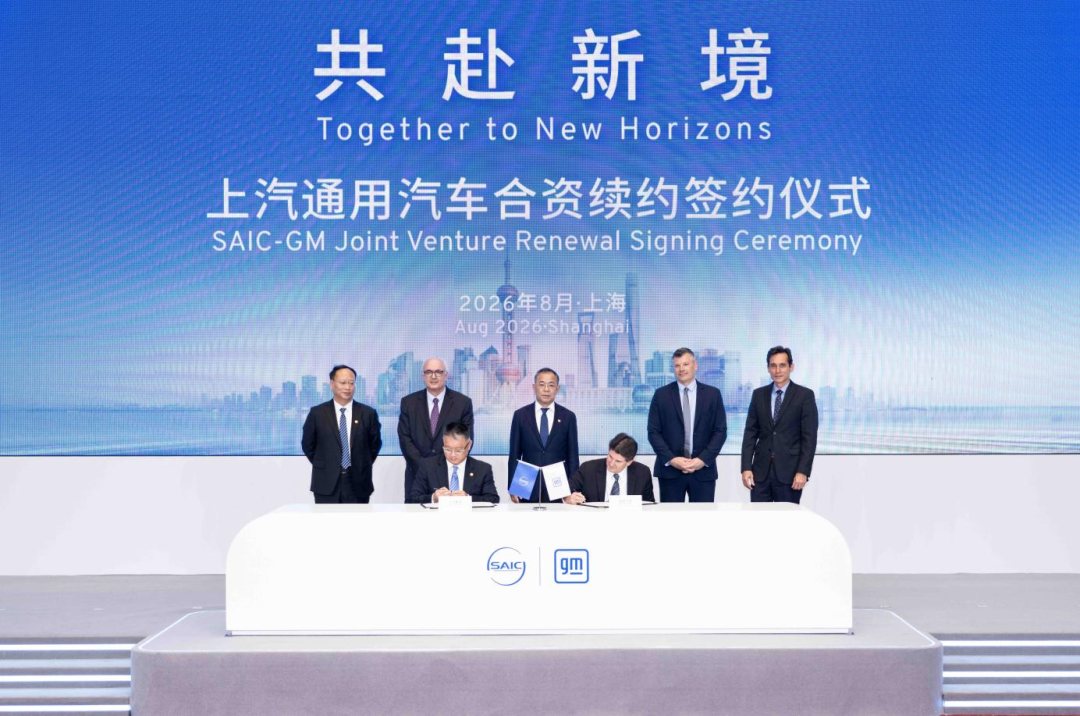
The messages from the 5 August event at the World Reception Hall were positive. Steve Hill, GM senior vice president and president of GM China, said the two sides will keep strengthening product and technology development for China, push further into intelligent driving and look for growth opportunities outside China. GM chair and chief executive Mary Barra stressed in a video message that success depends on excellent products, faster innovation, strong local execution and an unchanging focus on customers.
SAIC chairman Wang Xiaoqiu defined the future directly as joint venture 2.0. In his framing, the 1.0 era answered whether a joint venture could exist. The current era has to answer whether it can be strong. Wang’s remarks point to the value of SAIC-GM over the next 20 years. China’s greatest value to GM used to be the market. Going forward, it adds research, supply chain and a base for exporting new energy products.
The division of labour between the shareholders is changing accordingly. Leiphone understands that the Chinese side has gained more say over product definition, meaning who the car is sold to, what smart cockpit and driver-assistance features it carries and which technical route it takes. GM holds the lead on where vehicles are exported, how overseas sales networks are built, and compliance and brand operations, drawing on its mature global network.
The plan is for SAIC-GM to develop products defined, engineered and built in China for global markets. The Buick Electra E7 will be exported officially in October this year. Target markets include the Middle East, Africa, South America, Mexico and Asia-Pacific. The 50-50 structure is unchanged, and the two sides will keep developing models in China and sharing profit.
The mandate has plainly shifted. GM says SAIC-GM plans to launch at least 30 new energy models by 2030, while the two sides focus on Buick and Cadillac and shift Chevrolet towards export, using Chinese development and manufacturing to build smaller, more competitively priced cars for overseas markets through GM’s network. Among mainstream joint ventures, this is the longest renewal on record. What GM is also buying is the transition experience SAIC-GM has accumulated, a capability that is scarce among multinational carmakers.
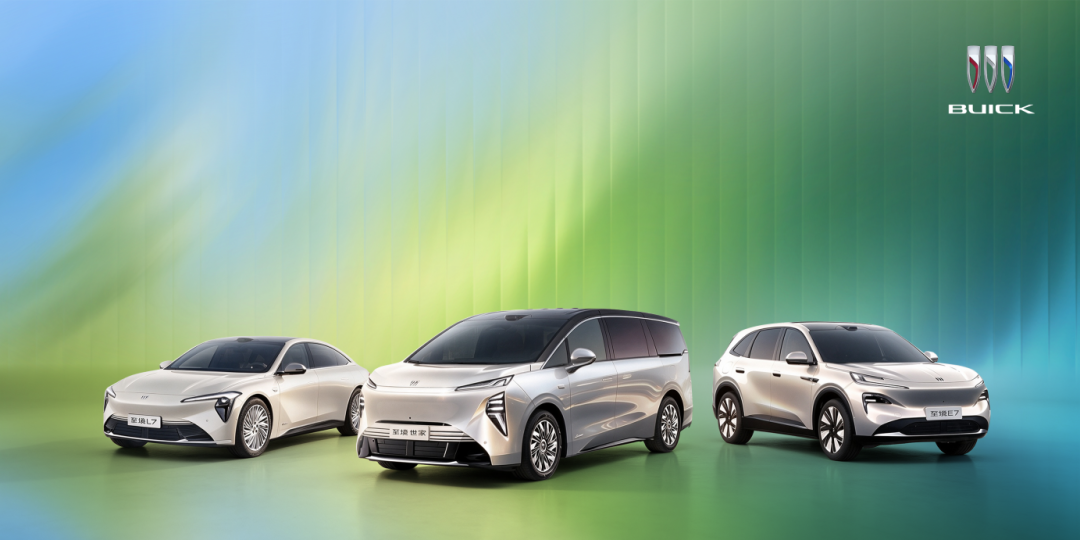
In 2025 SAIC-GM introduced the Xiaoyao super-hybrid architecture, the first joint-venture new energy platform led by a Chinese team, covering battery-electric, plug-in hybrid and range-extender powertrains and accommodating saloons, SUVs and MPVs. On that base the Buick Electra brand built a full product line-up within a year. Internally the approach is called the Electra model, and the market has given it an early verdict. The Electra E7 passed 10,000 first-month deliveries, the fastest a joint-venture new energy product has reached that mark, and the Electra Shijia became the best-selling luxury new energy MPV above RMB 400,000 in the first half of 2026.
The goal of the Electra model is to be both fast and good. Good means the quality, engineering capability and safety standards of a traditional joint venture. Fast means the local product definition and software iteration that the Chinese market now demands. The update logic of Electra OS V2.1 shows the change reaching product level. When users reported that parking bay markings in older residential compounds are faint, the company added parking without bay lines. When users wanted navigation, music and driver assistance displayed together, it added more split-screen capability. When users wanted more waypoints for self-driving trips, it raised the limit from five to ten. When camping users worried about engine noise from hybrids, it optimised for camping scenarios.
SAIC-GM is also working with Momenta to extend assisted driving across more models. Leiphone understands the company will fit assisted driving not only to new energy vehicles but also to retrofit intelligence into combustion models. Intelligent driving, smart cockpits and large AI models are also moving from the China market to overseas markets quickly. The next 20 years of the partnership are therefore unlikely to be a one-way transfer of technology. They are more likely to combine GM’s global capability, SAIC’s local capability, the Chinese supply chain and Chinese intelligent vehicle technology into a new product capability.
If that system runs, SAIC-GM becomes something more than a joint-venture brand. It becomes a new template in which an overseas group supplies global reach, a Chinese shareholder supplies localisation, and Chinese supply chain and software become the shared technical base.
Three questions now define the next 20 years. Can product definition move further towards local control? Can software and AI genuinely enter the core technical system? Can products and technology developed in China genuinely reach global markets? Those three determine whether this is a stay of execution or a rebirth. For a joint venture approaching 30 years old, a 20-year renewal does not mean the past can be repeated. It means SAIC-GM has 20 years to prove why it deserves to continue.
Editor’s note: This is an adapted translation of the original Leiphone report. It has been trimmed and restructured for readability for an international business audience. The full original (in Chinese) is at https://www.leiphone.com/latest/index/id/4761.