A star robotics company has entered bankruptcy, and the lesson is not about technology
DeepBlue Robotics, once a fixture at technology exhibitions and treated as a new force in Chinese robotics, has formally entered bankruptcy liquidation.
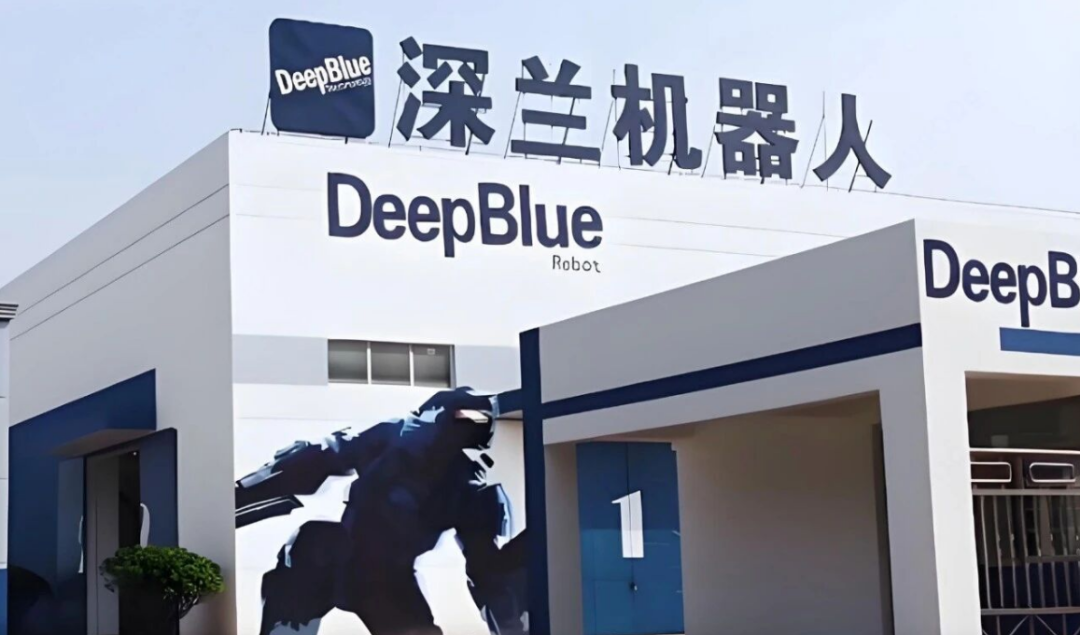
The People’s Court of Pudong New Area in Shanghai has accepted the case. The core robotics subsidiary of what was an AI unicorn has left the competitive stage, and the arc from prominence to collapse is a useful sample of the shakeout now running through the robotics industry.
Where the trouble was planted
Backed by the brand and capital of its parent company DeepBlue Technology, DeepBlue Robotics rose quickly during the sector’s capital boom. It opened several business lines at once, covering commercial cleaning, smart delivery, epidemic disinfection and industrial collaboration. Prototypes appeared constantly at trade shows, large cooperation orders were announced publicly, and a large-scale production base was planned.
Behind the promotion, operating problems kept accumulating. Information published by the bankruptcy administrator shows that the company faced collective action by around a hundred employees, with employee claims exceeding RMB 23 million. On top of a large number of contract disputes and overdue debt cases, its assets can no longer cover its liabilities, and there are disputes over internal cash flow and shareholder contributions. It had long been spending more than it took in.
The central mistake was confusing exhibition demonstrations with real delivery capability. Many products could only perform in the ideal conditions of a showroom and could not adapt to complex real scenarios, so the company never built stable, sustainable revenue at scale.
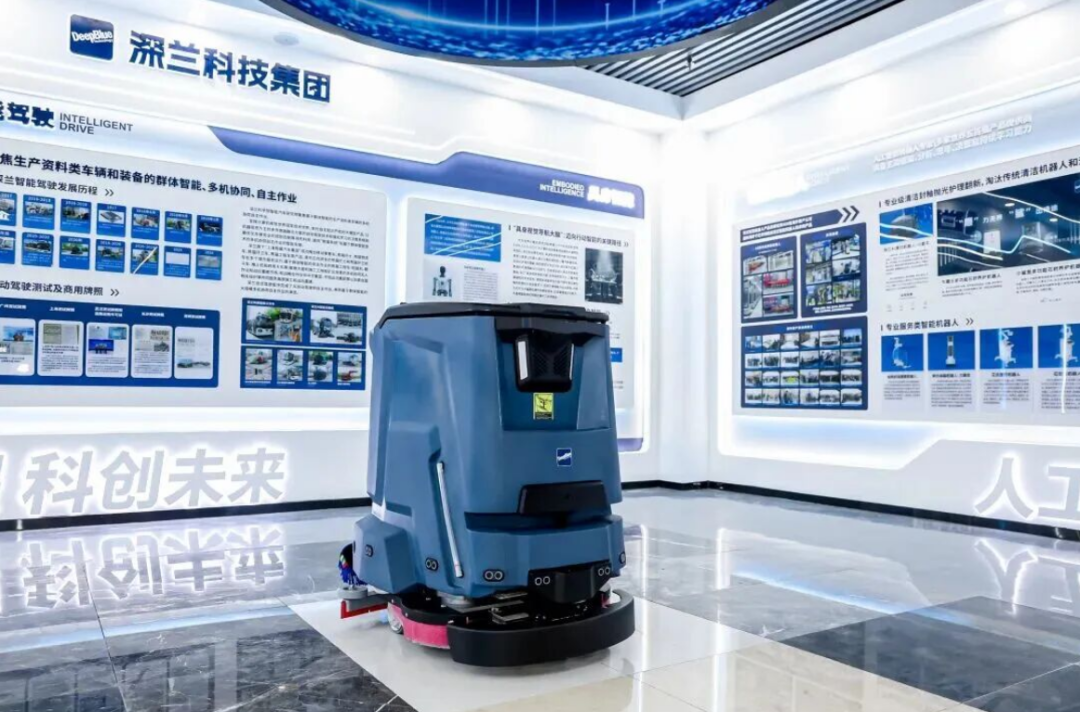
Robotics is an asset-heavy, long-cycle business. Research, supply chain and production lines all need continuous investment, and cash comes back slowly. Relying only on funding and parent-company transfers without building positive cash flow means a crisis is only a matter of time. When the capital cycle cooled and the parent company came under its own debt pressure, the funding chain broke and production, delivery and staffing collapsed together.
How many prototypes are stuck in showrooms?
DeepBlue Robotics is not an isolated case. Over the past few years capital enthusiasm swept through humanoid and service robotics, and many start-ups raised money on concept stories and prototype demonstrations, with heavy marketing and light validation becoming a noticeable pattern. Some founders have said publicly that a small number of companies manufacture fake order data through related-party transactions to win capital favour.
Cooler judgements were also heard at the 2026 World Robot Conference. Qian Dongqi, chairman of Ecovacs, argued that humanoid robots will take far longer to reach homes than the market imagines, and that safety, experience and cost, rather than impressive technical displays, are the thresholds that commercialisation cannot avoid. Survey data supports that view. Many humanoid robots on the market today are used for exhibition and research data collection, and the share that genuinely go into factories and commercial settings to generate recurring revenue is not high.
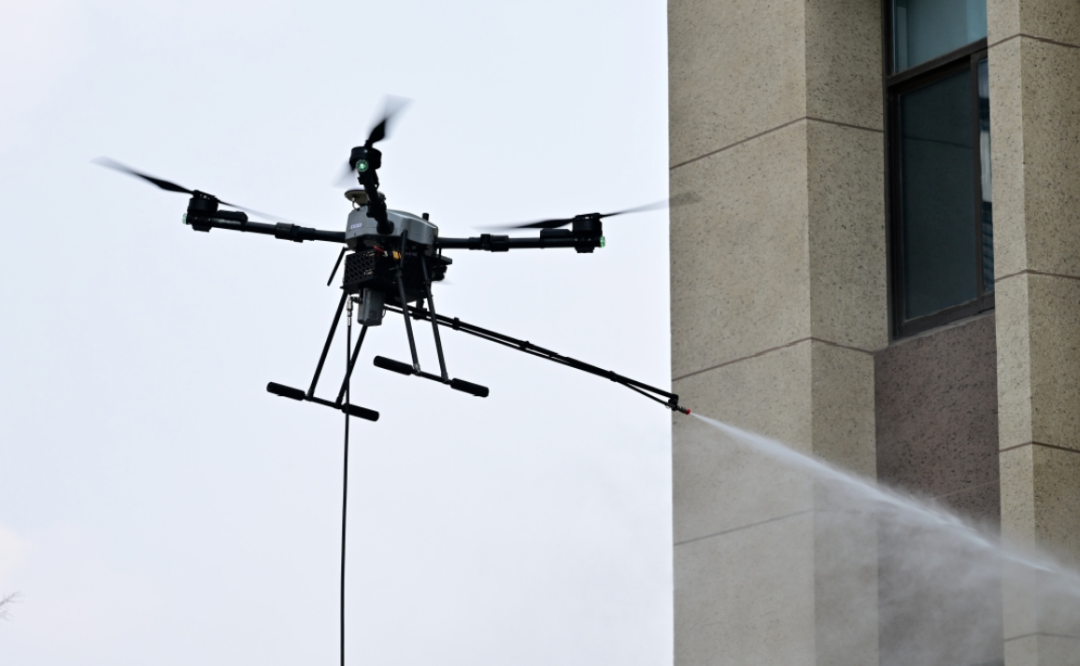
Many companies fall into a thinking trap. They assume that if technical specifications are impressive enough, the market will pay. The real commercial logic is the reverse. What a customer will pay for is always a tool that solves a real problem, not a technology exhibit. Some companies also chase breadth for its own sake, attacking several unrelated sectors at once, scattering research resources until no single business line achieves real competitiveness.
Where the industry goes after the froth
The standard of judgement in capital markets has changed completely. The industry has formally left the phase of burning money on stories. Investors and industrial players no longer chase concepts blindly. Order volume, delivery capability, gross margin and the ability to operate sustainably have become the core measures, and manufacturers without delivery capability are being cleared out, with concentration rising.
The lessons are worth taking seriously. First, technology development has to be anchored to commercialisation. Iteration detached from real market demand cannot be converted into a company’s ability to survive, however advanced it is. A prototype is only a starting point, and moving from the showroom to a real scenario requires engineering refinement, cost control and volume delivery.
Second, companies have to restrain the urge to expand. A grab-everything approach quickly consumes limited resources, and deep cultivation of a narrow scenario offers a better chance of survival than a broad product line.
Third, healthy cash flow is the lifeline of a technology company. Robotics companies cannot rest their survival purely on external funding. However advanced the technology, a company has to return to commercial fundamentals and build the ability to sustain itself.
The long-term value of the robotics sector is not in question, and under the banner of new quality productive forces the room to grow remains wide. The competition ahead will not be over whose story is more compelling. It will be over whose product genuinely creates value for customers. When the tide goes out, only companies that combine technical innovation, stable volume production and a mature business model will make it through the cycle.
Editor’s note: This is an adapted translation of the original OFweek report. It has been trimmed and restructured for readability for an international business audience. The full original (in Chinese) is at https://robot.ofweek.com/2026-09/ART-8321203-12003-30703597.html.