SOG Computing, an AI-for-materials company, has closed a tens-of-millions-yuan angel round. Fosun Capital led the round, with the Nantong state AI fund, Yunqi Partners and Zhongying Venture Capital following and Zi Zhu Science Park reinvesting. The funds go to its automated materials R&D pipeline, laboratory build-out, team expansion and pushing domestic high-end materials toward self-reliance.
Founded in 2025, SOG Computing builds original AI compute engines and related technology to speed new-materials discovery. Its founder and chief scientist, Xu Zhenli, is a Shanghai Jiao Tong University distinguished professor and director of its AI new-materials research centre, and a National Science Fund for Distinguished Young Scholars recipient. The 30-plus-person R&D team runs four centres spanning AI algorithms, applied technology, agents and quantum computing.

Why materials need AI
Traditional materials research leans on trial and error, and a new material can take decades from lab discovery to product, at high cost and with opaque mechanisms. SOG Computing attacks the bottleneck at the algorithm level. Its SOGNet learns long-range atomic correlations directly in Fourier space and was published in Physical Review Letters in 2025 with an editor’s suggestion. A stochastic-batching algorithm lifts parallel efficiency past 95 per cent, 10 to 100 times faster than the 20 to 30 per cent typical of conventional methods, and won a Shanghai Natural Science first prize.
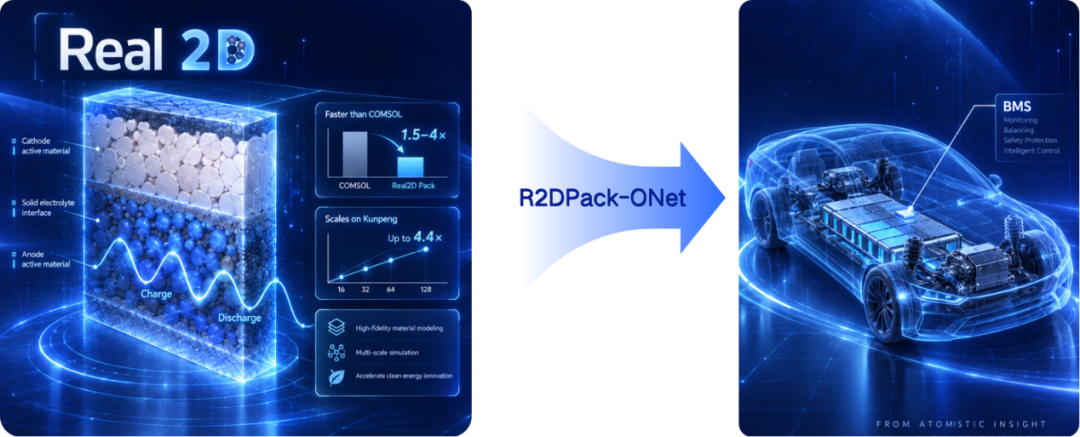
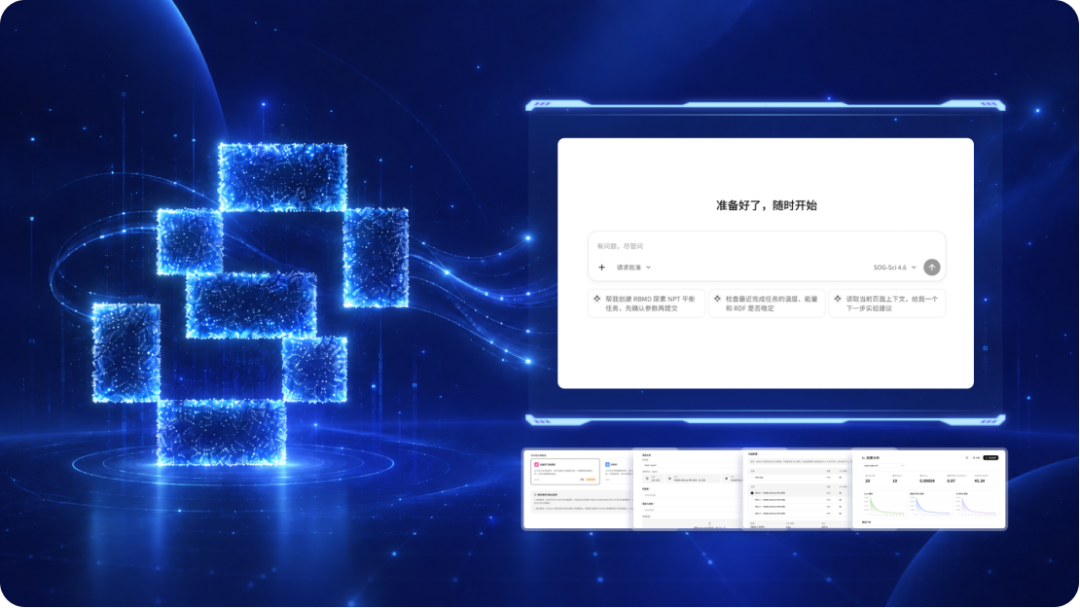
Its R2D multi-field coupling model breaks the homogeneous-assumption limit of traditional electrochemistry and captures the multi-physics evolution of battery materials through charge and discharge, including ion transport, interface reactions, stress and failure. On these algorithms the company built a product matrix: the SOGNet atomic model, the NanoTitan simulator, the R2DPack simulation platform and the SOG Omni agent.
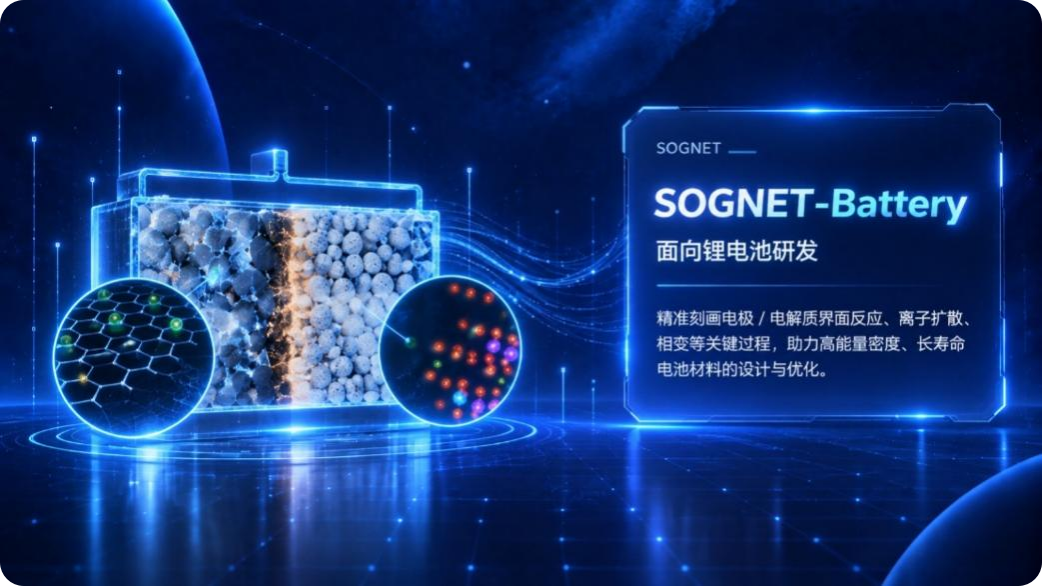
The lithium-battery model SOGNET-Battery uses a smaller parameter count yet beats larger general-purpose potential models. On the Li-Li6PS5Cl system, fine-tuning with just 359 configurations cut atomic-force error by about 68 per cent and energy error by about 83 per cent, while inference ran more than 80 per cent faster than general models.
A solid-state-battery leader already uses R2DPack for cell-level multi-physics simulation, coupling material parameters, interface traits and cell structure to predict and optimise performance, cutting reliance on repeated lab validation. For in-vehicle real-time computing the model responds in milliseconds on mainstream automotive chips.

Editor’s note: This is an adapted translation of the original 36Kr report. It has been trimmed and restructured for readability for an international business audience. The full original (in Chinese) is at https://36kr.com/p/3996737880559493.