On 17 September D-Robotics, also known as D-Robot and spun out of Horizon Robotics, closed a 400 million dollar Series C. Mirae Asset led the round, with Meituan Strategic Investment, Hefei State Investment, Nanshan Strategic Emerging Industry Investment, Jingquan Capital and Cathay Capital among the followers, while more than twenty existing backers including Hillhouse, 5Y Capital, Temasek’s Vertex Growth and Aramco’s Prosperity7 fund re-upped.
A 400 million dollar single round is one of the largest in the robotics sector in four years. The telling detail is that the company that raised it does not build robot bodies.
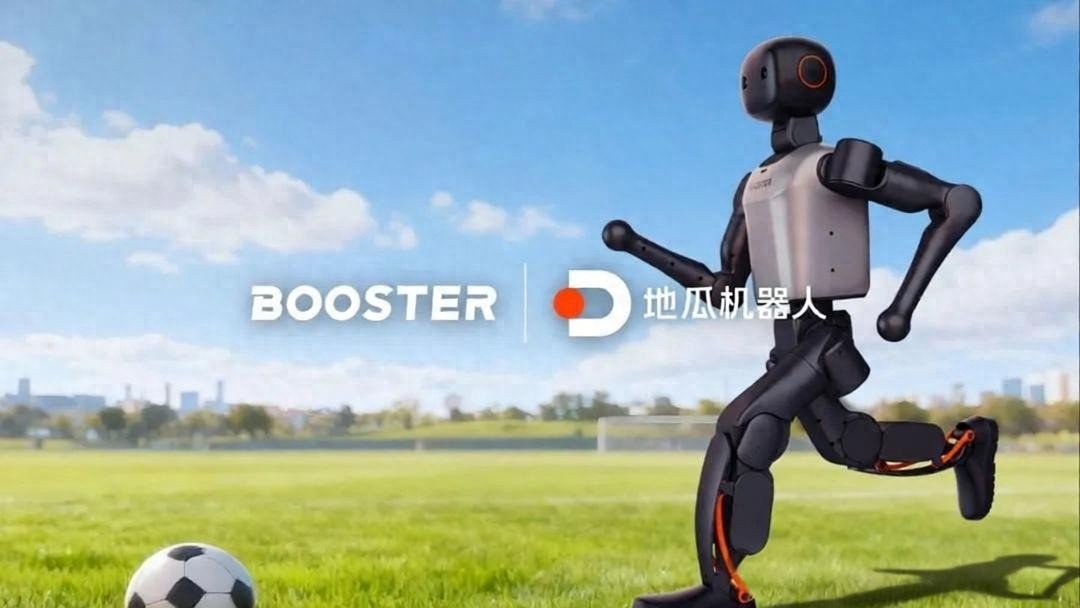
D-Robot positions itself as the shovel seller. It builds only chips, operating systems and developer toolchains and lets others build the robots, aiming to become the Wintel of the robot era and the Nvidia of embodied intelligence. As whole-machine humanoid makers cool and valuations soften, a body-free infrastructure play just took 400 million dollars, raising a question: why is robotics money migrating upstream?
Three layers, one goal: make building robots easy
The stack has three layers. On chips, the Sunrise series spans 5 to 560 TOPS, covering robots from floor cleaners to humanoids. On software, the RDK developer kit supports many algorithm deployments and open-source repositories so developers do not start from scratch. On ecosystem, the Geocentric acceleration programme serves more than 500 small maker teams, 100,000 developers and over 500 universities.
The flagship Sunrise S600, launched in November 2025, packs 560 TOPS and the key selling point of brain and body on one chip: an 18-core CPU for perception and decision plus a 6-core MCU for real-time motor control, all in a single die. Past robots needed one AI chip plus one external MCU, with cross-chip scheduling adding cost and latency. S600 does the job on one chip, saving a component and the delay.
Customers are buying. Sunrise-series chips have shipped more than 8 million units, and first-half 2026 revenue grew several-fold year on year. Within six months of S600’s launch, more than twenty leading customers including Unitree, UBTECH and PaXini adopted it, giving D-Robot over 50 per cent coverage of the embodied-AI field, with most projects at mass-production scale. Most of those 8 million units, though, come from mature categories like floor cleaners, mowers and drones, not embodied AI.
Why the financing keeps speeding up
The cadence is unusual: a 100 million dollar Series A in May 2025, a 120 million dollar B1 in March 2026, a 150 million dollar B2 in April, and the 400 million dollar C in September. Four rounds in two years total about 770 million dollars, with 670 million dollars raised across three rounds this year alone, B1 and B2 just twenty days apart.
The pattern signals a shift in how capital thinks. For two years it chased whoever could build a robot. Now it asks who supplies the things builders cannot avoid. Money is rotating from whole machines to upstream cores like chips and dexterous hands. D-Robot is the extreme version: bet on who wins, or bet on who everyone must use.
Its lineage underwrites the confidence. Split from Horizon in early 2024, the core team came from Horizon’s AIoT unit, and chief executive Wang Cong led edge-AI there from 2018. As Horizon kept funding D-Robot, its stake diluted from near 70 per cent to about 40 per cent and, from 31 March 2026, D-Robot left the consolidation, becoming an associate rather than a subsidiary, though Horizon remains the largest single shareholder and technology partner.
Taking on Nvidia
Horizon founder and chief executive Yu Kai said plainly at the 2026 Yabuli Forum that the rival in this field is still Nvidia. Nvidia’s Jetson has been the de facto robot-compute standard for a decade, holding about 69 per cent of the global robot SoC market by Yole’s count, with a million-scale developer base locked into CUDA. Agility’s Digit and Boston Dynamics’ Atlas run on Jetson Thor.
D-Robot does not win on raw specs. S600’s 560 TOPS sits between Nvidia’s prior Orin at 275 TOPS and the newest Thor, and the figures are not even directly comparable across INT8 and FP4. Its real cards are three. Cost: dropping the external MCU lowers bill-of-materials pressure on thousand-yuan consumer robots. Power: the Sunrise 5 draws about 3 watts against Thor’s 40 to 130 watts, fitting home-robot power budgets of 25 to 40 watts. And supply-chain security: export-control uncertainty turns the chip choice from a technical call into a risk call for many Chinese makers.
The ecosystem remains D-Robot’s weak flank. Nvidia’s JetPack, Isaac, Omniverse and GR00T form a simulation-to-deployment chain that CUDA inertia is hard to break. Wang Cong accepts this, saying simulation and training may stay on Nvidia while deployment shifts to D-Robot, a smart and risky position that captures the inference-deployment slice rather than the whole stack. The robot market, unlike autos, has no unified form, so D-Robot bets on horizontal division of labour: body makers focus on hardware and scenes, platform suppliers on standard compute, exactly the split Horizon already proved in cars.
Editor’s note: This is an adapted translation of the original OFweek report. It has been trimmed and restructured for readability for an international business audience. The full original (in Chinese) is at https://robot.ofweek.com/2026-09/ART-898890-12003-30704773.html.