On 27 July, Standard Robots filed a listing application with the Hong Kong Stock Exchange for the third time. The industrial robot company, spun out of the Harbin Institute of Technology in 2016 by founder Wang Yongkun, is chasing the label of first industrial embodied intelligence stock. The prospectus, updated with financials through the first four months of 2026, shows the strain underneath: revenue rose about 139 per cent year on year in those four months and overseas sales climbed to 67.9 per cent of revenue, yet the company still posted a net loss of about 61.84 million yuan.

Across 2023 to 2025, revenue reached 162 million, 251 million and 301 million yuan, crossing the 300 million line, but the company never escaped loss, with cumulative losses over three years above 300 million yuan.
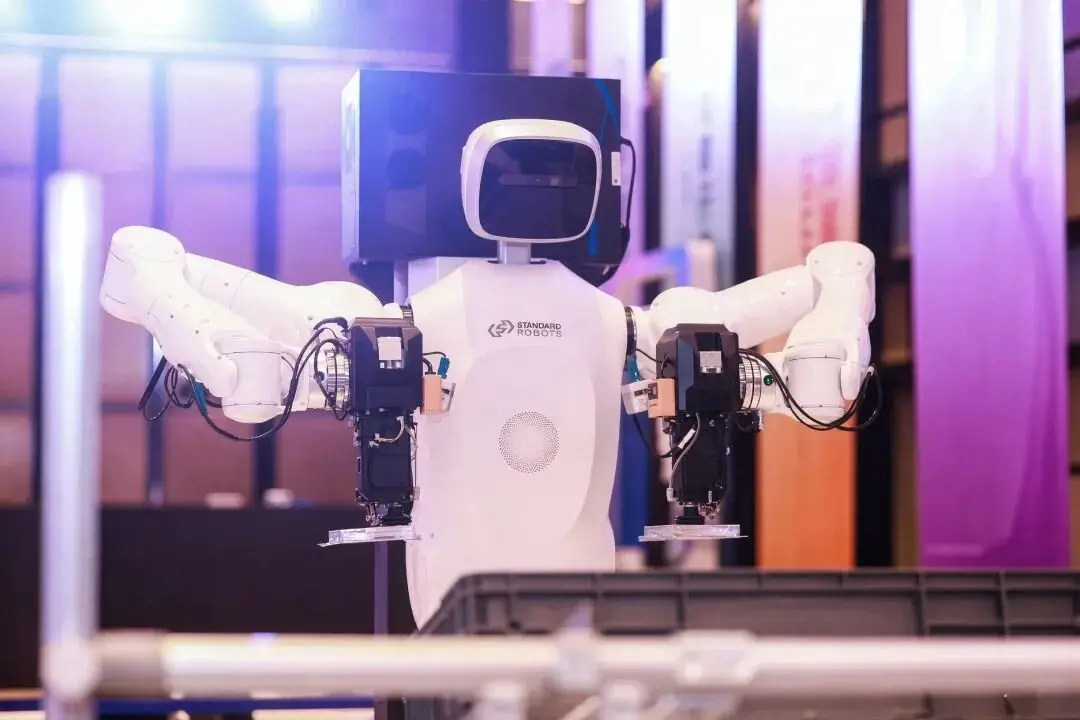
Standard Robots began in in plant logistics, first with laser SLAM modules, then moving to AMR bodies and full solutions. In 2021 it rode the new energy vehicle supply chain to become a well known supplier, launched the precursor to its RoboVerse software that year, and in 2025 rolled out the dual arm wheeled embodied robot DARWIN and a new RoboVerse release.
The overseas push is the growth engine. From a first Japan export in 2019, its products and solutions reached 15 countries and regions by 2024. Overseas revenue ran 20.28 million, 60.4 million and 76.25 million yuan from 2023 to 2025, lifting from 12.5 per cent to 24.1 per cent to 25.3 per cent of total revenue, then to 67.9 per cent in the first four months of 2026.
But that surge is concentrated. The prospectus admits the early 2026 overseas growth came mainly from large single orders from system integrators in Japan, Taiwan and Thailand, and integrator contributed revenue share rose from 50.6 per cent to 69.1 per cent. The model fits the industry norm: local integrators know the plant floor, while Standard Robots supplies standardised bodies, controls and support.
The margin gap is real but narrowing. In 2025 overseas gross margin was about 51.9 per cent against 36.7 per cent at home. In the first four months of 2026 the two sat at 47.3 per cent and 38.5 per cent. As orders scale, Standard Robots is pricing more competitively, so the overseas premium will not hold forever.
The deeper question is durability. Whether large overseas orders bring repeat purchases from end factories, whether embodied intelligence moves from delivery to profit, and whether cash collection keeps pace with expansion will decide how far this growth travels.


Editor’s note: This is an adapted translation of the original OFweek report. It has been trimmed and restructured for readability for an international business audience. The full original (in Chinese) is at https://robot.ofweek.com/2026-10/ART-898890-12003-30705538.html.