A serious push into physical AI
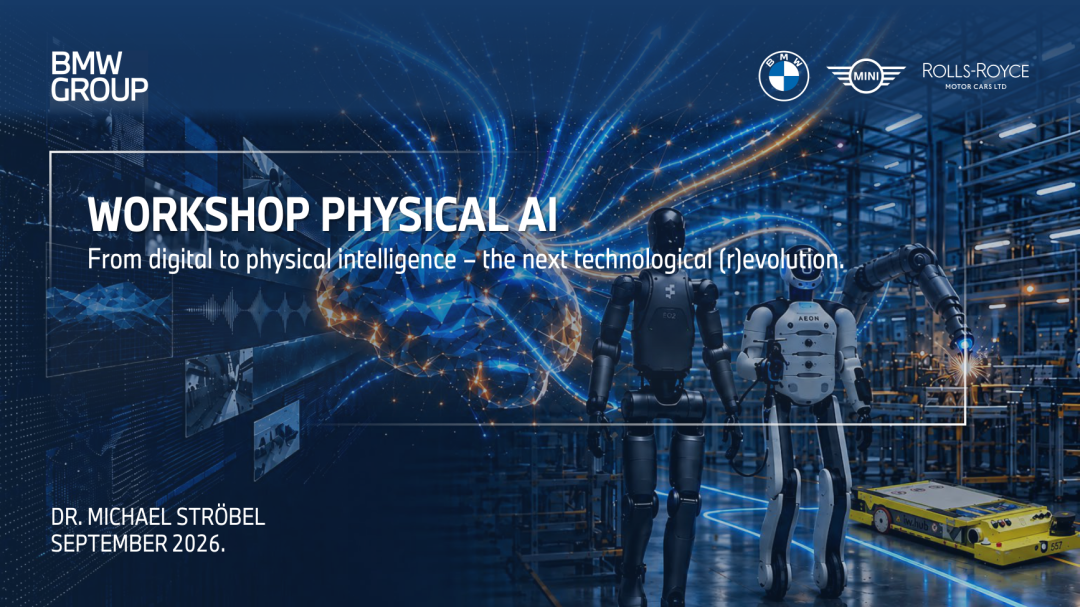
At its Capital Markets Day on 30 September, BMW used the physical-AI forum to show humanoid robots, autonomous guided vehicles and robotic arms working together, with the aim of turning that flexible productivity into a template for BMW plants worldwide. The headline figure is not a prototype video but time on a live line.
A Figure 02 spent eleven months in the body shop at BMW’s Spartanburg plant in the United States, on ten-hour shifts from Monday to Friday, logging more than 1,250 hours. It placed over 90,000 parts into more than 30,000 BMW X3 bodies at an 84-second cycle, with loading taking 37 seconds and placement precision kept above 99 per cent every shift. The target is zero human intervention. The robot walked about 1.2 million steps and covered more than 200 miles.
From welding to judgement
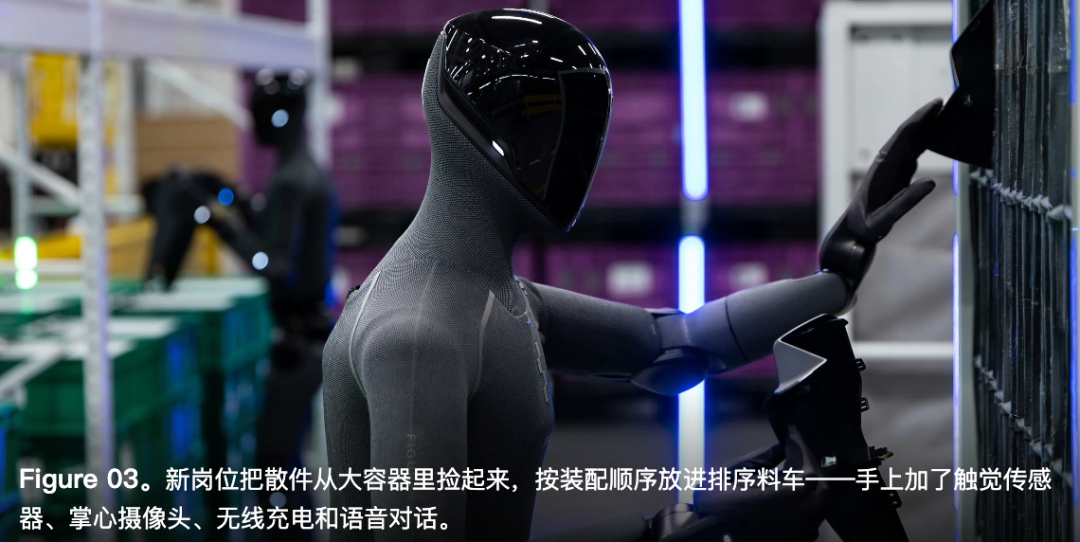
The 84-second cycle and five-millimetre tolerance demand placing a part into a weld fixture within two seconds while dodging people and equipment, and the forearm proved the main failure point. For Figure 03, BMW’s partner reworked the wrist electronics, dropping the distribution board and dynamic cabling so the wrist motor controller talks straight to the main computer. Across 70,000 steel parts repeated over ten months, Figure 02 held up well enough that in June 2026 it handed the job to Figure 03, whose new task is sorting loose parts into sequence carts for an automated tug to deliver to the line. The newer unit carries tactile sensors and a palm camera, uses soft materials to share space with people, runs wireless charging so it never stops for a cable, and speaks to line-side workers by voice.
When one machine rests, another takes over. The job has shifted from moving things to making choices, and the Spartanburg vice president for production control and logistics now calls the plant the birthplace of the humanoid on the factory floor.
Equipment follows the task
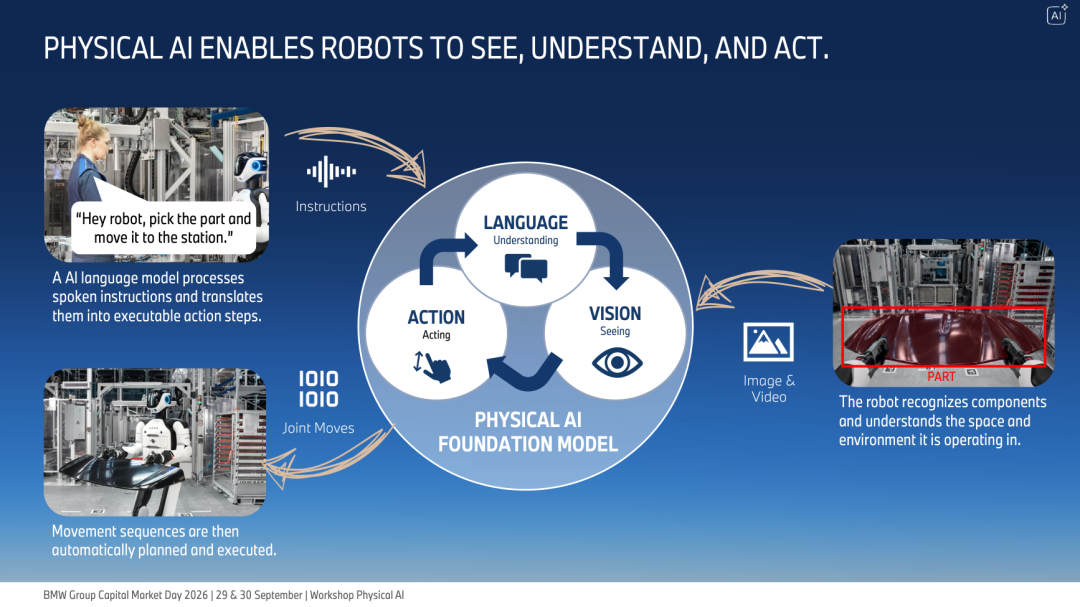
Car plants are already densely automated: welding, transport and painting run on six-axis arms with fixed fixtures, fast and accurate when the rhythm is steady. The problem is that parts and their arrangement change, bins are not always in the same spot, and stations move with the model and the production plan. A person adjusts by eye. A machine with a hard-coded program simply stops to be reprogrammed. BMW’s physical-AI combination is built to perceive a change, understand the task and execute, so a worker can name a job, the system hears it, a camera reads the part and the surroundings, and the robot plans and acts.
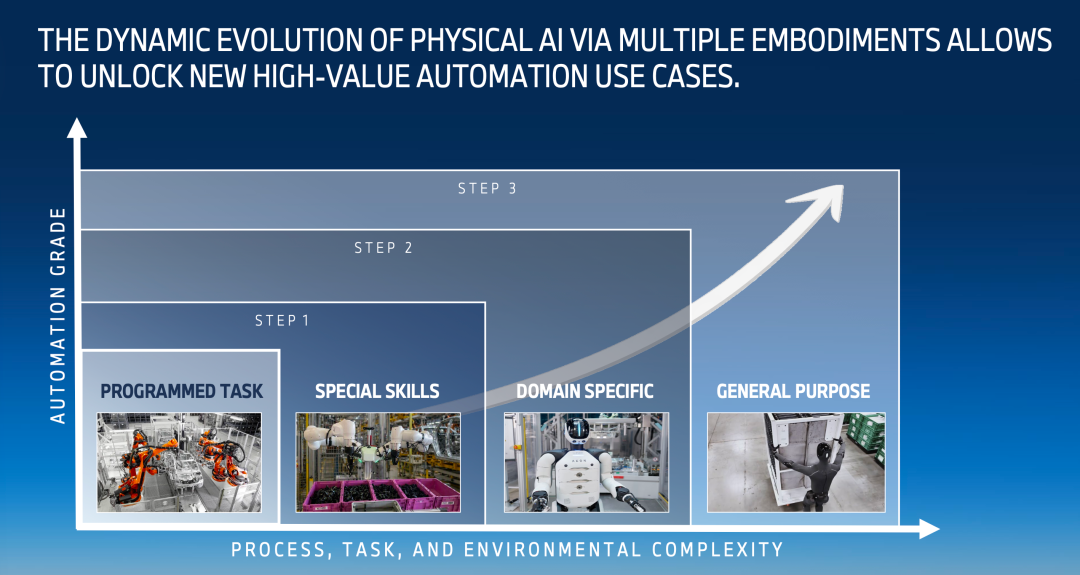
BMW benchmarks the climb in four steps: run a fixed program, master a specific skill, perform many tasks within one domain, and only last build a general robot that works across industries and environments. The value today sits at step two, giving mature industrial hardware a little adaptability so it can absorb a range of positional variation without learning everything at once.
A separate demonstration, AEON, sits at step three. Standing 1.65 metres tall and weighing 60 kilograms, with wheels instead of feet, a top planar speed of 2.5 metres per second, 24 sensors and an onboard Jetson Orin, it was trained in simulation with NVIDIA Isaac. Built by Hexagon Robotics, it began testing at a Leipzig plant in December 2025 on high-voltage battery assembly and component production, so workers no longer wear heavy protective gear for repetitive motions.
A reusable skill set
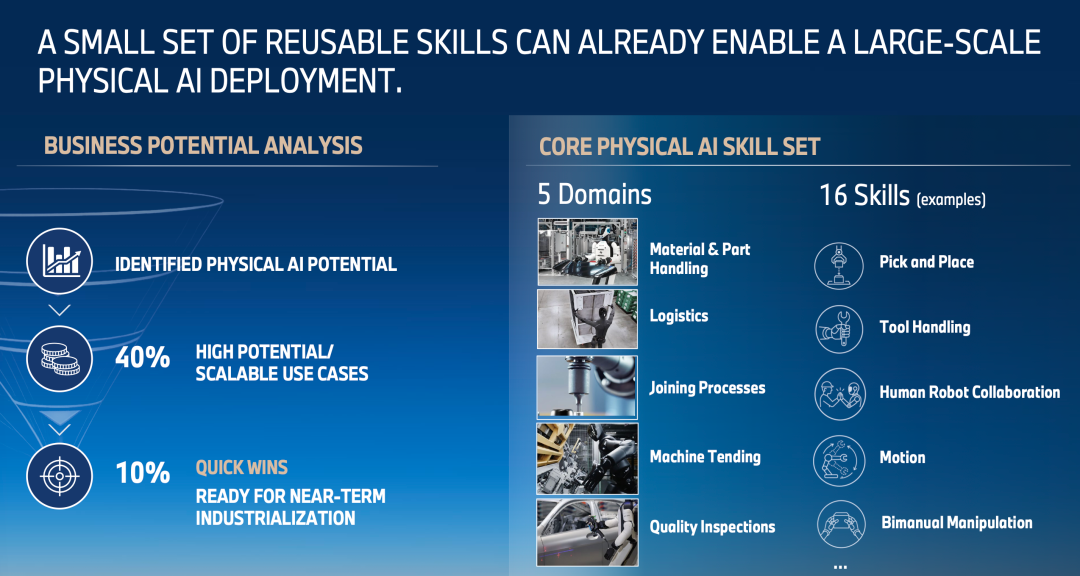
The logic is to pick hardware after the task. Fixed stations keep their arms, transport keeps its AGVs, and humanoids arrive only where manipulation must flex, so equipment follows the work. BMW is first building a reusable skill library around five domains: material and part handling, logistics, joining processes, machine loading and unloading, and quality inspection, expressed in concrete motions such as pick and place, tool handling, movement, dual-arm work and human-robot collaboration.
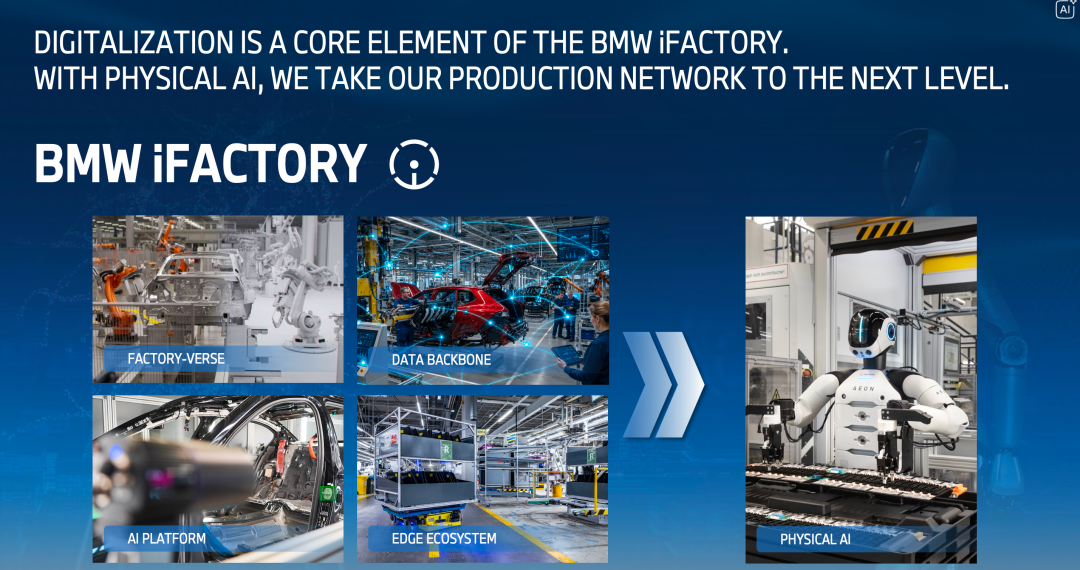
Of the physical-AI potential BMW mapped, roughly 40 per cent are high-potential, scalable cases and about 10 per cent are near-term industrialisation quick wins. Those figures describe the result of use-case screening, not the current automation rate or realised savings. The platform links an edge ecosystem, an AI platform and location services up to digital production integration, general AI models and BMW’s own data, with the skill set on top, all aimed at building once and deploying globally.
Train before you touch the line
A virtual factory supplies simulation, production planning, synthetic data and work plans so a robot can rehearse before it reaches the floor. Process experts feed remote operation and first-person video, capturing what makes a grasp stable or a step error-prone in a form a model can ingest. The real plant contributes actual flow, quality data and 3D scans, because no amount of simulation survives the occlusion and surprises of a live line.
BMW’s deployment looks deliberate, and the article’s closing note is telling: Tesla may already be far ahead on this path.
Editor’s note: This is an adapted translation of the original OFweek Robotics report. It has been trimmed and restructured for readability for an international business audience. The full original (in Chinese) is at https://robot.ofweek.com/2026-10/ART-898890-8460-30705590.html.