From a better wheelchair to a smart robot
Shuangpai Robotics, an ageing-care mobility-robot company founded in 2022, has announced an A+ round led by Daosheng Capital with Lingdong Venture following. From angel to A to this A+, the hard-tech firm has drawn repeated backing from front-line institutions and pushed the smart walker category into the spotlight.
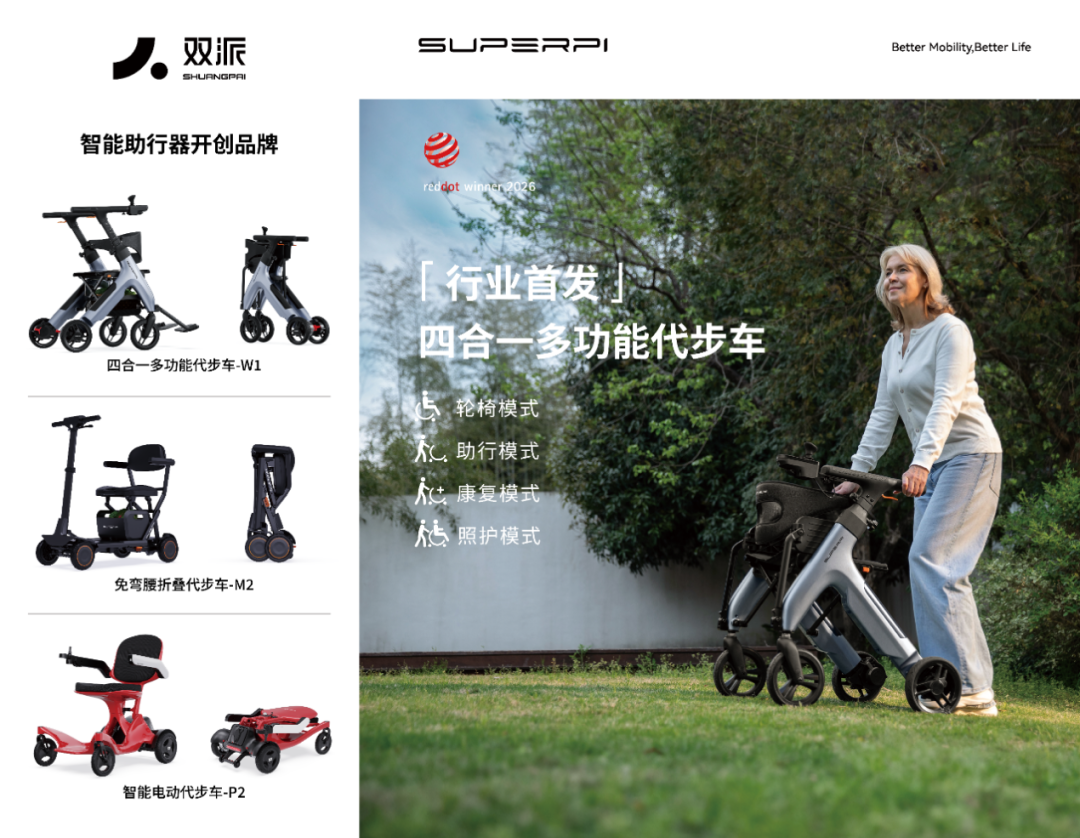
The market is full of wheelchairs and walkers, but most traditional aids only solve the basic “can it move” problem. Shuangpai instead fuses mobile-robot technology with rehabilitation aids. Its range includes the W1 four-in-one smart walker, the P2 long-range smart wheelchair and the M2 no-bend foldable scooter, each aimed at a different stage of an elderly person’s daily mobility.
The W1 alone switches between walking aid, wheelchair, rehab and assist modes, covering short trips, rehab and companion pushing, and it won a Red Dot design award. Before any large-scale launch it had already secured sizeable overseas orders and begun batch delivery.
Why capital is crowding the mobility scene
The investor mix carries a signal worth reading. Lead investor Daosheng Capital is a known robotics investor whose stars include Dobot, Deep Robotics, Shibit, Yiyou and Berr Laikar, with deep roots in embodied intelligence. Follower Lingdong Venture brings automotive-grade supply-chain and export experience. One brings the robotics ecosystem, the other imports mature auto-industry manufacturing, and that complement is what sets this round apart from a typical ageing-care deal.
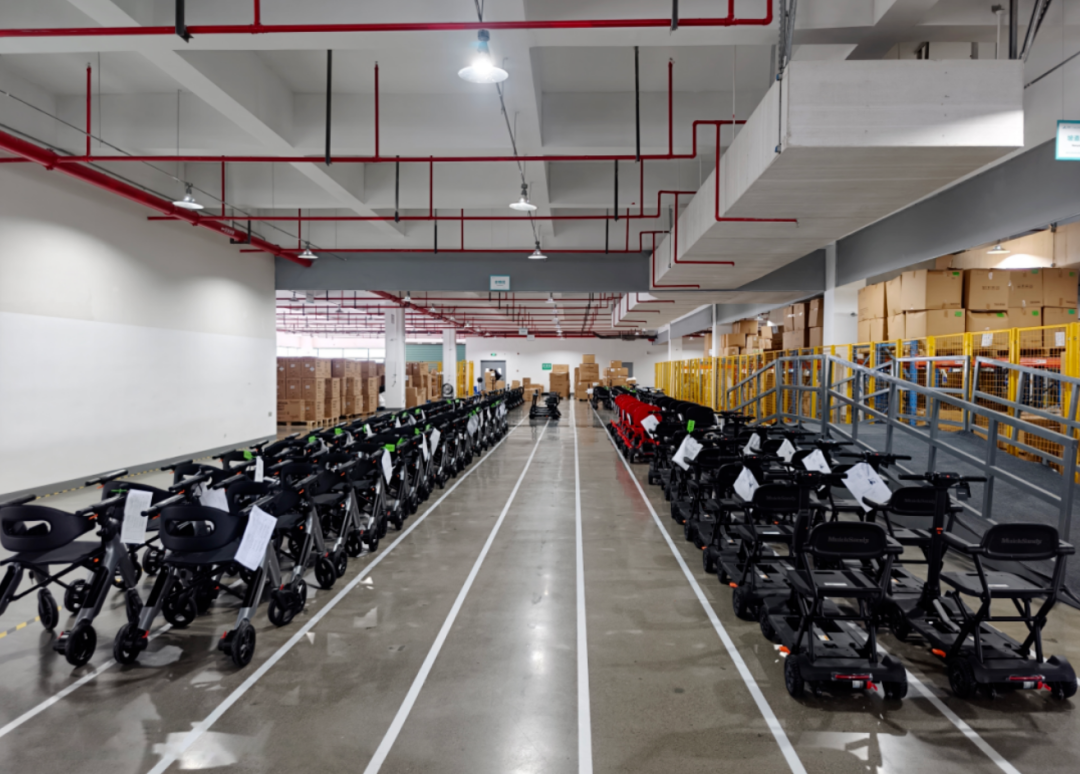
Daosheng partner Jia Jia has argued that embodied intelligence scales first not in labs but in real, paid, high-frequency scenes, and elderly mobility is a textbook case. Nearly 30 countries served, almost 10,000 orders in hand, capacity booked into late next year: those hard market numbers dissolve capital’s fear that ageing products please but do not sell.
The real difficulty of ageing-care products
Lingdong founder Shi Jianhui has said electric wheelchairs and smart walkers will become the core entry point for home-based ageing-care embodied intelligence, where voice companionship and assisted navigation take root only after the product first holds the market.
Even with a clear path, the sector carries old problems: low-level domestic competition, products that chase weight savings at the cost of stability, and the awkward truth that the buyer is usually the adult child while the user is the elderly parent, so mismatched needs leave devices unused in a corner.
Beyond hardware, software and service are the harder wall. This round funds self-developed core components, assisted driving, voice companionship and an intelligent operating system, plus overseas channels and capacity, all resting on talent and organisation. The destination is not a mobility machine but a moving assistant that guards an elder’s independent living.
Editor’s note: This is an adapted translation of the original OFweek Robotics report. It has been trimmed and restructured for readability for an international business audience. The full original (in Chinese) is at https://robot.ofweek.com/2026-10/ART-8321203-8420-30706654.html.
More from the original report