Robot rental prices have fallen, and they have fallen absurdly far.
At the start of 2025, a fully serviced humanoid robot rented for RMB10,000 a day. By October 2026, a Unitree U2 bundled with a technician costs under RMB3,000 a day, a decline of roughly 70 per cent.
On 9 October, UBtech signed a strategic cooperation agreement with C&D (Xiamen ITG Holding Group’s listed arm). The two sides did not negotiate over a specific robot. They negotiated over channel networks, supply chain, finance leasing, after-sales service and overseas markets.
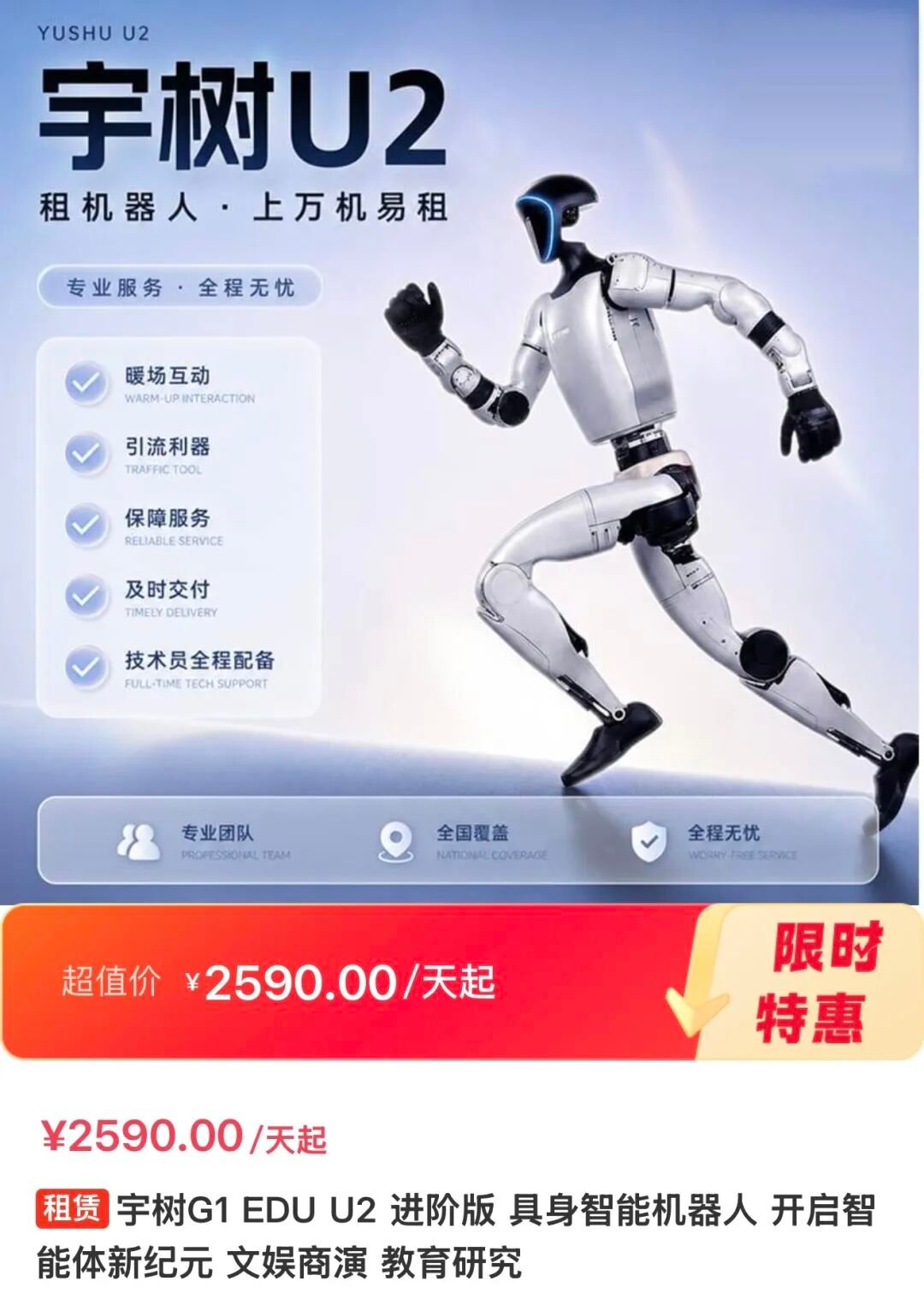
Put the two developments together and the conclusion is unavoidable. Supply of robots is rising fast. The ability to sell a robot, get it into a real scenario and keep it running has not risen with it. The industry bottleneck has moved from whether a machine can be built to how it gets delivered and actually used.
RMB640m of dealer revenue
Selling robots through dealers is not new.
Unitree’s prospectus shows 2025 main business revenue of RMB1.676bn, of which offline sales were 89.28 per cent. Dealer revenue reached RMB640m, or 38.18 per cent of the total.
Even a company as strong as Unitree cannot do without dealers. And Unitree asks more of its agents than taking delivery of stock. Agents need capital, a dedicated sales network and after-sales capability, and the company sets targets by country, region and industry.
That RMB640m shows external channels can already expand sales. It does not show that humanoid robots have a mature distribution system. Unitree sells humanoid robots, quadruped robots and components side by side. Some products are cheaper and more standardised, closer to what a traditional dealer knows how to quote, stock and service. The more standard the product, the more the channel resembles ordinary retail.
Car dealerships became a mature format only because the car, the sale and the repair process were all highly standardised. What UBtech is looking for now carries much heavier obligations.
In July, Boshi Group became UBtech’s first authorised partner for bionic humanoid robots in the Beijing-Tianjin-Hebei region. Beyond placing the U1 series in Mercedes-Benz and Hyundai dealerships, it handles demonstration, rental, scenario deployment, standardised delivery and official maintenance. By October, the C&D agreement had extended the scope to channels, supply chain, finance leasing and overseas operations.
The U1 series is positioned as a super-bionic humanoid robot, priced from RMB119,800 to RMB990,000. For a product whose purpose still needs explaining and whose usage pattern is not yet settled, a store only solves the question of where someone can see it. Whether the customer pays depends on what the robot can do on site and who is accountable when it fails.
Traffic does not pay the rent
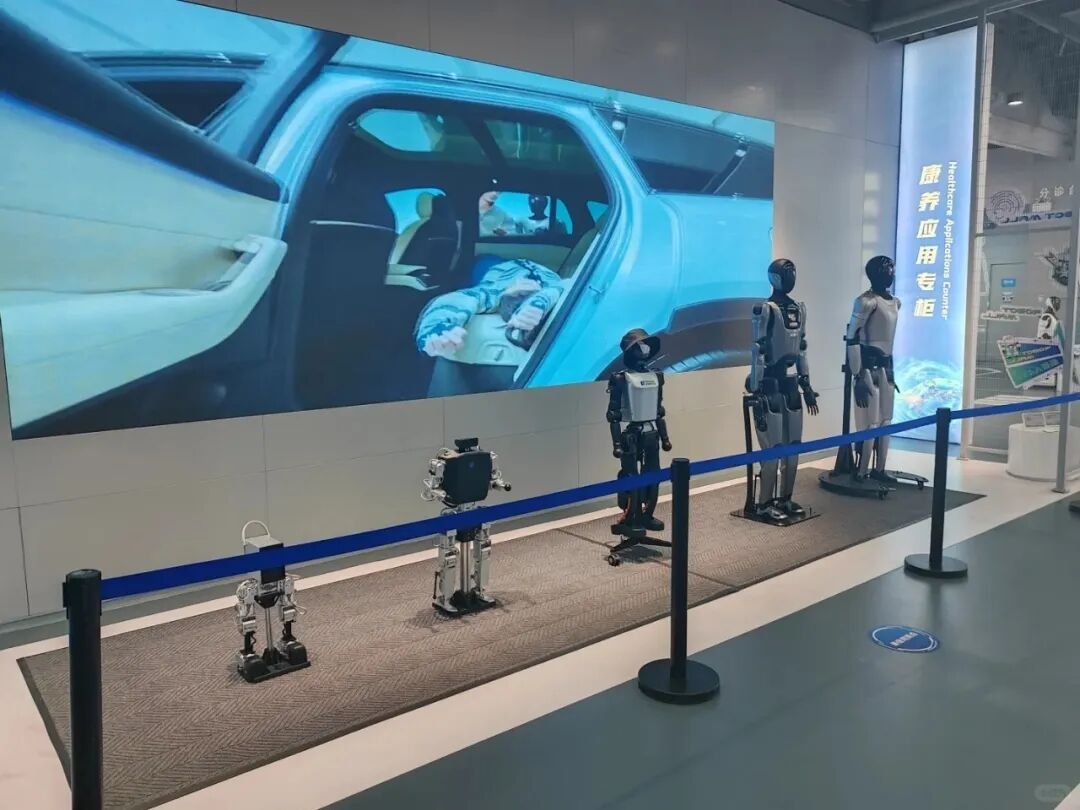
Robot 4S, 5S and 6S stores have appeared in clusters across Chinese cities since last year.
Beijing Yizhuang’s Robot Mall reported more than 100,000 visitors in its first year, turnover above RMB60m, and connections to over 150 partner manufacturers. It no longer sells only individual robots. Custom development, rental, finance and scenario matching are all part of the business.
That RMB60m is not broken out between hardware, rental and services, so it cannot be read as robot retail revenue. But it does show the format is trying to bundle development, leasing and finance rather than move boxes.
Another store lays out the cost structure more honestly. When a reporter visited a robot 6S store in Guiyang in May, footfall reached 500 to 600 people a day, and monthly operating cash flow still failed to cover full costs, with a gap of about 40 per cent.
Upfront investment was close to RMB10m. Upstream suppliers demanded full prepayment. A team of more than ten people cost over RMB100,000 a month in labour, while revenue came mainly from product sales and rental.
People arriving does not mean robots selling. Robots selling does not mean the channel is profitable. Yizhuang’s Robot Mall sits on an industrial platform that can combine display, tenant recruitment, developer services and scenario validation in one system. A commercially funded independent store carries demo units, rent, staff and repair costs on its own. Both are called 4S or 6S stores. They are not running the same arithmetic.
Three businesses wearing one name
Robot channels are harder than car dealers for a structural reason. Hardware and spare parts are not interchangeable across brands, product iterations are fast, and a demo unit can lose value before it is sold. Local engineers can only fix so much, and plenty of units still go back to the factory. The channel carries inventory risk while also doing demonstration, modification, commissioning and after-sales work on the vendor’s behalf.
A traditional dealer receives a finished product. A robot channel receives a product that still needs development on site. Call it the product completion layer: display explains the use case, rental lowers the cost of trying, integration finishes the task, repair keeps it running.
That layer carries a built-in contradiction. The less mature the product, the more the customer needs the channel. The more work the channel has to do, the harder it is to replicate.
Rental data shows the contradiction widening. Over the past year the number of rental operators has grown quickly, alongside the installed base. Unitree’s G1 with labour fell from RMB6,000 to 8,000 a day in the second half of 2025 to about RMB3,000. Agibot’s Expedition A3 fell from RMB12,000 to 13,000 in February to RMB7,000 to 8,000.
One rental operator said the market now has too many machines, and smaller firms cut prices to keep utilisation up. Operators used to earn on scarcity. What is valuable now is choreography, commissioning and on-site service.
Customer demands are getting harder at the same time. Where a client once rented one or two robots to dance, some now rent ten or twenty for a group performance, forcing small operators to scramble for equipment and staff. Others ask whether a robot can identify fabric, fold clothes and put them in a wardrobe, a request no action library can answer without pulling the robot maker, an arm supplier and a development team back together.
What fell in price was the scarcity of the machine. What did not fall was the cost of turning a machine into a finished result.
So the three businesses inside the word channel earn differently. Dealers earn on product turnover and carry inventory. Rental platforms earn on utilisation and care about rented days and renewals. Scenario service providers earn on completed tasks and care about deployment cycles, on-site labour and repeat purchase. One company can run all three, but store counts, brand counts and unit counts do not prove any of them works.
What matters is engineer density: how many engineers and how many days it takes to deliver one robot into one new scenario, and whether the next order can reuse the last programme, process, spare parts and repair knowledge. If every order needs fresh programming, fresh commissioning and another team on site, it is still a project business. Scale economics only appear when the same capability transfers across brands and customers.
That is why vendors keep opening channels while rental prices fall. Machines are multiplying, but customers will not absorb the full cost of trial and error on a device that cannot yet do the job on its own.
Channels cannot invent tasks. More stores only mean more people see a robot. The mark of a mature robot channel is not how many 4S stores opened. It is that each additional robot delivered no longer requires one more engineer standing beside it.
Editor’s note: This is an adapted translation of the original OFweek report. It has been trimmed and restructured for readability for an international business audience. The full original (in Chinese) is at https://robot.m.ofweek.com/2026-10/ART-898890-8420-30708237.html.