Hongfuhan Technology, a Shenzhen-listed precision manufacturer, has approved a plan to build a robot precision metal components production base in Wuzhong district, Suzhou, Jiangsu province, at a total investment of about RMB1.007bn with a two-year construction period.
The funding structure is explicit. RMB220m comes from the remaining proceeds of its initial public offering, including interest and cash-management income earned while those funds sat idle. The remaining RMB787m comes from the company’s own funds and self-raised capital.
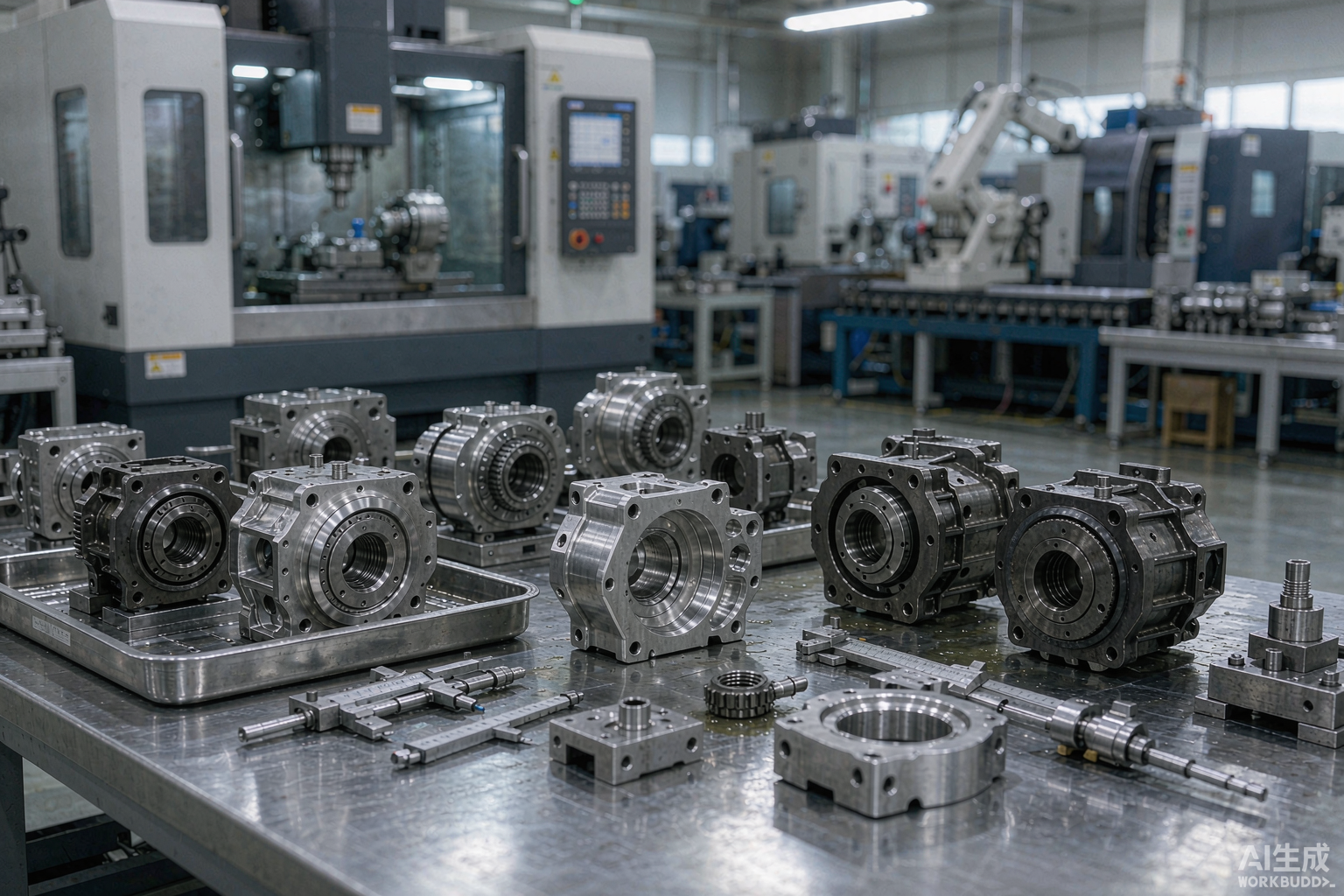
The project, named the Hongjinhan robot precision metal components production base, will upgrade existing plant, install high-precision production and testing equipment, and use the company’s existing precision machining teams to produce robot components such as CNC machined parts and injection-moulded assemblies.
A RMB480m order came first
The capital commitment follows a commercial one. In February 2026 Hongfuhan signed a three-party framework agreement with Guangdong Quanxiang Intelligent Technology and Jiangxi Xiexun Intelligent Equipment. Under the deal Hongfuhan supplies transfer robots, collaborative robots, charging robots, new-energy forklifts, robot modules and core components, for a contract value of RMB480m including tax.
That agreement matters because it converts a components supplier into a systems supplier. The company is not only selling machined metal. It is selling into robot programmes where the buyer has already committed to a bill of materials.
Profit is growing faster than revenue
In the first half of 2026 Hongfuhan reported revenue of RMB589m, up 65.7 per cent year on year, with net profit attributable to shareholders of RMB73.1m, up 221.6 per cent. Non-recurring-adjusted net profit reached RMB69.52m, up 232.5 per cent.
The gap between the two growth rates is the story. Profit rising more than three times faster than sales implies operating leverage, better product mix, or both. For a contract manufacturer that has spent years in consumer electronics, that is a meaningful shift.
The third quarter extended the trend. Preliminary results for the first nine months of 2026 point to net profit of RMB170m to RMB200m, an increase of 108.19 per cent to 144.93 per cent, with adjusted net profit of RMB166m to RMB198m.
An existing supply chain, redirected
Hongfuhan’s core business covers precision functional components, automation equipment, thermal solutions and photovoltaic storage products. Its end markets began in consumer electronics and ICT, then extended into solar and new-energy vehicles.
Its customer list is the credential that matters here. The company is already inside the supply chains of Foxconn, Avary Holding, Murata, BOE and Luxshare, and has accumulated the process discipline those relationships demand.
Technically, the bridge is short. Hongfuhan controls precision stamping, milling and brazing, and skiving brazing. Those processes extend naturally to robot metal components, where the constraint is rarely a new physics problem and more often tolerance, repeatability and cost at volume.
The company now describes its strategy as intelligent manufacturing plus thermal solutions plus industrial robots, aiming to build a platform spanning consumer electronics, AI data centres and industrial robots. That is the shape of a component supplier trying to become a solution provider.
Why the parts layer matters
China’s humanoid robot narrative is dominated by whole-machine companies and their funding rounds. The less visible but more consequential build-out is happening one tier down, where joint housings, harmonic reducers, screws, sensors and structural parts are qualified and brought to volume.
A base of this size tells you what the company expects. A two-year build for robot metal components implies order visibility beyond a pilot line, and it implies that the buyer side has moved from prototype quantities to production planning.
The risk sits in the same place as the opportunity. Component makers carry the capital cost of capacity before the orders arrive in full, and robot programmes slip. Hongfuhan is betting RMB1bn that this one does not slip far.
Editor’s note: This is an adapted translation of the original OFweek report. It has been trimmed and restructured for readability for an international business audience. The full original (in Chinese) is at https://robot.m.ofweek.com/2026-10/ART-8321201-8120-30707866.html.