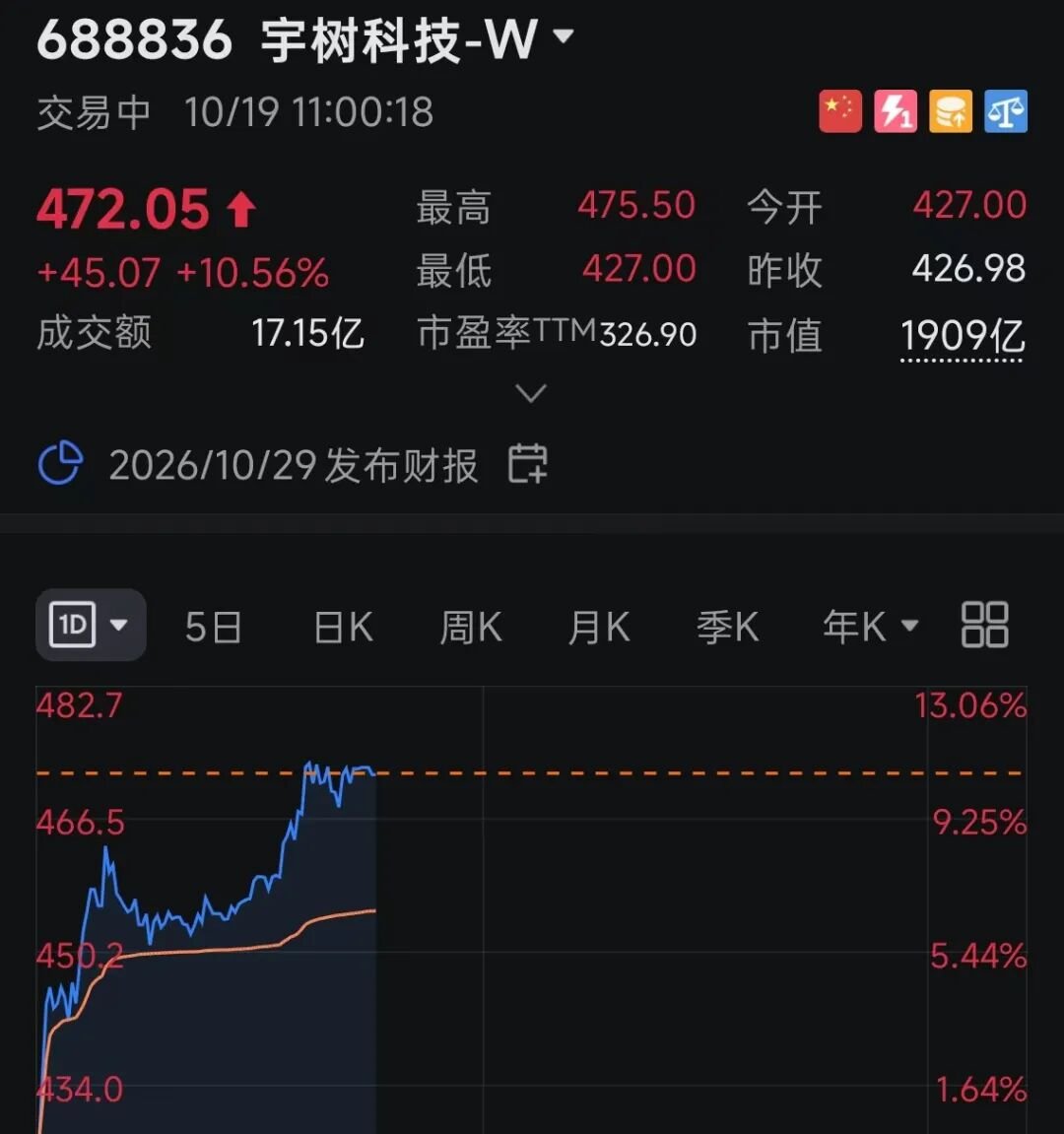
Unitree Technology rose more than 20 per cent intraday on 23 October, reaching a high of RMB 624 per share, with the market value returning to RMB 250 billion. Over the previous six trading sessions the stock gained more than 54 per cent.
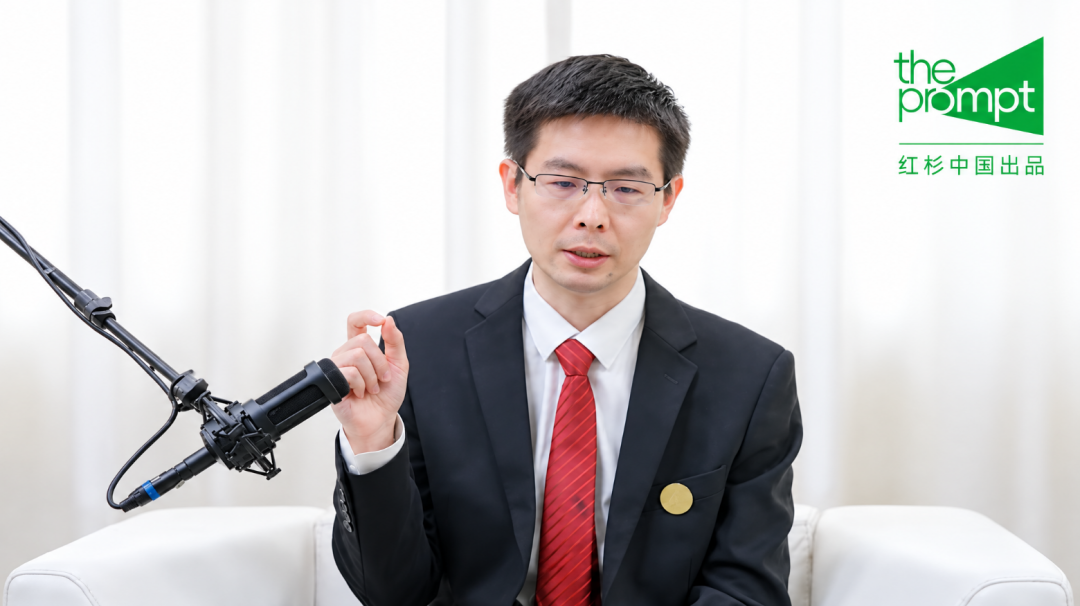
The trigger was a demonstration the day before. On 22 October the 2026 World Physical AI Conference and the Unitree partner ecosystem conference opened at the Hangzhou International Expo Centre, where founder Wang Xingxing showed a Unitree G1 humanoid copying a physical drawing under the control of OpenAI’s GPT-6.
According to Wang, GPT-6 controlled the robot with no pretraining and no pre-built planning algorithm. It could direct the G1 to change colour and to clean the brush.
The claim that moved the stock
Wang then gave his own forecast. The industry, he said, has already seen the first signs of physical AI being cracked, and it will probably happen within one to two, or two to three years.
He also set out the scale problem. Unitree currently produces tens of thousands of robots a year along with hundreds of thousands of joint motors and modules, and that capacity is nowhere near enough for mass adoption. If factories, shopping centres and homes each end up with a robot, the annual market could reach ten million units.
That is the pitch. The demonstration is the part that made it credible to a market that had spent two months punishing the same company.
From RMB 440 billion to a 60 per cent drawdown
Unitree listed on the STAR Market on 19 August at an issue price of RMB 150.80, the first humanoid robot company to do so. The stock opened at RMB 1,100 and the market value briefly exceeded RMB 440 billion, making Wang, then 36, the wealthiest entrepreneur in China born in the 1990s.
The heat did not last. Within two months the shares had fallen to around RMB 420, roughly 60 per cent below the peak, and more than RMB 200 billion of market value had gone. The market began to question whether robots that performed at exhibitions could earn money inside factories, and whether that justified a valuation in the hundreds of billions.
A rebound started on 19 October after a deep correction and extended into the 23 October session.
Why a US model matters to a Chinese listing
Unitree built its position on hardware cost. Quadruped robots sell for a few thousand yuan, and its humanoid was priced at RMB 99,900. Wang’s long-standing logic was that a robot is a machine first: make the hardware cheap and reliable, and plug in an external model once one matures.
GPT-6 changed the sequence. Testing the model on its own hardware, and Stanford’s use of GPT-6 to drive a G1 through an unfamiliar kitchen, reset internal assumptions about how much of the intelligence could be bought instead of built.
That is also the uncomfortable part for anyone pricing the stock. The capability increment in this demonstration came from a model Unitree does not own and cannot control, running on a body it does own and can manufacture at scale. The company is now explicitly pursuing hardware and physical AI in parallel rather than hardware alone.
Q3 results are due on 29 October. Until then the valuation rests on a demonstration, a forecast and a manufacturing base, which is roughly the same mix that produced both the RMB 440 billion peak and the 60 per cent decline.
Editor’s note: This is an adapted translation of the original OFweek report. It has been trimmed and restructured for readability for an international business audience. The full original (in Chinese) is at https://robot.ofweek.com/2026-10/ART-898890-12002-30708514.html.