Shenzhen is running the national AI Plus programme through its financial sector, and the city has begun organising the supply side of that market by name.
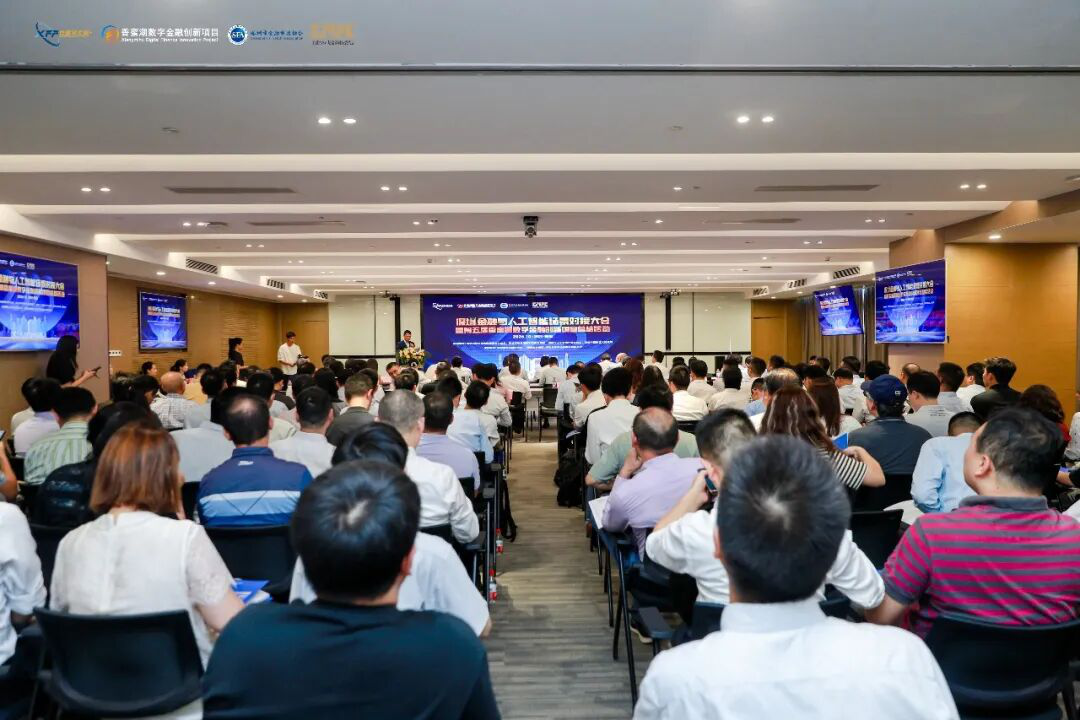
On the afternoon of 20 October, the 2026 Shenzhen Finance and Artificial Intelligence Scenario Matchmaking Conference, together with the fifth Xiangmihu Digital Finance Innovation awards, was held at the Bay Area International Fintech City. Government and regulatory representatives attended, alongside chief information officers from leading financial institutions, technology heads, fintech entrepreneurs and tenants of the Futian fintech park. More than 160 people took part.
Where the city says it stands
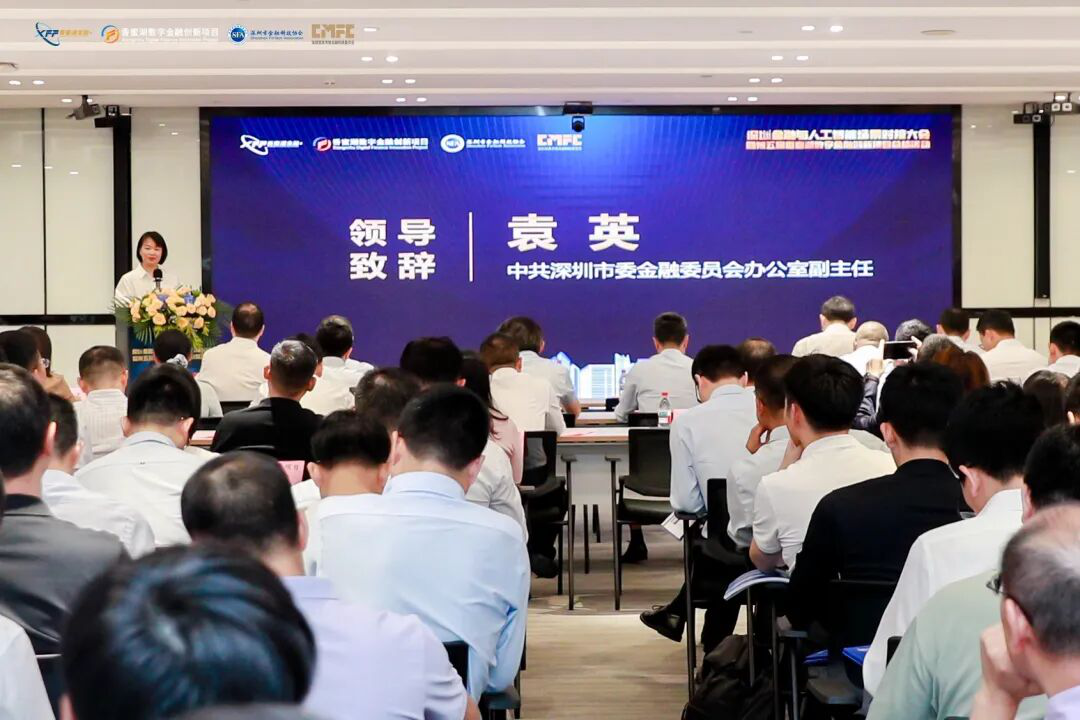
Yuan Ying, deputy director of the Shenzhen municipal financial committee office, said the past year of digital finance had been defined by AI enablement and twin-city resonance. In the latest Global Financial Centres Index, Hong Kong ranks first globally for fintech and Shenzhen sits directly behind it in third.
Her three priorities were policy supply, opening business scenarios and deepening Shenzhen-Hong Kong coordination, with the explicit aim of building a global fintech centre across the two cities.
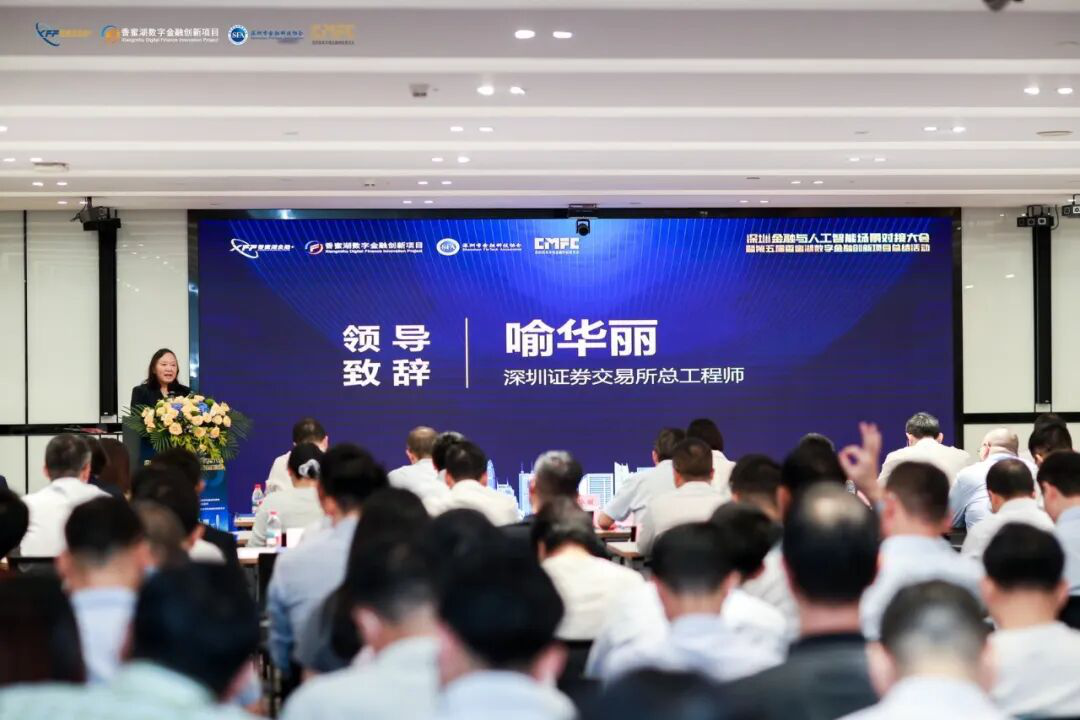
Yu Huali, chief engineer at the Shenzhen Stock Exchange, described an AI platform supporting the exchange group’s digital transformation, with large models and agents deployed in listed-company supervision, trading supervision and internal management. Specific applications already in use include a financial-fraud supervision model, an intelligent review assistant and tools for meetings, official documents and regulations.
The catalogue is the deliverable
The conference certified 23 projects out of 140 applications for the fifth round of the Xiangmihu Digital Finance Innovation programme, and published the accompanying 2026 blue book. The awards have run since 2018 and have received more than 500 applications in total, drawing submissions from banks, securities firms, insurers and funds.
This year’s intake included 13 comprehensive innovation projects, eight featured application projects, one emerging technology company and one digital transformation pioneer, selected with the help of an AI evaluation system for the first time. The winning projects cluster around large models and blockchain, with breakthroughs claimed in intelligent research, data security and the domestic substitution of financial systems.
More practically for buyers, the city published the Shenzhen Financial AI Solutions Collection 2026, compiled by the Shenzhen Fintech Association. It contains 53 solutions from 42 providers, spanning risk control, operations, customer service and investment research, all described as tested in real business settings and ready for deployment. The catalogue is intended to work as a public matchmaking layer between institutions and vendors, lowering the cost of trying the wrong thing.
The supply base and the policy instruments
A representative of the Shenzhen artificial intelligence office set out the industrial base: more than 2,600 AI companies, more than 300 city-level AI scenarios opened to industry, and a dedicated AI policy using computing vouchers, scenario support and industry funds. The city is also building AI-focused communities as part of its ambition to be a national AI pioneer city.
That combination, a dense vendor base plus a procurement channel into regulated buyers, is the part other Chinese cities have found hard to copy. Shenzhen’s advantage is not model research. It is having thousands of suppliers and a financial sector large enough to buy from them in the same postal code.
What is actually running
The institution presentations were more specific than the policy framing.
Ping An Group’s technology head, Wang Wei, described an AI in All approach, applying models across marketing, service, operations and management on top of security and data protection foundations.
China Merchants Securities’ chief information officer, Zheng Jixiang, set out a path to an AI-native securities firm through a unified AI base layer and multiple agents, with human-machine collaboration restructuring business processes.
Boshi Fund’s chief digital officer, Che Hongyuan, said the company’s BSBox platform covers research, advisory, trading and client service, supported by an enterprise knowledge and data hub and an intelligent research platform called Xuanji.
WeBank, the country’s first digital bank, has more than 100 vertical AI applications and more than 90 digital employees in production, covering risk analysis and precision marketing.
Ping An Property and Casualty’s chief technology officer, Wang Wei, said 93 per cent of motor insurance policies are now issued by robots, and described an Eagle Eye risk-reduction platform that uses data mining to make previously uninsurable drone assets insurable.
The regulators were in the room
The caution came from the supervisors. A representative of the National Financial Regulatory Administration’s Shenzhen bureau pointed to the guidance on safe AI development in banking and insurance as the start of a regulated phase, noting that Shenzhen’s banks and insurers have adopted AI widely while carrying algorithm, model, data and supply-chain risk. The message was lifecycle management, shared computing capacity and a firm safety floor.
A representative of the China Securities Regulatory Commission’s Shenzhen bureau said securities and futures firms have moved from isolated pilots to platform-scale deployment, with digital employees and advisory assistants in production at leading institutions, and warned that information security and business compliance risks require tighter controls.
For a foreign reader, the significance is structural. Beijing has spent two years pushing AI adoption through industrial policy, and Shenzhen is now converting that into procurement inside the one sector where errors are expensive and auditable. A published vendor catalogue with regulatory sign-off is a mechanism for scaling adoption without letting institutions each run their own procurement experiment.
Editor’s note: This is an adapted translation of the original Shenzhen News report. It has been trimmed and restructured for readability for an international business audience. The full original (in Chinese) is at https://www.sznews.com/news/content/2026-10/21/content_32197088.htm.