Chuguang Yueqian has disclosed a seed round of several hundred million yuan, with Chentao Capital, Xiaomi Strategic Investment, BV Baidu Ventures and Xinhe Capital all participating. The company is less than five months old.
Its founder carries a specific reputation. Zhang Ying was the core technology lead for Horizon Robotics’ assisted-driving system and is known in the industry as the end-to-end war god. He led teams through three generations of driving architecture, from map-dependent to mapless to single-stage pure-vision end-to-end, pushing a production system to roughly the level of Tesla’s full self-driving stack.
The obvious question is why a driving veteran would move to robots. Zhang’s answer is that the end-to-end method validated in autonomous driving is a perception, reasoning and execution pipeline, and nothing about it requires a steering wheel. The same structure generalises to manipulation in unstructured environments, where a model has to perceive in real time, reason quickly and act precisely.

The benchmark result
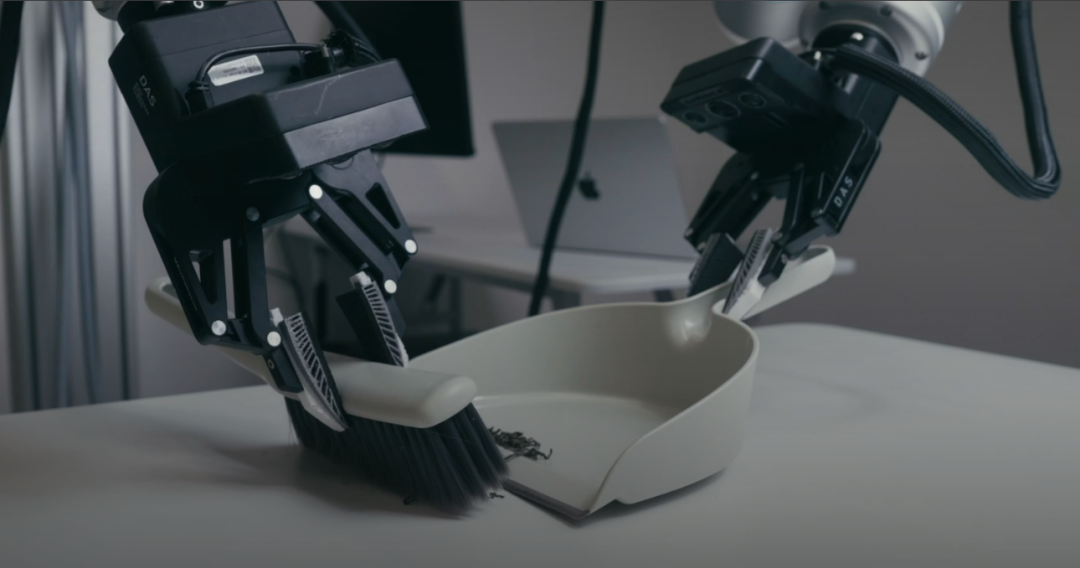
On 23 September the company’s core product, Simate-beta, took first place on the RoboDojo leaderboard with an average score of 33.95 and a success rate of 27.96 per cent, ahead of GPT-6 Astra and DeepMind entries. On a physical robot it completed a multi-step tea-brewing task, demonstrating state tracking and environmental adaptation across a continuous sequence of actions.
Leaderboards get climbed. Xingdong Jiyuan and LiberAI moved up soon afterwards. What Zhang is betting on is not a snapshot of first place but a research method he calls physical recursive self-improvement: getting AI to work out how to make robots smarter.
His AutoResearch system runs the loop of proposing hypotheses, designing experiments, executing validation and analysing results automatically, with human researchers setting direction and constraints. According to the company, researchers from MIT, Tsinghua, Peking University and Hong Kong University of Science and Technology have entered the platform’s beta programme.
The bottleneck is the research process, not the model
The uncomfortable truth underneath this is that physical AI’s constraint has never been model size. It is the speed of the research paradigm. Each new task requires fresh data collection, fresh model training and fresh engineering tuning, so iteration throughput is capped by headcount.
When AI starts researching AI, dozens of routes can run in parallel, failing directions are eliminated in simulation, and only the promising ones reach physical hardware. That is the mechanism behind a three-month climb to the top of the leaderboard, and it is a claim about throughput rather than about intelligence.
Read as an industry signal, Zhang’s move is one data point in a larger migration. Senior autonomous-driving engineers are moving into physical AI in numbers, robot development is becoming agent-driven and infrastructure-shaped, and the field is reorganising around understanding and intervening in the physical world.
The method that was sharpened in a production driving programme is now being pointed at a harder problem with worse data. Whether it transfers is the open question, and the answer will not come from a leaderboard.
Why the capital moved this fast
A five-month-old company raising several hundred million yuan at seed stage is unusual in any market. In China’s embodied AI sector it is now routine, and the composition of the investor list explains it. Xiaomi’s strategic arm and Baidu’s venture arm are both buying access to the model layer rather than to a hardware line, and both have distribution if a model proves portable.
Chentao Capital has a long record in autonomous driving and robotics, and Xinhe Capital fills out the syndicate. The round is a bet that the transfer from driving to manipulation happens at the software layer, where a small team with the right method can move faster than a large one with better hardware.
The counterargument is equally simple. Driving has cheap data, a bounded task and a legal framework that forces convergence. Manipulation has expensive data, an unbounded task set and no convergence pressure at all. A method that produced a production-grade driving stack in four years may produce demonstrations in robotics and nothing else.
The company’s own framing acknowledges the risk. Physical recursive self-improvement is an argument about how fast the field can learn, and it is being made by a team with four months of operating history and no disclosed commercial deployment.
Editor’s note: This is an adapted translation of the original OFweek report. It has been trimmed and restructured for readability for an international business audience. The full original (in Chinese) is at https://robot.ofweek.com/2026-10/ART-8321205-12003-30707448.html.