CATL has spent a decade arguing that electric passenger cars can beat petrol on cost. It is now making the same argument about the least forgiving segment in road transport: long-haul heavy trucks.
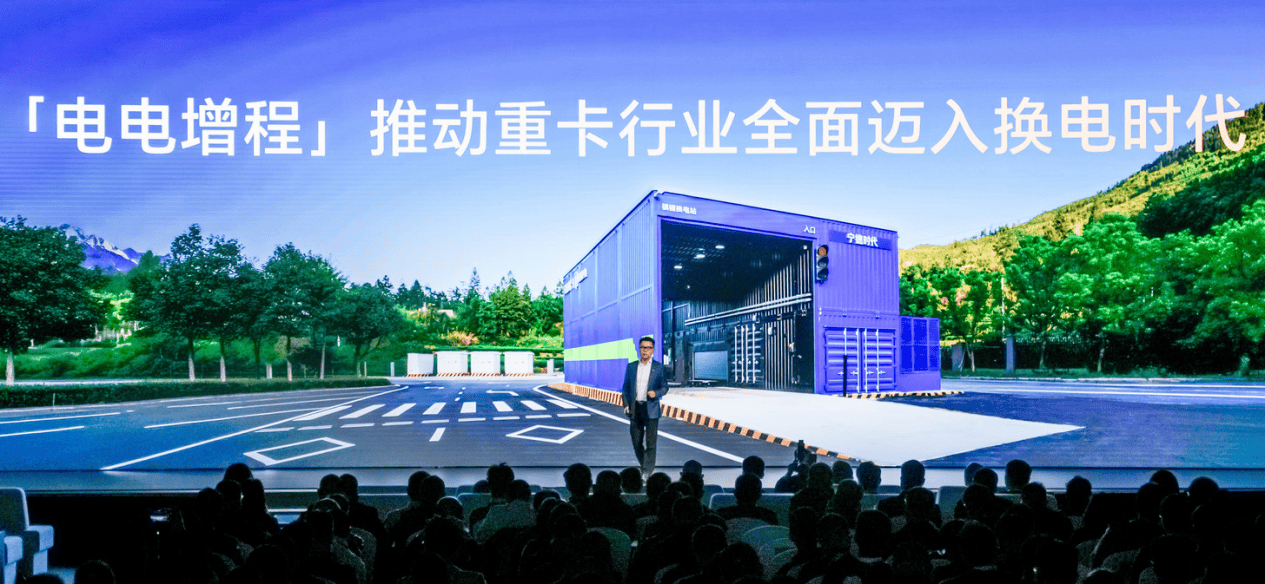
The product is Tianxing II, marketed as an electric-electric range extender. The architecture splits the battery in two. A 77 kWh pack stays on the truck as its own asset. The main traction battery sits underneath and is swapped, not bought, at a Qiji station.
Removing the upfront number
Diesel trucks win on purchase price. The battery is what breaks the comparison. By renting the main pack instead of buying it, CATL claims the initial outlay falls to the same level as a diesel heavy truck, before purchase subsidies, flexible rental terms and low-interest instalments are counted.
The rental meter follows the vehicle rather than the calendar. Billing starts when the truck goes into service, tracks peak and off-peak seasons, and can be suspended for up to two months ahead of a resale, so an operator is not paying rent on a parked asset.
The number that matters is the state of charge on return
Battery-swap trucks have always carried a hidden penalty. Operators return to the station at roughly 30 per cent state of charge because they dare not run the pack flat. With the range extender as a backstop, CATL pushes the return threshold below 5 per cent per cent of capacity, which is real asset utilisation recovered on every cycle.
If the main pack empties, the system switches to the extender battery in milliseconds, so the truck keeps pulling instead of stopping. A Qiji station completes a swap in five minutes.
CATL puts the residual-value advantage at 10 per cent against the industry average for used trucks carrying its batteries, and argues the rental structure lifts the resale ratio towards diesel parity.
Standardised blocks, not bespoke packs
Qiji defines swap blocks by physical size rather than by vehicle model. The 260# block carries 432 kWh for 3.8 metre wheelbase trucks, the 300# block carries 513 kWh for 4.2 metre wheelbases. Together with the 77 kWh pack they form a platform that CATL can populate with different chemistries and capacities later.
The third-generation station keeps the five-minute swap and a 99.99 per cent first-attempt success rate, while lifting daily throughput 28 per cent and cutting build cost 10 per cent.
On the economics, CATL runs the case at 400 km a day. Annual energy cost falls by RMB 130,000 against diesel. Over three years, total cost of ownership is RMB 70,000 below a battery-purchase electric truck and more than RMB 460,000 below a diesel heavy truck.
Who is actually buying
CATL signed cooperation agreements with China Post, SF Express, YTO Express, STO Express, Hunan Steel, Chongqing Logistics and others, with 13,000 trucks in the first wave.
The network is the constraint. Qiji has five corridors in stable operation, including Guangdong to Shanghai and Chengdu to Wuhan, with more than 5 million km of cumulative operating distance. The plan calls for 900 stations by the end of this year, 2,000 by 2027, and 10,000 at maturity, aligned with a national programme to build 30,000 km of zero-carbon freight corridors.
Editor’s note: This is an adapted translation of the original Sohu Auto report. It has been trimmed and restructured for readability for an international business audience. The full original (in Chinese) is at https://www.sohu.com/a/1091152168_120774496.