On 12 October, Hangzhou Xinjian Electromechanical Drive answered the Shenzhen Stock Exchange’s first round of questions. A company that spent 27 years on precision transmission had become the most closely watched listing candidate in the humanoid supply chain, because it supplies the screw segment for Tesla’s humanoid programme and the component base for BYD’s cars.
Screws are the part that decides whether a robot stands up straight and walks smoothly. They convert the rotation of a motor into linear thrust, and securities house Zheshang calls them the joint and tendon of a humanoid, at up to 20 per cent of single-unit value.
Why the screw is expensive and hard
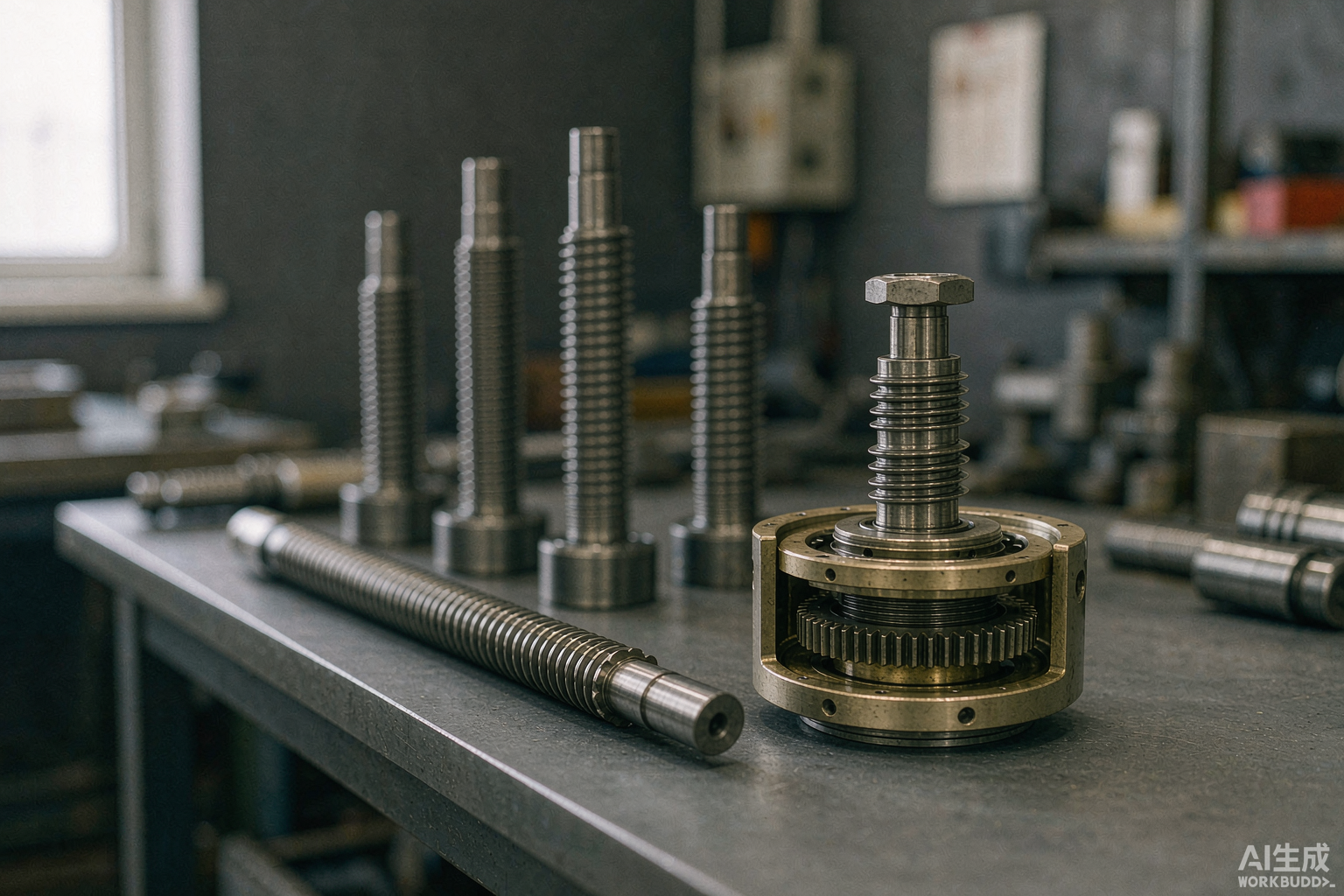
Industry estimates put 14 planetary roller screws and 12 miniature ball screws inside a third-generation Optimus, with the roller screws alone accounting for about 19 per cent of the bill of materials. Expensive parts are usually difficult parts. The barrier sits in the forward design of the tooth profile, the precision grinding of the internal thread and the domestic supply of high-accuracy grinding machines.
Third-party data puts the four foreign names Rollvis, GSA, Ewellix and Rexroth at roughly 78 per cent of China’s planetary roller screw market in 2023. Japanese and European brands hold more than 55 per cent of ball screws. A Chinese humanoid that wants its own tendons has to get past a component that foreign suppliers have controlled for years.
Xinjian is one of the first domestic companies through that door. Open-source securities treats it as a significant supplier in the Tesla humanoid screw chain and argues the listing will give the asset class a valuation reference.
The customer number that fell
The inquiry reply disclosed a set of post-period sales figures that made the market nervous. A customer referred to as Company A, described as a leading global robot manufacturer, contributed RMB 16.59 million of revenue in 2025, then RMB 1.52 million in the first half of 2026, then RMB 224,400 across July and August.
Xinjian’s explanation is that Company A cut development and trial-production orders as it moved into volume ramp. The nature of the order changed from sampling to batch production, and the value went through the gap between the two.
Global humanoid shipments ran between 13,000 and 18,000 units in 2025, mostly research and industrial pilots. The whole industry sits on the eve of a switch from sample to product. Zheshang expects shipments near 18,000 units in 2025, up about 508 per cent, close to 60,000 in 2026 and 500,000 by 2030.
Margins falling for three years
Gross margin slid from 34.04 per cent in 2023 to 30.46 per cent in 2024 and 29.7 per cent in 2025. The decline comes from the legacy car business. Gross margin on seat horizontal drives fell from 34.58 to 29.19 per cent, precision metal transmission parts from 34.54 to 27.08 per cent, and screws for automotive use from 32.43 per cent in 2023 to 13.15 per cent in the first half of 2026, as carmakers pushed cost cuts upstream.
The robot business is the highest-margin line the company has. Embodied AI gross margin ran at 62.37, 70.31 and 59.53 per cent from 2023 to 2025, down but still far above the legacy business. The profit structure is a transition: the old money is getting harder and the new money is not yet big enough.
The RMB 2.8 billion question
The contested number is the RMB 2.812 billion investment total, of which RMB 2.519 billion is meant to come from the listing. The main project is a plant for one million humanoid and automotive planetary roller screws a year, with RMB 202 million for a research centre and RMB 100 million for working capital.
Against current scale the arithmetic is tight. Existing screw capacity is 1.5 million units a year, utilisation was 72.7 per cent in 2025, and sales were 982,200 units. The new plant adds more than the current sales volume. The company concedes that if capacity is not absorbed, gross margin comes under heavy pressure. It held about RMB 91.33 million of cash at the reporting date, generated RMB 95.37 million of operating cash flow in 2025, and saw RMB 1.056 billion flow out through investing activities, mostly into wealth products and long-term assets.
In conventional manufacturing that pace is hard to justify. In this chain it is the consensus. Sanhua Intelligent Controls and Tuopu Group are expanding. Beite Technology’s first roller screw phase is planned at 800,000 sets, Wuzhou Xinchun at 980,000. Everyone is building lines against the same premise, that demand in the first year of volume production will arrive.
Editor’s note: This is an adapted translation of the original OFweek report. It has been trimmed and restructured for readability for an international business audience. The full original (in Chinese) is at https://robot.ofweek.com/2026-10/ART-8321201-12003-30708707.html.