After landing manufacturing and logistics reference customers in Europe, UBTech has started filling in the piece it did not have: a local network.
On 22 October the Shenzhen-listed company, trading in Hong Kong as 09880, signed a memorandum of understanding with ChinaEU, an international association headquartered in Brussels, to deepen cooperation in the European robot market. The two sides will work commercial opportunities in manufacturing, logistics and other industrial and commercial segments, aimed at lifting productivity and operations with humanoids.
The difference from earlier deals is the mechanism. This one is about matchmaking and landing, not shipping equipment. ChinaEU will use its industrial network, institutional relationships and local experience to open doors, assess opportunities, connect UBTech with customers and partners, and explain European requirements, integration standards and regulation. UBTech brings its existing partnerships and dealer network.
Airbus, then the DACH channel
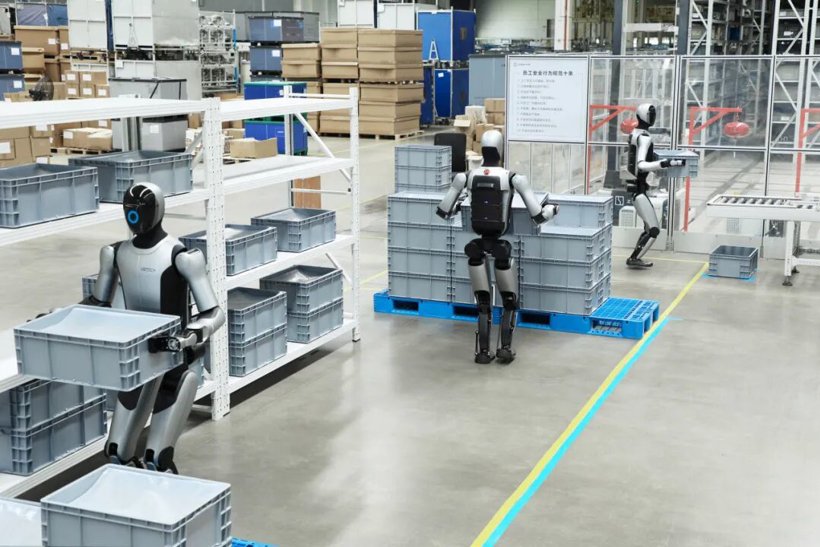
This is not the company’s first entry into Europe. In January, Airbus bought the industrial Walker S2 for its manufacturing plants. In April, UBTech signed Terra Robotics as exclusive distributor for Germany, Austria and Switzerland, and the integrator ordered the first dozens of full-size Walker S2 units for long-term pilots at sites including a ROSSMANN logistics centre.
Airbus and ROSSMANN are point references. The ChinaEU agreement targets the layer above them: resource matching, regulatory alignment and market access.
European manufacturing and logistics automation demand is strong, but the market is fragmented, the regulation is strict, and buyers expect data security and local service. Exporting hardware alone does not clear those hurdles. UBTech’s approach is shifting from exporting products to exporting scenarios and an ecosystem.
The memorandum is a framework, with no purchase value or unit count attached. How much becomes business depends on project-level follow-through.
Set against the wider Chinese humanoid push abroad in 2026, the signal is still clear. Competition has moved from demonstration at home to channel building, compliance capability and delivery capacity in real overseas industrial settings.
For UBTech the test is not how many memoranda get signed. It is whether ten-thousand-unit capacity can be absorbed by overseas orders, and whether the model of Chinese hardware plus local integration actually works.
Editor’s note: This is an adapted translation of the original Gasgoo report. It has been trimmed and restructured for readability for an international business audience. The full original (in Chinese) is at https://www.gasgoo.com/apps/e060bad9eca91db7f01403fc7120041f/robot/news/70475882-/.