Keda Intelligent Technology has filed an application for the main board of the Hong Kong Stock Exchange, with Huatai International and Guoyuan International as joint sponsors. It is the company’s second attempt this year, after a first filing on 19 January. If it clears, the company, which has traded on ChiNext since May 2011, joins the small group with dual A-share and Hong Kong listings.
The shares closed at RMB 9.29 on the mainland on the day of the filing, up 5.93 per cent, for a market value of about RMB 7.27 billion.
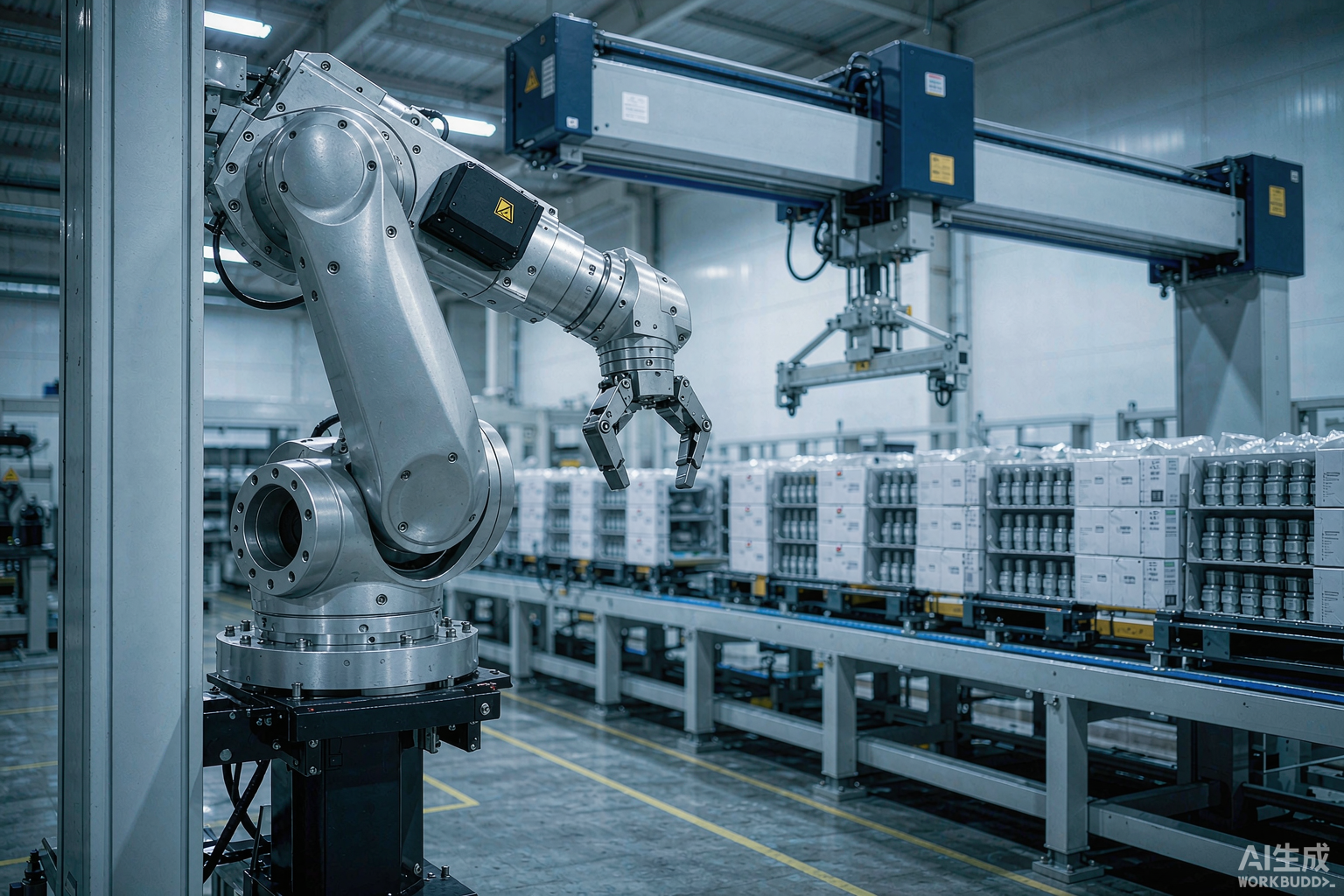
Where the money goes tells you what the story is now. Proceeds are earmarked to defend the technology position in power equipment and storage and in robots, to deepen AI integration and broaden scenario coverage, to expand sales networks and capacity at home and abroad, and to develop equipment for AI data centre scenarios and for quantum technology fused with grid applications, alongside working capital.
A power equipment company that bought a robot business
The predecessor was incorporated in 2002 as a smart distribution and consumption company with seed money from the University of Science and Technology of China. The category itself has been cyclical: State Grid began exploring distribution automation in the early 1990s, the pilot wave cooled around 2000, and the segment only restarted with the smart grid programme in 2009 before scaling in 2010. Keda rode that cycle to an early listing.
It entered robotics in 2014 by paying RMB 526 million for Yongqian Electromechanical, a gripper business. Acquisitions followed: Guanzhi Automation in welding line integration, Huaxiao Precision in automotive industrial intelligence, and Qiancheng Machinery in two steps. Qiancheng, now called Kezhi Digital Energy, was among the first suppliers to the second phase of Tesla’s Shanghai plant.
In 2018 the controlling shareholder agreed to sell 5 per cent to a JD.com affiliate for RMB 618 million, and the company signed a strategic partnership with Beijing JD Century Trading covering manufacturing upgrades for consumer goods suppliers, industrial IoT data and smart warehousing.
The year the goodwill landed
2019 was the reckoning. Revenue fell 35.63 per cent to RMB 2.313 billion and the group reported a net loss attributable to shareholders of RMB 2.643 billion, a swing of 772.55 per cent, after taking RMB 1.609 billion of goodwill impairment across the four acquired businesses. The robot assets bought at a premium became a weight on the balance sheet in a downcycle.
From that year the company began subtracting. In 2023 it sold the AGV and body-in-white welding line businesses, both lower margin, and pulled resources back to segments it could defend.
Two decades on, the company runs on two engines. In digital energy it supplies integrated source, grid, load and storage solutions and is one of the few domestic firms developing distribution switches, terminals and core components in house. It has supplied China’s largest state grid company for more than twenty years. Frost & Sullivan ranks it second nationally in integrated circuit breakers and second in feeder terminal units by 2025 revenue.
First in grippers, first in lithium stackers
The robot side carries the harder evidence. Keda is one of the few Chinese industrial robot makers with both the technology and the ability to land at scale across many scenarios. Core products are industrial grippers and SRM stacker cranes, with more than a thousand projects delivered in new energy, automotive, construction machinery and rail transit.
By Frost & Sullivan data, cumulative industrial gripper revenue from 2020 to 2025 ranks first in China, and cumulative SRM stacker revenue in the lithium battery industry also ranks first.
The reference list is dense. In 2025 the gripper business delivered Great Wall Motor’s Brazil plant in four months. The stacker business landed a custom order for CATL described as unusually difficult. Inspection robots reached rail customers in Beijing, Shijiazhuang and Shanghai. A factory operations platform passed acceptance at nine Linde Gas plants and was replicated at a Hangzhou Oxygen smart factory.
In the first half of 2026 the robot business added brake disc tightening, power battery tightening and collaborative robot applications, and paid RMB 5 million for 5 per cent of Shenzhen Weidali Innovation to enter the embodied AI joint module category.
Robot segment revenue from 2023 to June 2026 totals about RMB 725 million, including RMB 373 million in the first half of 2026, up 8.5 per cent, at a steady gross margin of 25.1 per cent.
The recovery is in the numbers
Group revenue ran at RMB 3.0245 billion in 2023, RMB 2.6868 billion in 2024 and RMB 3.0151 billion in 2025, a fall of 11.17 per cent followed by a rebound of 12.22 per cent. First half 2026 revenue was RMB 1.5238 billion against RMB 1.3231 billion, up 15.17 per cent.
Profit recovered faster. The group lost RMB 170.7 million in 2023, then earned RMB 61.6 million in 2024 and RMB 85.7 million in 2025, up 39.12 per cent. First half 2026 net profit was RMB 111.2 million against RMB 79.3 million, up 40.23 per cent.
What Hong Kong is being asked to price is not the gripper and stacker base. It is the newer lines: power infrastructure for AI data centres, quantum technology combined with the grid, and joint modules for humanoids. Whether those support the valuation will take longer than a prospectus to establish.
Editor’s note: This is an adapted translation of the original OFweek report. It has been trimmed and restructured for readability for an international business audience. The full original (in Chinese) is at https://robot.ofweek.com/2026-10/ART-8321202-8120-30708679.html.