Chinese robot exports produced a striking scorecard in the first half of 2026. Customs data puts the export value at RMB 24.85 billion, up 359.0 per cent year on year, with half a year already exceeding the total of the previous several years combined. Robots of all categories together reached RMB 11.32 billion. About nine of every ten humanoids worldwide are made in China.
Then the shipment mix is unpacked and a second fact appears. According to the Gaogong robot industry research institute, entertainment and commercial performance together with education and research procurement account for more than 60 per cent of exported robots, guidance and retail about 19 per cent, manufacturing only 13 per cent and warehousing and logistics 5 per cent.
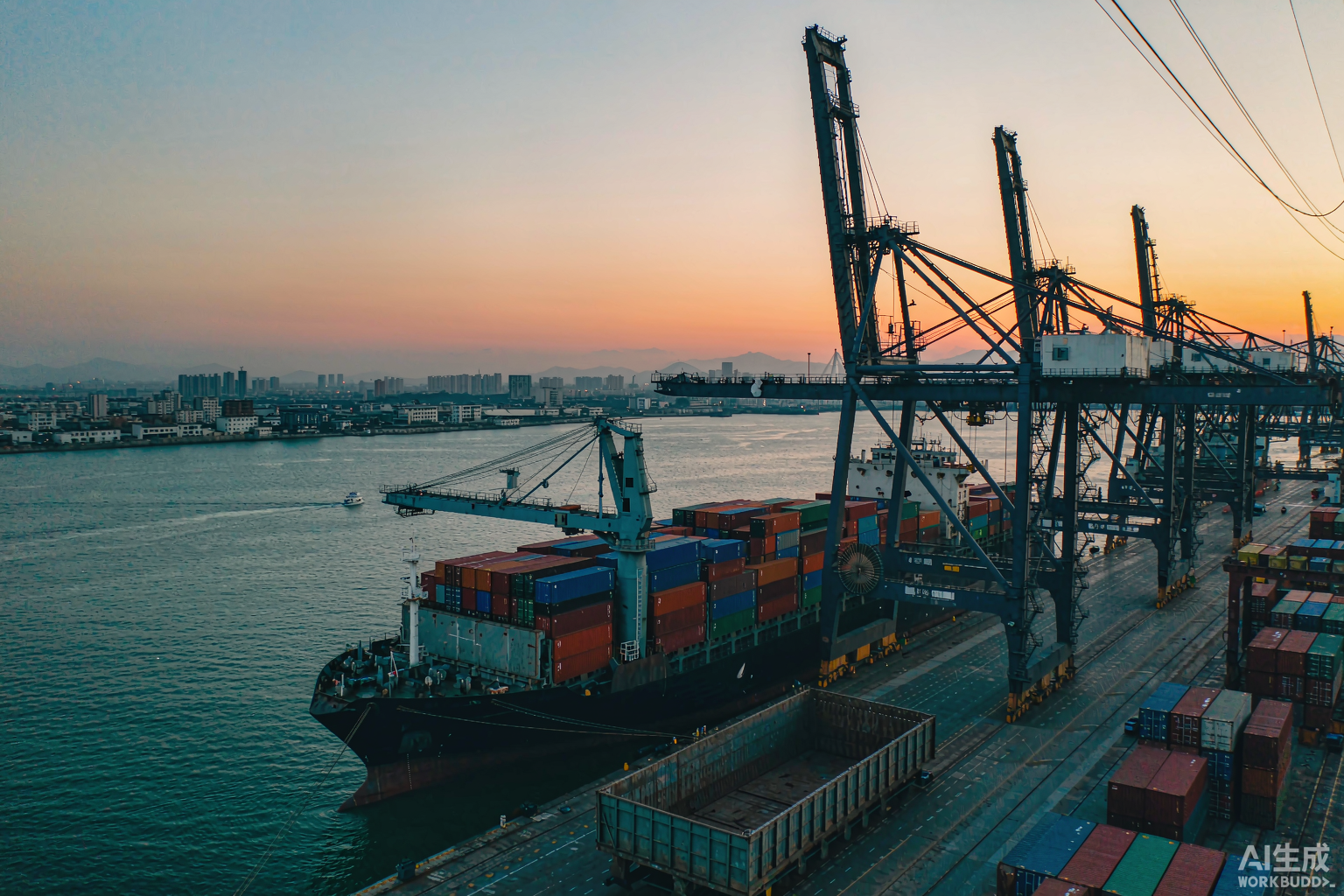
More than 60 per cent of the machines sold abroad work on exhibition stands and in classrooms. The lines and warehouses that would give them productive value take less than a fifth. The mismatch is a direct measure of how far embodied intelligence still is from real production environments.
Crossing a border multiplies the difficulty by distance, and turns a technical problem into a very expensive delivery test.
A semi-finished product that has to be taught
Embodied AI exports differently from conventional robots. An industrial robot ships as a standard product whose motion logic is fixed in code before it leaves the factory. A welding robot arrives, gets power, is taught its points, is tuned, and repeats the same path. A consumer robot behaves like a small appliance and maps a room after joining the Wi-Fi. Capability and boundaries are set at the factory.
An embodied AI product leaves the factory closer to a semi-finished good. Its brain learns to work through physical interaction. How much force an object needs, whether it slips, how high to lift, that force and tactile information barely exists on the internet and has to be collected on site, which is the data scarcity the industry keeps talking about.
Most embodied products arrive with basic capability only. A new scenario means new samples, a retuned model and a re-adapted end effector. It is not a device with a fixed program. It is a system that has to be taught.
Wujie Dynamics’ K15, for example, had to relearn the specific process at a French battery plant, with the local team collecting force, tactile and process data, fine-tuning the model and repeatedly adapting the end effector. Delivery is far more complex than for a conventional robot.
That means the export model cannot be shipping product. The product has to be finished again in the local scenario. Delivery time stops being a function of logistics or market access and becomes a function of teaching the machine once per new scenario, which turns exports from standard goods into project-based, non-standard delivery, with longer cycles and heavier use of on-site labour and cash.
The bill after the sale
Cross-border after-sales is the second cost gate. Internal JD research found that European order volumes for Chinese robot brands rose over the past two years, but after-sales complaints exceeded 40 per cent, with 80 per cent of those about slow repair, high cost and missing local service.
Slow repair is a border problem. High cost is logistics, spare parts and expensive local labour. A mid-size quadruped costs RMB 3,000 to 8,000 to move across borders, and a round trip plus repair takes at least 20 to 40 days. A certified German technician can bill more than RMB 1,200 for a single callout. Local service is missing because qualified overseas technicians are scarce and each company would have to build its own network.
So machines go back to China, or engineers fly out. For a consumer humanoid or quadruped selling for tens of thousands of renminbi, the repair can cost more than a new unit. After-sales stops being a cost line and becomes a loss-cutting line.
The central problem of the export business may already be whether service and maintenance cost per unit falls as volume rises. If that inverse curve does not hold, revenue growth and profit improvement stay separated by a physical barrier.
Lighter delivery
The most direct response is to break delivery into lighter pieces. The first is removing the need to send people.
REALMAN demonstrated at CES 2026 that an operator in Beijing could control a robot on a Las Vegas stand in real time to perform grasping tasks. At Agibot’s G2 launch, an operator in Beijing controlled a robot in Shanghai over the horizon to hit a balloon. Operationally the trainer no longer needs to be in the room.
The second is hardware. Splitting the joint into modules moves the unit of repair from the whole machine to a single part. Nanjing Yinxesi launched a second-generation humanoid joint module with quick release, rebuilding the joint structure and interface so that swapping a joint falls from hours of specialist work to minutes. The company claims this cuts service cost to roughly a tenth.
Repair then stops being a whole-machine event. A module ships across a border, a local technician fits it, and the skill requirement falls from robotics engineer to parts fitter. Not every architecture supports that. Stardust Intelligence builds on tendon drive, and its approach is to move calibration into the factory. Friction losses and preload drift happen in use and in transit, which factory calibration cannot control.
Even with modules, somebody has to stock parts and somebody has to fit them. Companies like Pangtian Technology have built RobotICU, a shared after-sales platform with subsidiaries, representative offices and service points in the United States, Hong Kong, Europe and Southeast Asia, offering parts allocation, repair and warranty coordination. It turns after-sales from a fixed cost each company carries into a variable cost called on per job.
Selling hours instead of units
Once the physical weight is stripped out, the business model changes. At MWC 2026, Agibot opened an overseas standalone site with a robot-as-a-service offer: Agibot supplies the machine, local partners handle logistics and deployment, and headquarters keeps cloud-based intelligent operations. Entry rental is EUR 899 a day across 17 countries and regions.
The important change is not that renting is cheaper than buying. It is that on-site work is pushed to local partners, so the manufacturer does not need a service point in every country and earns continuing fees rather than a single sale.
The lighter route is to borrow someone else’s network. Mojia Robotics, incubated inside the Chery system, did not build overseas after-sales at all. It reuses Chery’s channels, parts centres and service sites. By August it had 100 per cent supply chain reuse with Chery, 90 per cent shared R&D technology, 2,000 units delivered overseas and coverage of more than 60 countries. Chery executive vice-president and Mojia general manager Zhang Guibing put it directly: what competes abroad is not a single product but the whole chain of development, manufacturing, supply, channels, delivery, service and local operations.
The cost of that is visible. Mojia’s overseas shipments run through Chery dealerships, robot budgets are bundled with vehicle marketing, and overseas customers are Chery dealers rather than independent robot buyers. The customer relationship stays with the car channel.
The real threshold for going abroad is no longer whether a machine can be built and shipped. It is whether the weight of cross-border delivery can be taken off. That is a shift from selling a unit once to renting capability, or borrowing an ecosystem to carry it.
Editor’s note: This is an adapted translation of the original OFweek report. It has been trimmed and restructured for readability for an international business audience. The full original (in Chinese) is at https://robot.ofweek.com/2026-10/ART-8321206-8130-30708673.html.