The most valuable company in physical AI may turn out to be one that does not build robots at all.
General-purpose models are now being tested as robot controllers. Recent work around GPT-6 Astra and comparable systems shows models that can interpret complex instructions, identify objects and plan the next operation, including recovering when a camera view is blocked.
Fine manipulation is where the ceiling shows. Ask a robot to insert a key into a lock and the model may know the goal and the rough sequence. When the key catches on the edge of the cylinder, someone still has to decide whether the angle is wrong, the position is off, or the arm should withdraw and retry.
Split the problem, not solve it
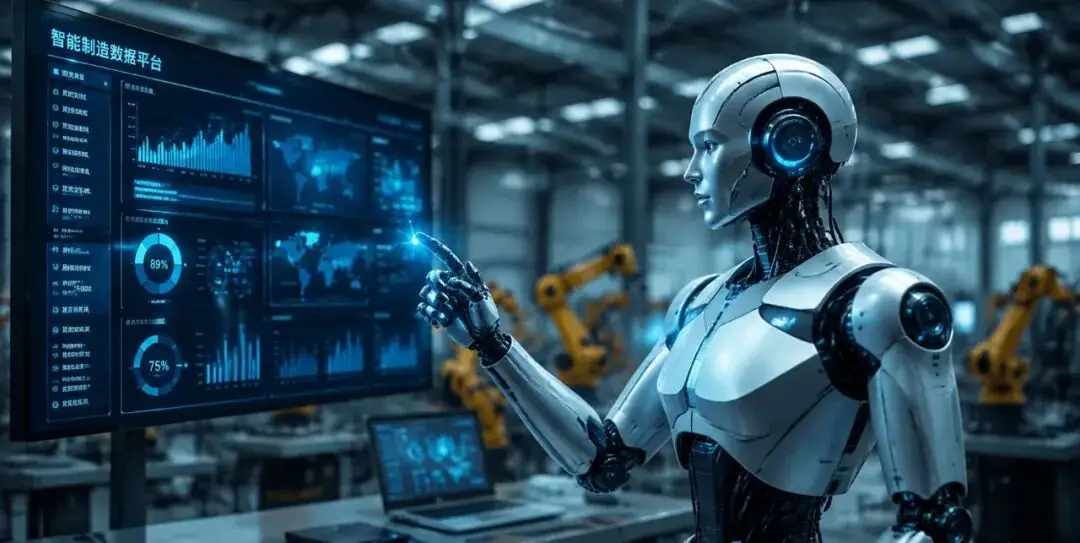
Researchers are responding by dividing the labour. Let the large model understand the task and decide the order of operations. Let a dedicated control system own how the arm moves and how much force to apply.
Approaches such as HexaShell and WorldScape-RSI follow that division, and the reported results improve task completion once dedicated motion planning and operation logging are added. Those results come from controlled test environments. The distance to stable long-run operation in a real factory is still the gap that matters.
The implication is commercially significant. Robotics may not need a single omniscient model before it becomes useful. If a general model can carry more of the task understanding, and a specialised controller handles execution, a slice of automation arrives earlier than the humanoid timeline suggests, and it reaches industrial arms, warehouse robots, mobile equipment and service machines as much as bipeds.
Three ways to get paid
Chinese listed companies are already positioning along that chain, and their filings are the most honest research available.
Inovance disclosed in its 2026 interim report that it has shipped a seven-degree-of-freedom bionic arm, won designations on some humanoid components, and seen frameless motors enter small-batch use at leading humanoid makers, with the bionic arm through customer validation at the whole-machine level.
Estun represents the other route. It already had industrial robots and smart manufacturing systems, with mature industrial customers and delivery experience, and booked RMB 2.138 billion in that segment in the first half of 2026, up 2.21 per cent year on year. That revenue is not humanoid revenue, and the company does not claim it is.
The third route is data and sensing, which is where the pricing is clearest. Industry feedback puts headset-captured operation video at roughly RMB 100 to 300 per hour, with complex real-human demonstration and real-robot data reaching around RMB 1,000 per hour.
The suppliers already reporting
Orbbec disclosed that it has served more than a thousand robot customers worldwide and that revenue from vision systems for the global robot market more than doubled year on year. Its broader financials show why growth and profit are different questions: first-half revenue of RMB 438 million, up 0.49 per cent, and net profit of RMB 41.64 million, down 30.82 per cent, with higher research spending cited as one cause.
Fulai New Materials is building flexible sensors and tactile data collection hardware, including multimodal tactile gloves and fingertip sensors, with batch delivery to some customers and a still-small revenue share. Keli Sensing has reported selling more than 1,500 force sensors for robotics and sampling with over 70 customers, spanning six-axis force sensors, joint torque sensors and tactile sensors.
Demand is also reshaping the model makers’ own work. OpenAI’s robotics hiring touches data collection and testing programmes, and Figure and others are building their own collection platforms. Industry estimates cited in the Chinese supply chain put a possible OpenAI purchase of five to ten million hours of data in 2027, and the global market for such data heading toward the tens of billions of dollars. Those are projections, not contracted orders.
What to underwrite
For data suppliers, the metrics that matter are signed contracts, repeat purchases, acceptance rates and revenue growth, in that order. For hardware suppliers, it is whether a product moves from small-batch validation into sustained delivery.
The brain layer will consolidate around a handful of model owners. The bill for teaching those models to touch the world will be paid by a much longer list of sensor makers, data collectors and integrators, and that is the part of physical AI with predictable revenue.
Editor’s note: This is an adapted translation of the original OFweek report. It has been trimmed and restructured for readability for an international business audience. The full original (in Chinese) is at https://robot.ofweek.com/2026-10/ART-8321201-8420-30708760.html.