The humanoid supply chain has a hierarchy of attention that does not match its hierarchy of difficulty. Actuators and reducers get the conferences. Bearings get the purchase orders.
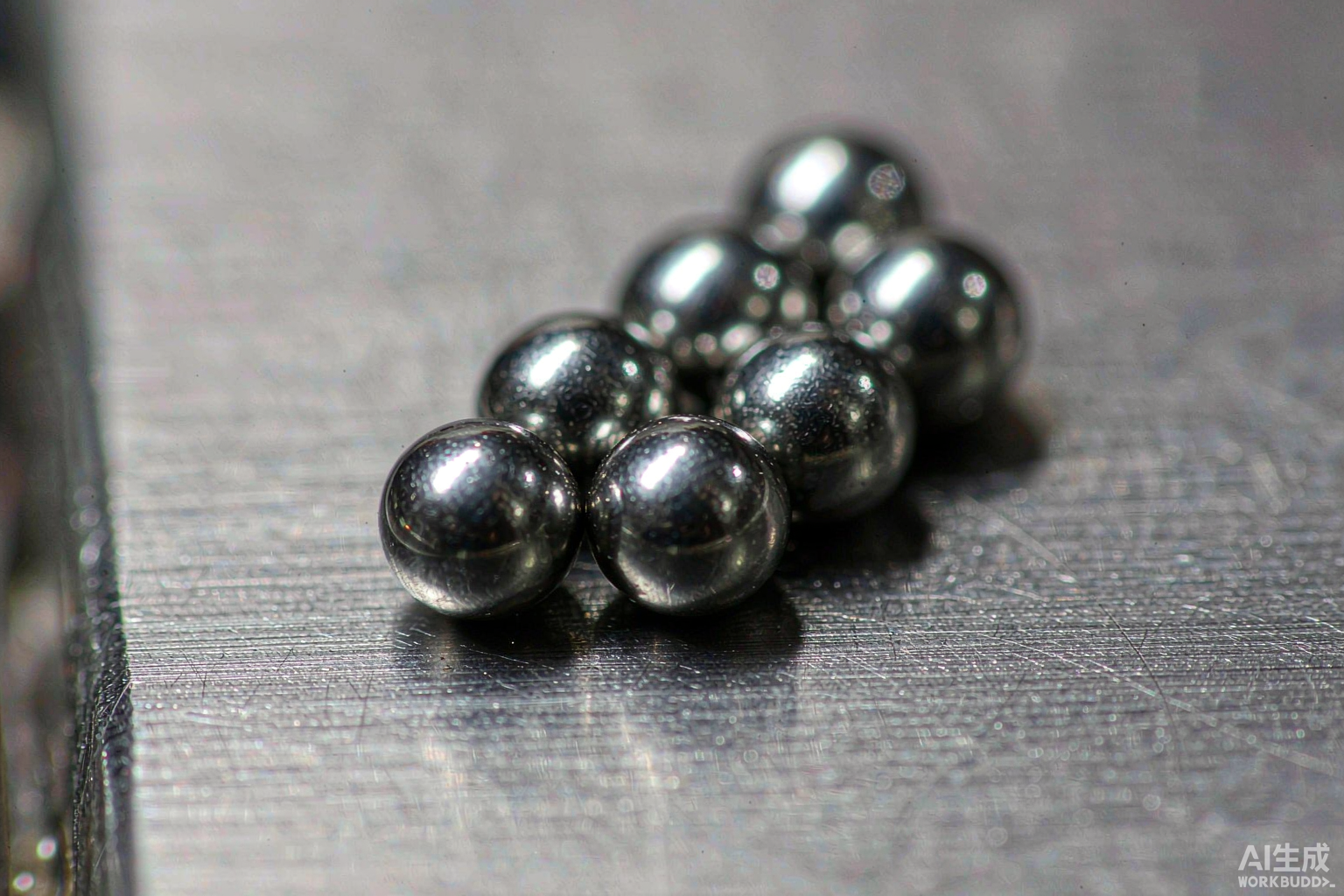
On a site in Wujiang District, Suzhou, a company most Western buyers have never heard of has started building a RMB 2.5 billion plant for parts that are smaller than a grain of rice.
What the third phase actually builds
Suzhou Teijin Electromechanical has broken ground on the third phase of its micro precision bearing and humanoid core component project. Total investment is projected at RMB 2.5 billion. At full capacity the plant is designed for one billion micro precision bearing sets and one million humanoid core components a year, with a focus on ultra-small cycloidal reducers and actuators.
Once fully ramped, the company expects the project to add RMB 2 billion of annual output value, and to raise domestic supply of both high-end micro bearings and humanoid components.
The existing capacity curve is what makes the number credible. Phase one runs at roughly 300 million bearings a year. Phase two reaches about 600 million at full ramp. Phase three goes to a billion bearing sets plus a million humanoid component sets.
That curve lands almost exactly on the window in which Chinese humanoids are moving from prototypes to volume. Component suppliers usually get asked to expand after the demand arrives. This one is expanding into it.
Why nine millimetres is a moat
Teijin was founded in 2012 and makes precision ball bearings with an outer diameter below 9 millimetres. The company describes itself as the first in China to achieve industrial-scale production of ultra-micro bearings, breaking a long-standing Japanese hold on the category.
Its two workhorse parts are the 693 bearing, with a 3 millimetre bore and an 8 millimetre outer diameter, and the 52 bearing, with a 2 millimetre bore and a 5 millimetre outer diameter. The company claims competitive positions across bore sizes of 1, 1.5, 2, 2.3, 2.5 and 3 millimetres.
At that scale, the manufacturing problem stops being about design and becomes about grinding, assembly and inspection. Teijin lists high-efficiency precision grinding, automated flexible assembly, automated flexible inspection and integrated line production as its core capabilities. Those are process advantages, and process advantages are the ones that take a decade to copy.
The humanoid entry point is the hand
Rather than chasing the hip or the knee, Teijin went after the dexterous hand. Its product matrix for humanoids includes 03 and 05 series micro harmonic reducer flex bearings, four-point contact bearings with 1.5 to 6 millimetre bores that carry the axial load in micro ball screws, and rod-end spherical bearings for linear actuators. Hand bearings shipped in 2025.
The most interesting part is a micro cycloidal reducer labelled CD1606-100. It measures 16 millimetres in diameter and 6.2 millimetres in thickness, weighs 9.3 grams, delivers 1.5 newton metres of peak torque at a 100:1 ratio, and reaches a torque density of 65 newton metres per kilogram.
Against Harmonic Drive’s CSF-3, which uses the same 100:1 ratio, Teijin claims a thinner and lighter package, higher continuous and peak torque, and roughly three times the torque density, at the cost of slightly lower transmission efficiency. Those claims deserve independent verification, but the direction is clear: the near-joint and far-joint of a robot finger is becoming a Chinese component market.
The customer list is the real validation
Teijin’s bearings already sit inside consumer devices and small machines from DJI, Bambu Lab, Dreame, Ecovacs, Kingclean, Moons’ Electric and Dingsheng Technology. That mix is instructive. Consumer electronics and home appliances demand high volume, tight cost and fast iteration, which forces a supplier to build the process discipline that robotics later requires.
Humanoid buyers will demand something harder: consistency across millions of cycles, documented life testing and the ability to hold tolerance as volume rises. A supplier that has already run 600 million parts a year through automated inspection has a head start on that conversation.
The company is repositioning from a bearing maker to a core component solution provider. Whether that works depends less on the RMB 2.5 billion than on whether a Chinese reducer can be qualified inside a Western or domestic humanoid programme at volume. That qualification takes two years and cannot be bought with capex.
Editor’s note: This is an adapted translation of the original OFweek report. It has been trimmed and restructured for readability for an international business audience. The full original (in Chinese) is at https://robot.ofweek.com/2026-10/ART-8321201-8120-30708824.html.