China’s manufacturing heartland released its nine-month economic data on 26 October, and one line in it deserves more attention than the headline growth figure.
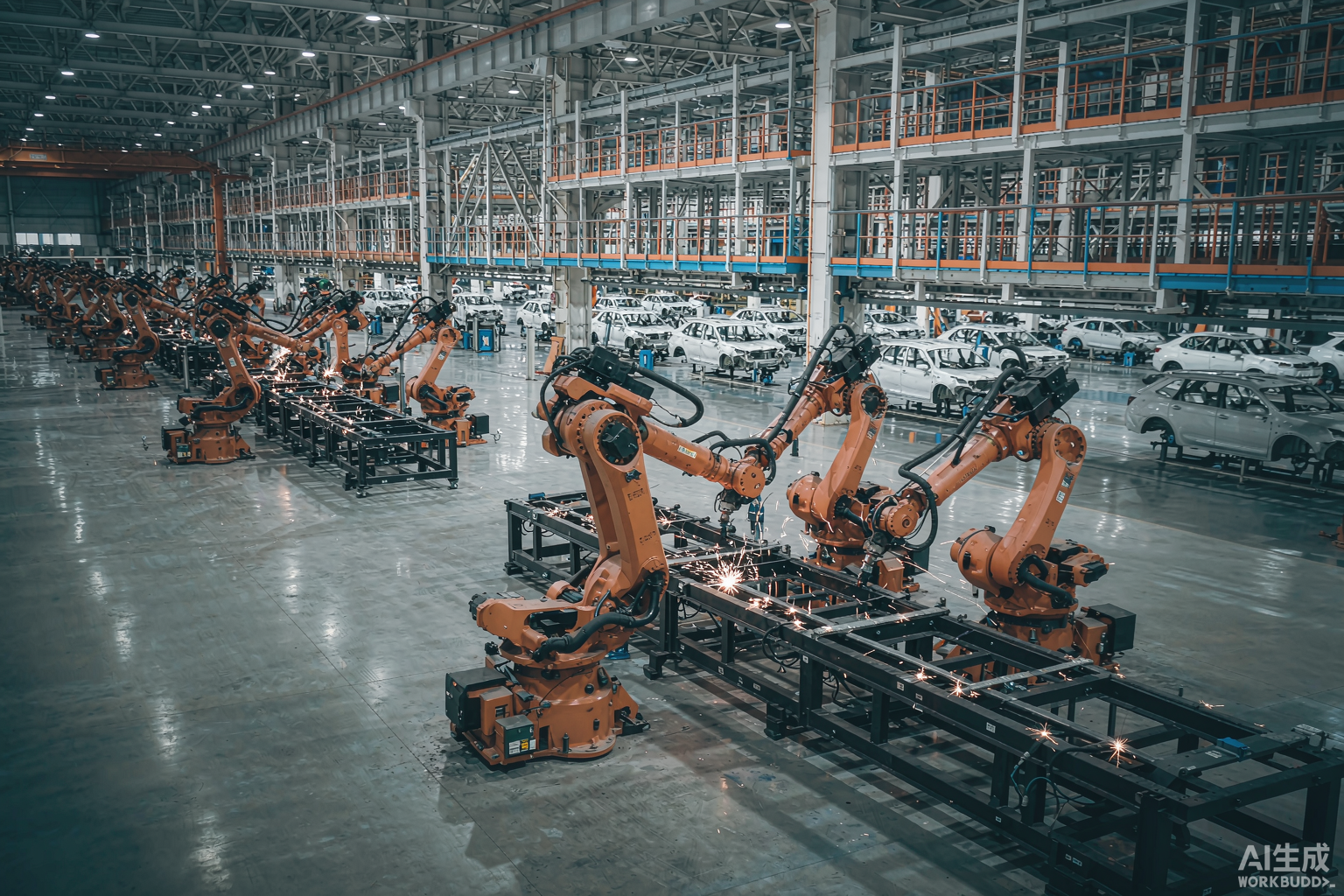
Guangdong’s GDP reached RMB 11.109 trillion in the first three quarters, up 4.6 per cent in real terms. Industrial robot output rose 34.2 per cent over the same period.
Those two numbers, side by side, describe the entire restructuring of Chinese manufacturing in a single snapshot.
The composition of the growth
Primary industry value added reached RMB 394.06 billion, up 4.0 per cent. Secondary industry reached RMB 4.158 trillion, up 4.9 per cent. Tertiary industry reached RMB 6.558 trillion, up 4.5 per cent.
Above-scale industrial value added grew 6.1 per cent, 0.3 percentage points faster than in the first half. The electronics sector did most of the work: computers, communications and other electronic equipment manufacturing rose 11.2 per cent and contributed 52.5 per cent of the total increase in above-scale industry.
Special-purpose equipment manufacturing rose 14.0 per cent, automotive manufacturing 12.4 per cent and general-purpose equipment 8.8 per cent, with the three accelerating by 2.8, 2.5 and 1.2 percentage points respectively.
The product mix tells the real story
High-tech products grew far faster than the economy as a whole. Industrial robot output rose 34.2 per cent, 3D printing equipment 71.0 per cent and integrated circuits 29.7 per cent.
Green products moved faster still in relative terms. New energy vehicle output rose 52.1 per cent and lithium-ion battery output 37.7 per cent.
This is a province that makes the robots and is also buying more of them. A 34.2 per cent increase in output against 4.6 per cent GDP growth means the machines are being absorbed into domestic production, not only exported. Robot density is rising inside the same factories that build the robots.
The structural shift, in three ratios
Above-scale advanced manufacturing value added rose 6.8 per cent and now represents 57.0 per cent of all above-scale industry, up 1.5 percentage points year on year. High-tech manufacturing rose 11.2 per cent and now stands at 36.1 per cent, up 2.3 points.
Both are growing faster than the sector as a whole, which is what a genuine upgrade looks like rather than a cyclical rebound.
Investment confirms it. High-tech manufacturing investment rose 10.9 per cent. Within that, investment in computer and office equipment manufacturing rose 41.9 per cent and investment in electronics and communications equipment 11.3 per cent.
Why this matters for the robotics thesis
Much of the global debate about Chinese robots focuses on humanoids, funding rounds and demonstrations. Guangdong’s data describes the boring, load-bearing version of the same trend: industrial robots are being installed at a rate that changes the cost structure of the factories installing them.
That matters for two reasons. First, the province is the proving ground for the component supply chain that humanoids will eventually depend on. Second, it is the demand base that lets Chinese robot makers iterate at a speed foreign competitors cannot match, because a domestic customer is a short drive away and will accept an imperfect first version.
The consumption side was softer. Retail sales of sports and entertainment goods rose 7.3 per cent, cultural and office goods 10.0 per cent and communications equipment 41.7 per cent, the last helped by trade-in subsidies.
The province is not growing quickly in aggregate. It is growing by replacing labour with machines, at a pace that would be considered an industrial policy achievement anywhere else and is treated here as a quarterly statistic.
Editor’s note: This is an adapted translation of the original Shenzhen News report. It has been trimmed and restructured for readability for an international business audience. The full original (in Chinese) is at https://www.sznews.com/news/content/2026-10/26/content_32201012.htm.