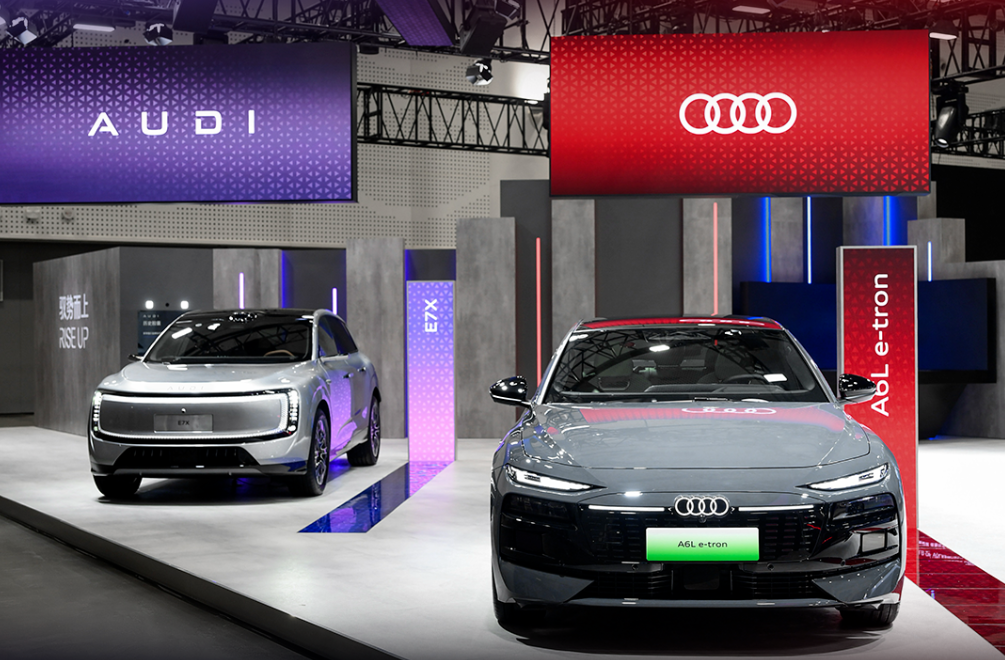
On 26 October Audi signed separate strategic agreements with China FAW and SAIC Group, redrawing how its brands operate in China. The four-rings brand goes to FAW to run in full. SAIC takes the lettered AUDI brand. The agreements took effect the same day.
A transition arrangement was published alongside them: SAIC Audi may continue selling four-rings products until the end of 2027, with after-sales and dealer operations continuing without disruption.
The deal took a year, and the numbers forced it
The transaction was negotiated for close to a year. Reports point to China’s supply chain as the main bargaining chip that got it done. What actually pushed Audi to close was a less flattering set of figures.
Audi sold 94,600 vehicles in China in the third quarter, down 24.5 per cent year on year. Profit fell harder. Audi Group’s China business contributed EUR 73 million in the first half, against EUR 279 million in the same period a year earlier, a decline of 74 per cent.
Two contradictions sat behind those numbers. Two joint ventures were selling the same badge, competing on price through separate channels. And AUDI, as a dedicated electric line, needed its own brand positioning and product cadence to have any chance.
One badge, two sales networks
Audi has held joint ventures in China for more than three decades, but the two-partner structure is only about ten years old. After SAIC Audi was established, the four-rings badge hung in two sales systems at once, with closely spaced price points and terminal prices undercutting each other.
The scale gap between the two is wide. FAW Audi operates close to 600 stores. SAIC Audi has just over 200. Gasgoo industry data shows that from January to September 2026, FAW Audi sold about 277,000 vehicles and SAIC Audi about 32,000, a ratio of nine to one.
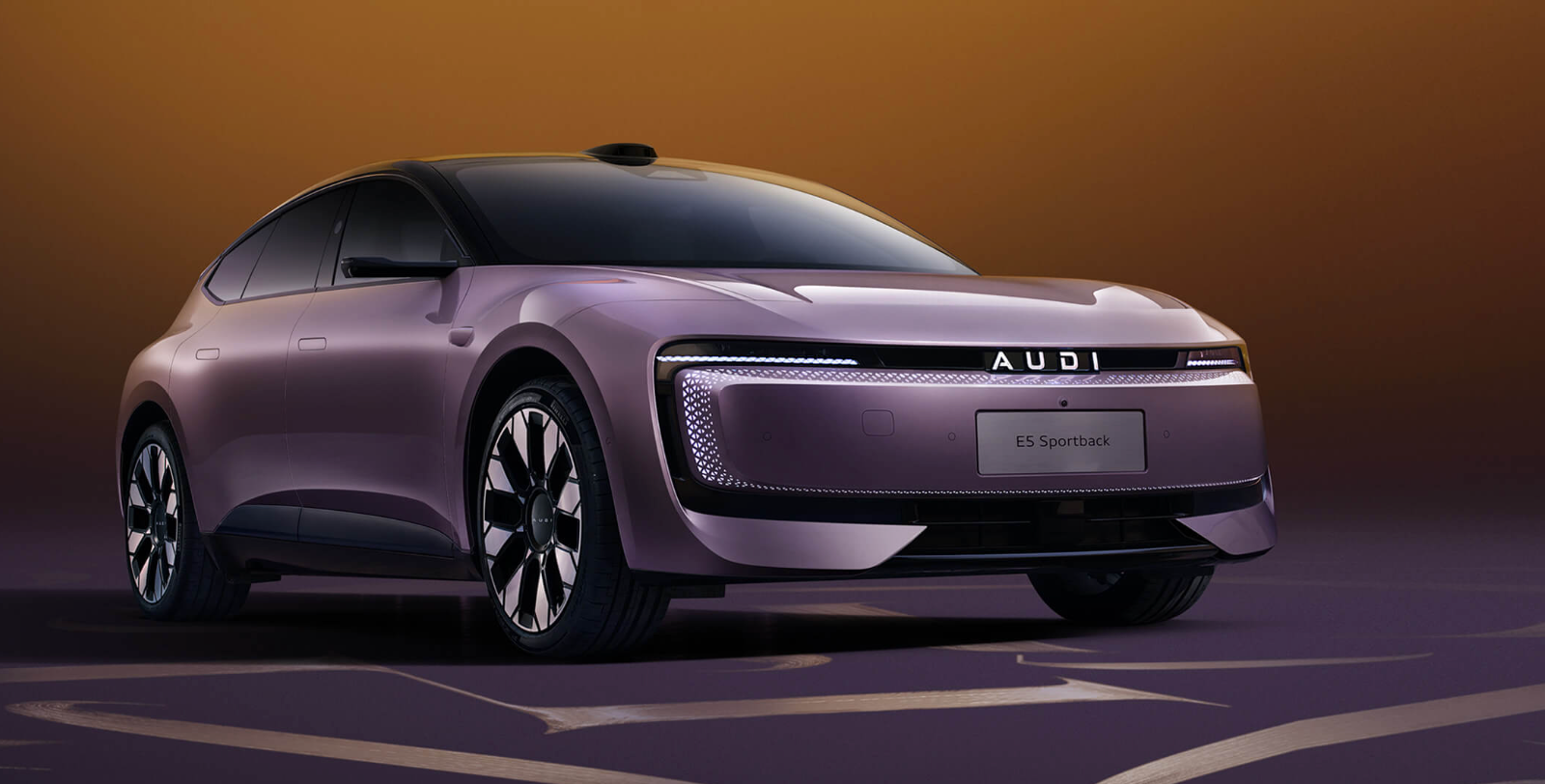
Under the new agreement the division is explicit. FAW Audi runs the four-rings business across both combustion and electric models. SAIC Audi continues to develop the AUDI lettered brand.
AUDI was launched at the end of 2024. Its first production model, the E5 Sportback, went on sale in September 2025, followed by a second model, the E7X. Cumulative sales for the brand have only just passed 10,000 units, which puts it firmly in the market entry phase.
The transition leaves a 14-month overlap
Because SAIC Audi can keep selling four-rings cars until the end of 2027, the split will not complete immediately. Both sides still have to manage existing model sales, dealer arrangements and after-sales handover.
Separating the badge does not separate the problem
Dividing brands and sales systems reduces channel price conflict. It does not fix product competitiveness.
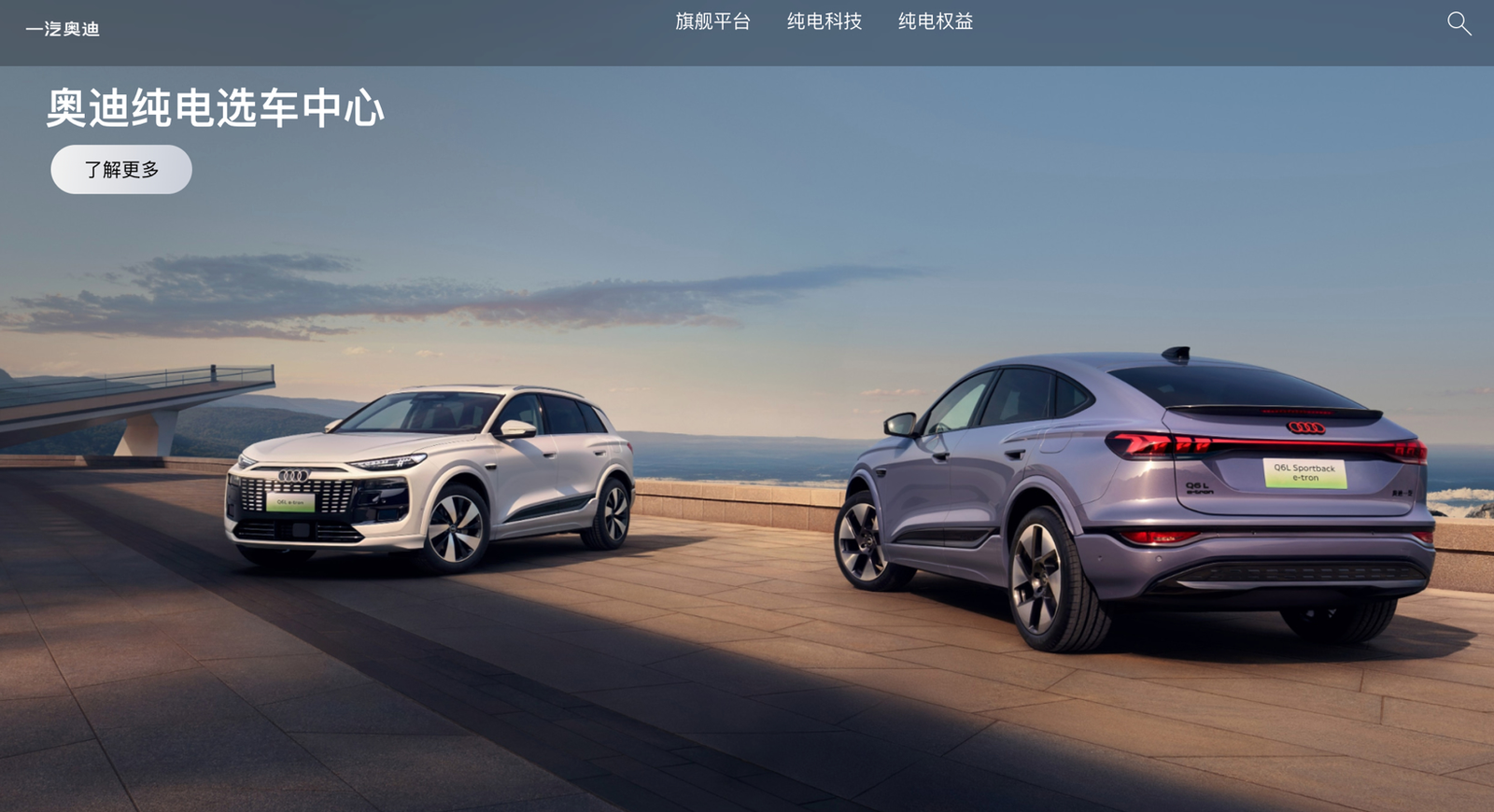
The four-rings brand has to hold the RMB 300,000 to RMB 500,000 luxury segment against Li Auto, Aito and NIO as well as against the BMW 5 Series and the Mercedes E-Class. The pressure is already visible. In September, insurance registrations for the Audi A6L, the BMW 5 Series and the Mercedes E-Class all came in below 10,000 units.
FAW Audi’s business still rests on combustion cars. The A6L has carried a large share of volume for years and is now under growth pressure. Taking full control of the four-rings business means FAW Audi must manage combustion and electric product planning together, and absorb the operating risk of a declining core.
SAIC Audi faces a different problem. AUDI is aimed at the RMB 200,000 to RMB 400,000 electric segment, where competition is heaviest and price war is compressing margin across the board.
For European suppliers watching this, the lesson is structural. When a premium OEM cannot make two distribution networks sell one badge without destroying each other’s pricing, the answer is not a better campaign. It is a legal separation, signed in China, between two Chinese partners, over a brand the German parent still owns and no longer fully controls.
Editor’s note: This is an adapted translation of the original Gasgoo report. It has been trimmed and restructured for readability for an international business audience. The full original (in Chinese) is at https://auto.gasgoo.com/news/202610/27I70476002C109.shtml.