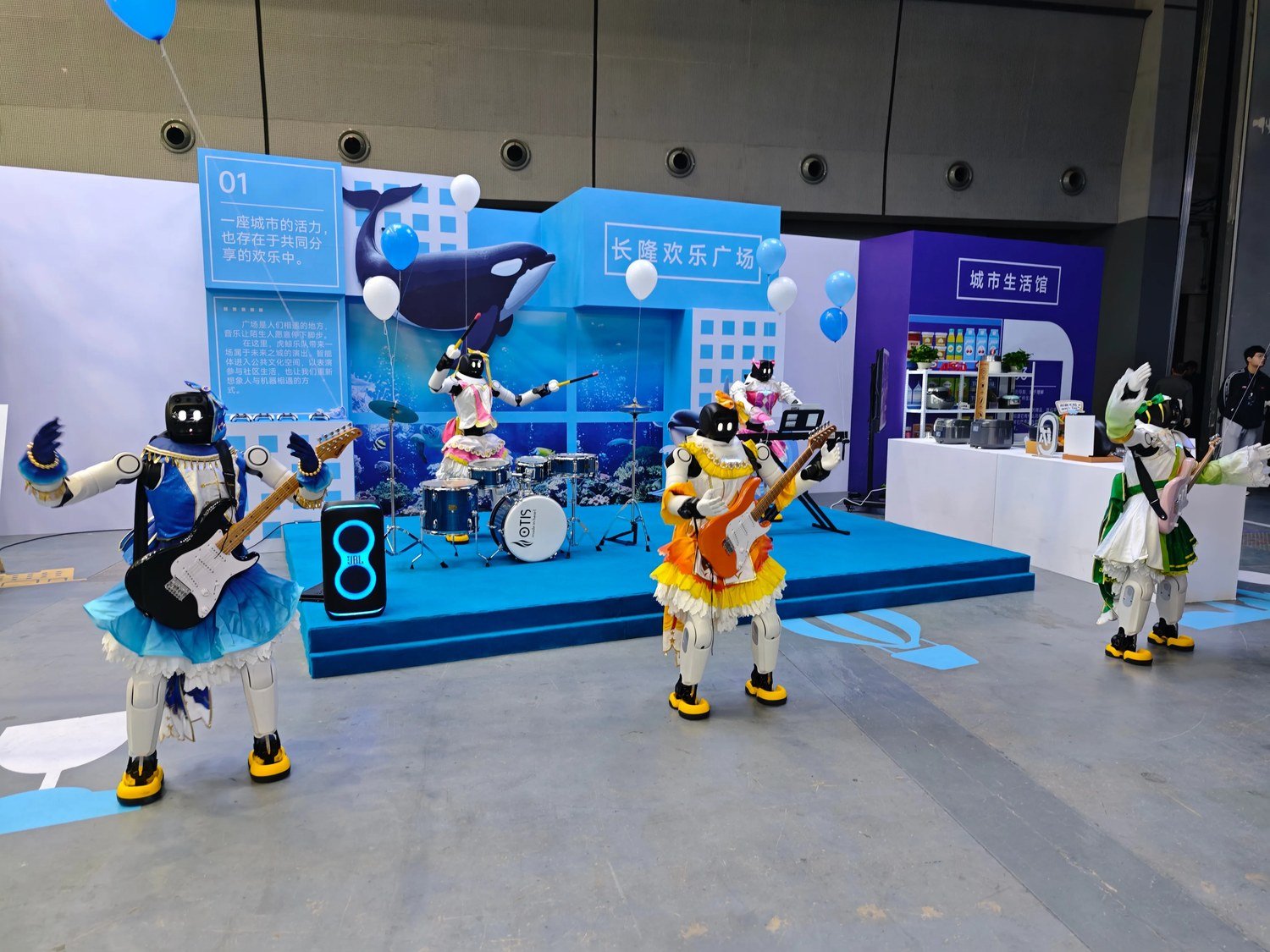
While the manufacturing side of Chinese robotics argues about when the technology will land, the downstream has already found something that pays. It is not factories. It is stages, shopping centres, weddings and sports arenas.
A year ago the daily rent for a humanoid reached RMB 30,000, and the industry talked about payback in six months. Today a fully inclusive package for a mainstream humanoid runs RMB 3,000 to 6,000 a day. Basic models have broken RMB 2,000. A bare quadruped can be had for RMB 160.
Prices collapsed and the market grew anyway
China shipped 14,400 humanoids in 2025. In the first half of 2026 alone, shipments passed 40,000. Newer models carry more compute and better actuators, so older stock can only compete on price. Rents fell 70 to 90 per cent while utilisation rose.
About 65 per cent of rental orders are one-off commercial performances: a store opening, a trade show warm-up, a ring delivered at a wedding. Those customers are not buying labour. They are buying footfall and a story to post.
The operators that scale are consolidating fast. Qingtianzu, the rental arm AgiBot set up with Feikuo Technology and others, closed A and A plus rounds in May at a RMB 7 billion valuation and entered unicorn territory. Its chief executive Li Yiyan puts trailing gross merchandise value near RMB 3.5 billion and targets RMB 10 billion of cumulative revenue in three years, roughly the size of the entire current market for one company. Wanjii Zuyi holds a post-money valuation of RMB 1 billion, and JD has opened its own rental storefront.
The customisation layer nobody priced in
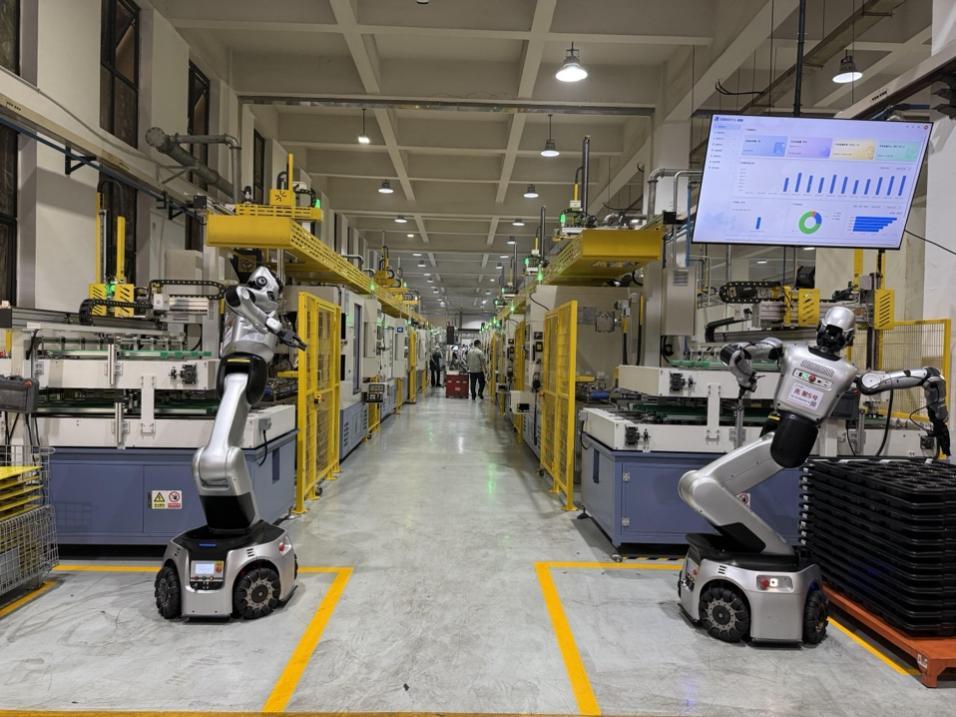
Between the factory and the customer sits a layer of integrators that adapt other people’s robots. A unit costs between RMB 150,000 and RMB 500,000, and a customer buying one or two needs bespoke development that no original manufacturer will staff a team for. Integrators do the tuning, run the scene and often hand 10 per cent back to the manufacturer.
The effort is real. Leju deployed 15 Kuafu robots at Zhaofeng Electromechanical and spent close to a year teaching them the job. The robots initially struggled to grip parts securely. One grasping motion alone required 15,000 training repetitions.
AgiBot chairman Deng Taihua said in April that after completing the first unit with a lead customer, scaling to the next hundred depends on ecosystem partners. Partners accounted for a quarter of AgiBot’s sales in 2025. The target for 2026 is 60 per cent.
The format is transitional, and everyone knows it
Some deployments are genuinely functional: luggage handling, hospital wayfinding, bank queue management. AgiBot and Chimelong built a 300 robot theme park in Zhuhai covering performance, tours and education. A 6S store opened in Shenzhen’s Longgang district last July, adding rental and training to the usual sales and service. Beijing’s Yizhuang Robot Mall has passed RMB 60 million in revenue with state backing.
But the Guangzhou store run by Huaji Intelligent Robot has invested close to RMB 10 million and still runs monthly revenue 40 per cent below operating cost, even with footfall ahead of plan. Across 23 cities, most 6S stores depend on local policy support rather than a market rate business model.
Rental math only works if every unit is out every day. Once the platforms with manufacturer backing and capital scale up, vacancy rates will rise and the smaller operators will exit. The window is not a market failure. It is what a capital intensive industry looks like before it can sell into a house.
Editor’s note: This is an adapted translation of the original OFweek report. It has been trimmed and restructured for readability for an international business audience. The full original (in Chinese) is at https://robot.ofweek.com/2026-11/ART-898890-8420-30710119.html.