A humanoid that can run, jump and backflip has demonstrated that its actuators work. That is a different achievement from gripping a machined part without crushing it, sensing a millimetre of binding halfway through an insertion, or stopping the force in time when the object in its hand is a glass.
Every one of those tasks depends on touch, and touch is the capability Chinese humanoid companies have been slowest to acquire. In Shenzhen, a cluster of component suppliers is now attacking it as a hardware problem rather than a software one.
Four millimetres and a thousand samples a second
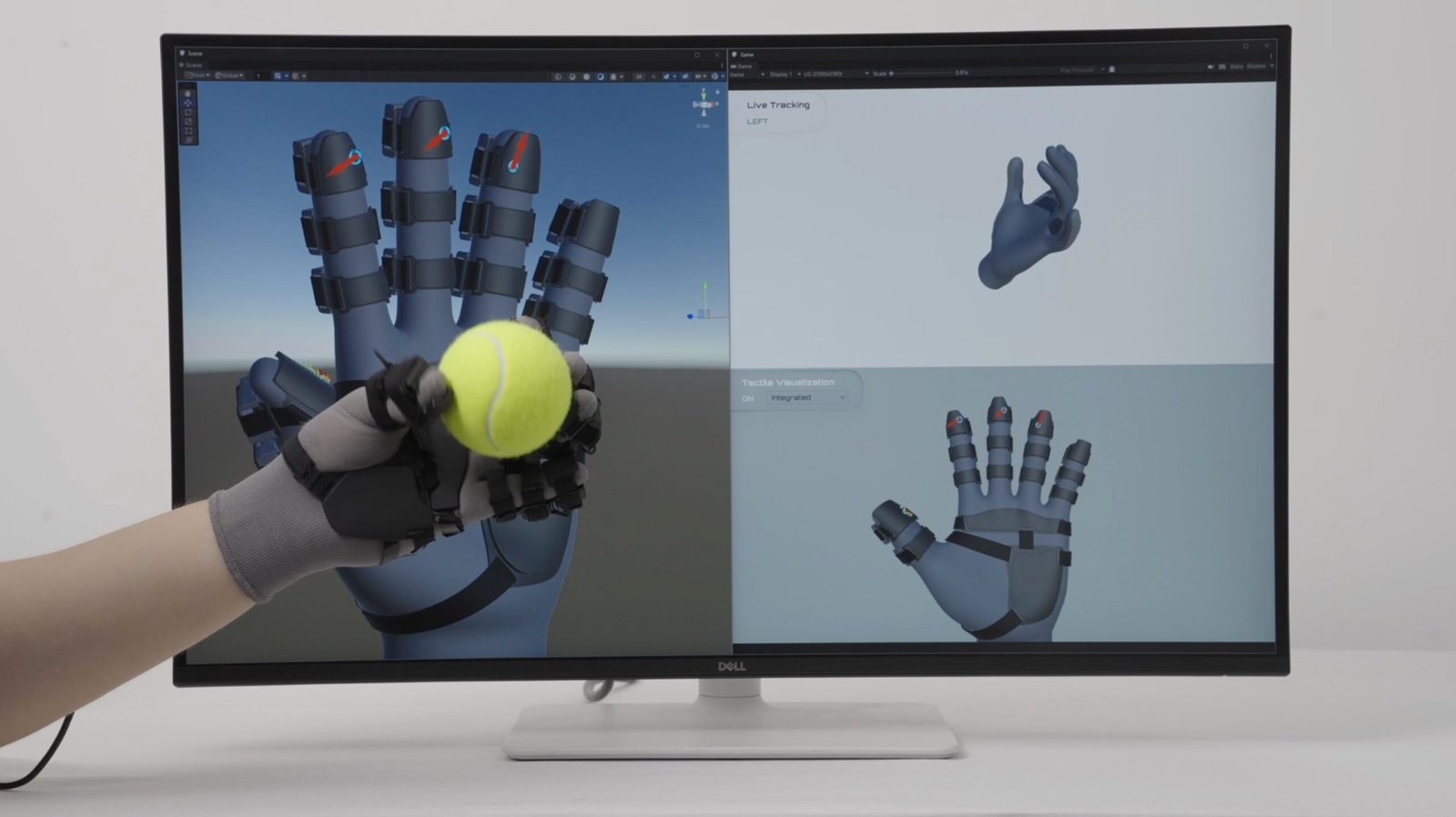
The most instructive case is Yuansheng Technology, founded a little over a year ago by Hou Ningzhe, who was born in 1999 and completed a doctorate at Oxford. The company sells multi-dimensional tactile sensors, data capture gloves and electronic skin, and has extended into automotive-grade manufacturing.
Its TACTA sensor is built on semiconductor process steps and measures under four millimetres thick with a sampling rate of 1,000 hertz, fast enough to catch millisecond-scale slip and impact. The electronic skin version is 1.75 millimetres thick and, on the company’s public figures, can cover close to 80 per cent of a humanoid’s body surface with about 18,000 sensing points.
The data glove, launched at the World Robot Conference in August, is the piece that connects the two halves of the problem. Camera-based motion capture can record where a hand went but not how hard it pressed or when contact changed. A modular glove that fits different hand shapes records trajectory and contact mechanics together, and the hard engineering is in mapping human hand data onto a robotic hand with different joints and different sensor placement without importing the deformation error of the glove itself.
Why vision runs out
In an assembly task the robot must locate a part, then approach, contact and complete the operation. Vision supplies shape and position. Once the fingers occlude the contact area, or the part shifts by a fraction of a millimetre inside the grip, the camera has nothing useful to report. A person closes that loop with touch and muscle control. A robot needs a sensor in the finger and a controller fast enough to act on it.
That is why tactile sensing is not decoration. Standardised rigid handling can survive without it. Flexible objects, precision insertion and unstructured environments cannot.
The part Shenzhen supplies that nowhere else does
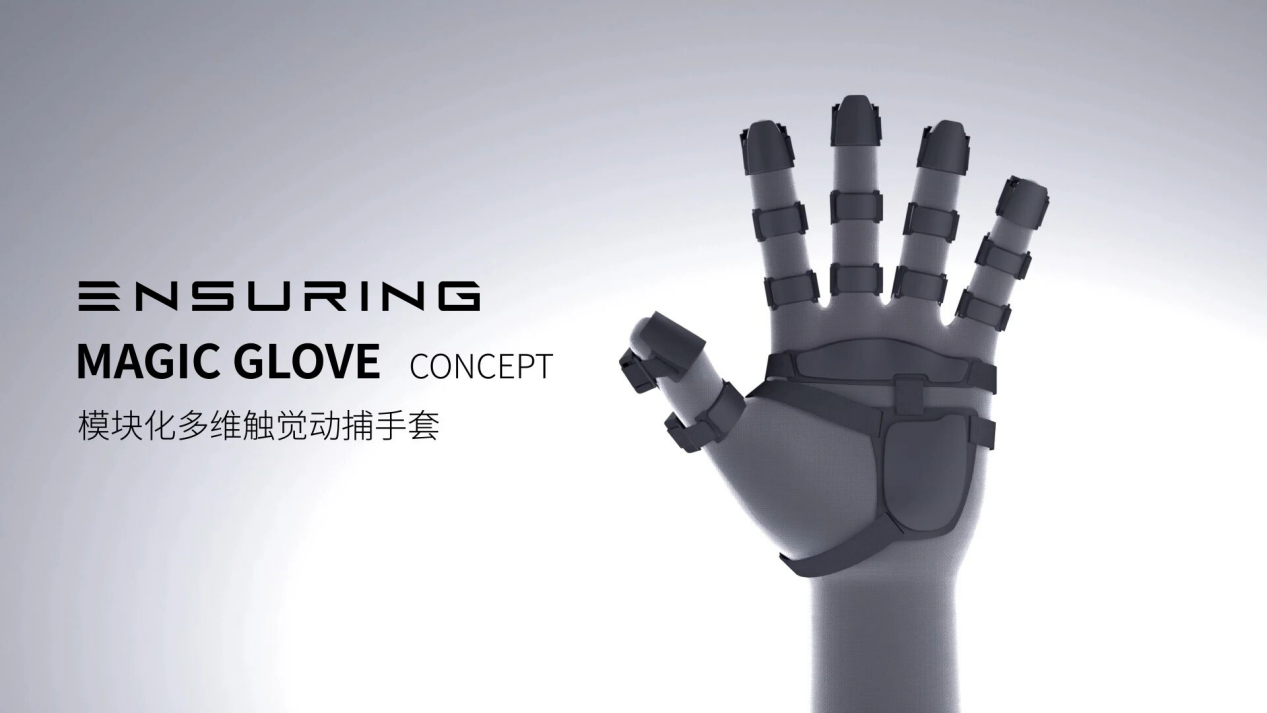
In August the company built a car-grade production line for multi-dimensional piezoresistive tactile sensors with Shangfu Dianji, adopting IATF 16949 quality management and automated process control. That detail matters more than the product announcement. Automotive supply chains are built around batch consistency, and a robot sensor that varies between units is a calibration problem that destroys the economics of deployment.
Doing this in Shenzhen is not incidental. Semiconductor process work, precision structure, algorithm development and manufacturing teams sit within the same city, and a mature automotive electronics base is available to be redirected at a new category. The reason a company this young can go from a sensor to a glove to a car-grade line in a year is that none of those steps required building a new industrial ecosystem.
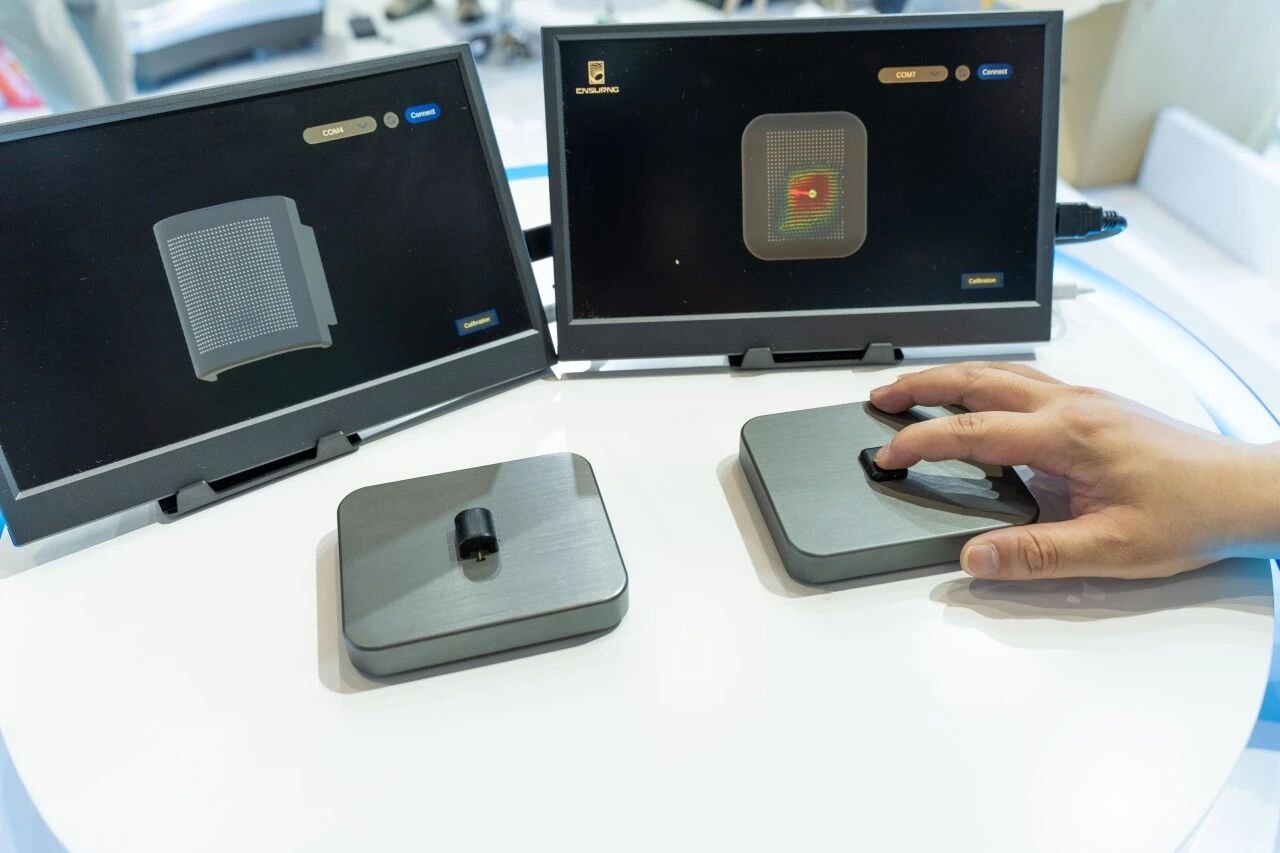
The wider pattern in Chinese robotics has been a shift from whole-body performance to end-effector competence, and the component layer is where that shift becomes measurable. A joint can be bought. A hand that can feel is still being designed. Shenzhen’s advantage in this next stage is not a single company but the density that lets a founder in her twenties with a doctorate and a sensor design find a partner to put it on an automotive line within months.
Whether that turns into a durable lead depends on the same thing it always does in components: whether the sensor survives a thousand shifts in a real factory, at a price the robot maker can absorb. The manufacturing line suggests the company understands that the test is yield, not novelty.
Editor’s note: This is an adapted translation of the original Shenzhen News report. It has been trimmed and restructured for readability for an international business audience. The full original (in Chinese) is at https://www.sznews.com/news/content/2026-11/02/content_32206155.htm.