Korea’s largest farm machinery maker has spent two years looking for a partner that can supply robot joints at volume. It found one in Shenzhen, and the two sides are now preparing a joint venture rather than a supply contract.
Yiyou Technology signed a memorandum of understanding with Daedong Group in Shanghai on 27 October. The scope is narrow on paper: joint modules for agricultural robots, joint development, field validation, production. The ambition is not. Both sides say they are working towards a joint venture and a shared pilot line for joint modules.
What each side brings
Daedong sells agricultural machinery in more than 70 countries and has been building out autonomous field robots and AI-guided mobile machines for greenhouses, poly tunnels and orchards. Those products have moved past demonstration and into commercial deployment, which is why the company is now shopping globally for a robot supply chain rather than developing joints in house.
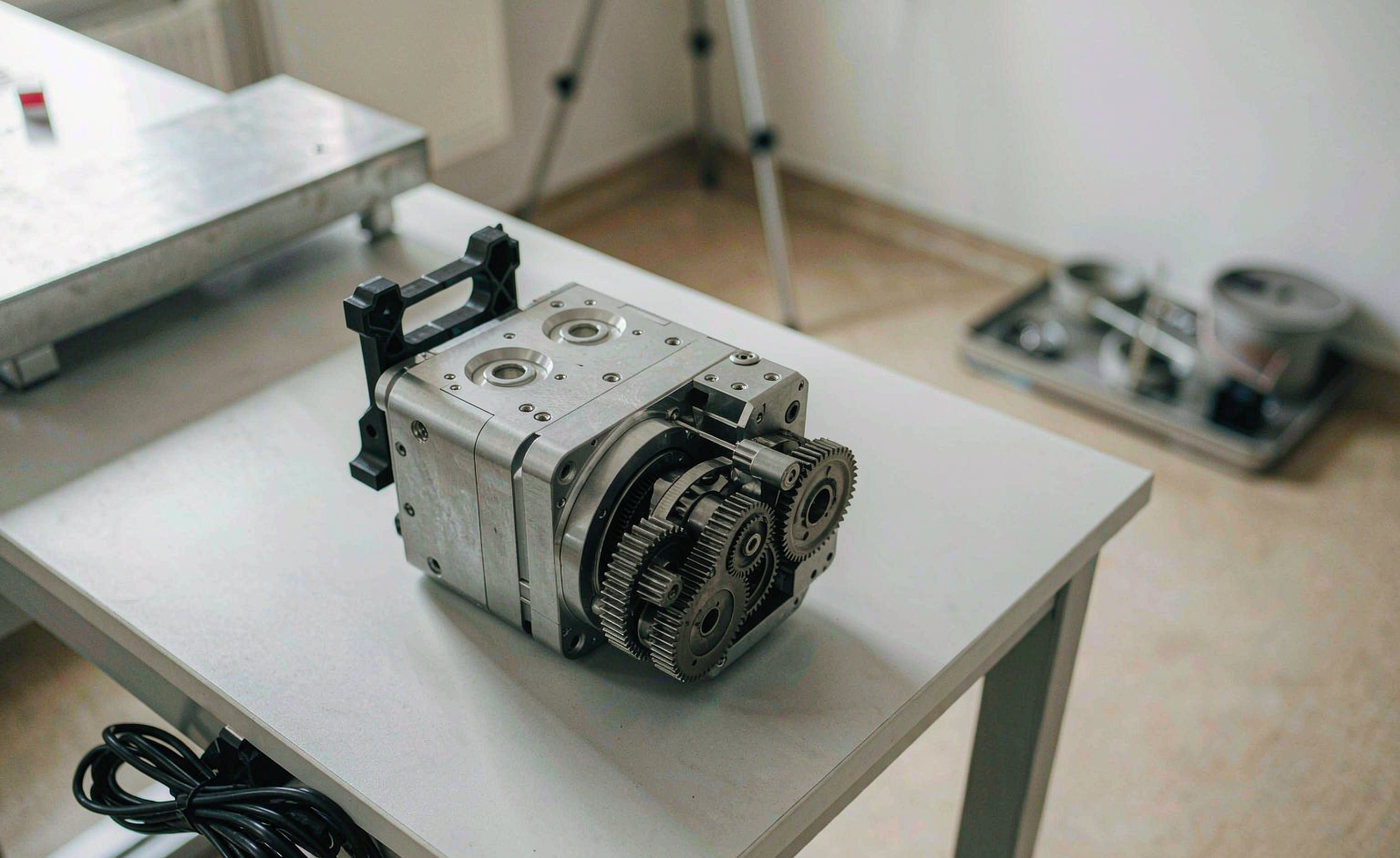
Yiyou has spent years on integrated joint modules, expanding capacity and adding product lines. The company’s pitch is not a specification sheet but a manufacturing and quality system that has already been validated at volume. In this deal it takes design, integration, testing and process engineering. Daedong supplies the field conditions the joints have to survive.
Neither side disclosed the equity split, the investment size or when production would start.
Why agriculture is a different test
Farm robots break joints in ways factory robots do not. Dust, mud, vibration, temperature swings and a working season measured in weeks rather than years all push reliability requirements away from the industrial baseline. A joint that survives a clean electronics line can fail in a poly tunnel.
That makes the validation loop the expensive part, and it is the part Daedong owns. The Korean company can put prototypes into real greenhouses and orchards across multiple climates without building a test farm. Yiyou cannot buy that access, and Daedong cannot buy Yiyou’s manufacturing yield curve.
The joint venture structure, if it closes, would lock both.
The Shenzhen side of the equation
Yiyou is based in Nanshan district in Shenzhen, one of a cluster of component makers that grew up supplying consumer drones, phones and industrial automation before turning to robot joints. Shenzhen’s advantage in this layer is not design talent. It is the density of machine shops, drive electronics suppliers and contract manufacturers within a short drive, which is what makes a 60 second cycle time on a harmonic joint line achievable at all.
For Daedong, that density is the reason to sign with a Chinese supplier rather than a Korean or Japanese one. For Yiyou, a Korean agricultural OEM is a route into a market where Chinese robot components still face procurement resistance.
The pattern is becoming familiar across Asian robotics supply chains. European and Korean OEMs keep the brand, the field knowledge and the customer relationship. The joint module, the drive and the encoder increasingly come from the Pearl River Delta.
Editor’s note: This is an adapted translation of the original OFweek report. It has been trimmed and restructured for readability for an international business audience. The full original (in Chinese) is at https://robot.ofweek.com/2026-11/ART-8321204-8120-30710321.html.