The consolidation of China’s embodied AI sector has started, and the buyers are not distressed funds. They are the model companies, the component makers and the carmakers that already sell into the same factories.
Two prices for the same technology
On 28 October, Sequoia China and Unitree launched a joint programme to find early-stage embodied AI projects, with Unitree supplying engineering experience and Sequoia supplying its investment system. DeepSeek is meanwhile negotiating to lead a seed round of tens of millions of dollars in Winverse AI at a post-money valuation of about USD 400 million, according to Bloomberg. Winverse was founded months ago by Hu Han, who previously ran Tencent’s vision-language and embodied foundation model work.
DeepSeek had already paid about RMB 141 million into Unitree’s IPO as a strategic investor. One deal bought a body, the other buys a brain.
The contrast sits in a single number pair. Hangzhou Kelin took control of humanoid maker Kepler in August at an implied valuation of about RMB 722 million, down from about RMB 1.06 billion nine months earlier, when it paid RMB 100 million for 9.43 per cent. Kepler reported 2025 revenue of RMB 4.34 million, a net loss of RMB 66.9 million and an order book above RMB 47 million. Winverse has no public product at all.
Who is actually paying
Model and chip companies are paying for teams. AMD agreed on 28 September to buy World Labs, co-founded by Fei-Fei Li, for about USD 8.2 billion in stock. Mobileye paid about USD 900 million for humanoid startup Mentee Robotics in 2026 and runs it as a separate division. Neither bought capacity or an order book. Both bought a research group and a route into physical AI workloads.
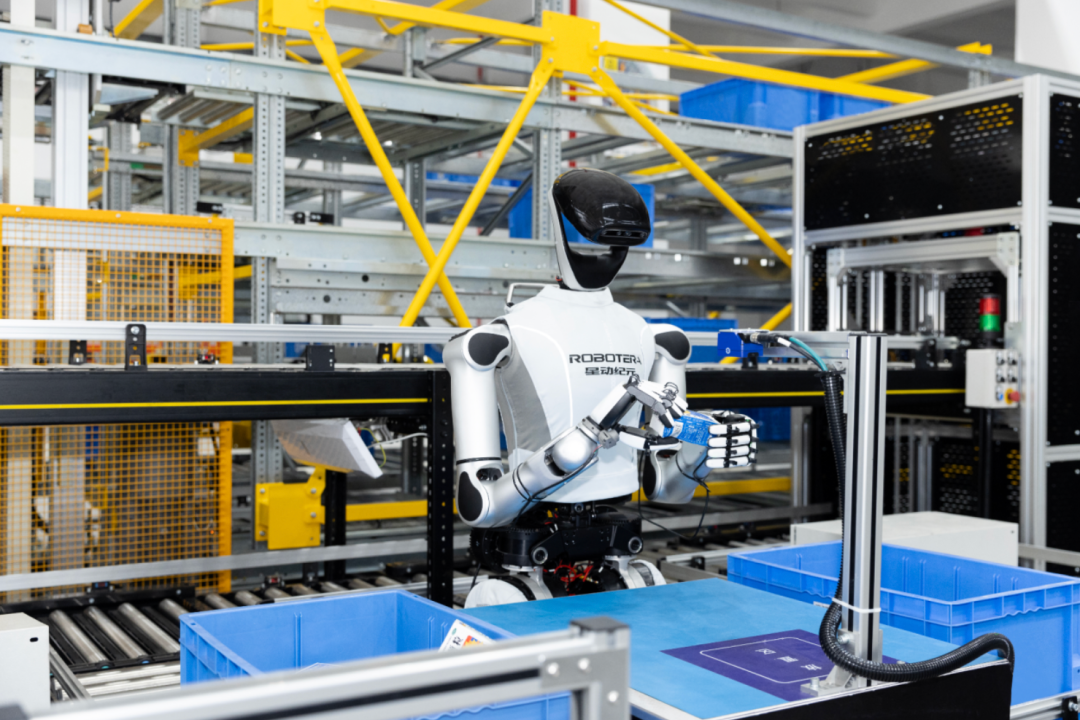
Industrial companies are paying for a fit with existing operations. CATL led a B round above RMB 1.1 billion in Galaxea in June 2025, after Galaxea’s heavy-duty robots had already gone into CATL battery plants. Hangzhou Kelin, which sells power-grid sensing and already makes six-axis force sensors, dexterous hands and motion control, bought a whole-robot maker to move from parts to machines.
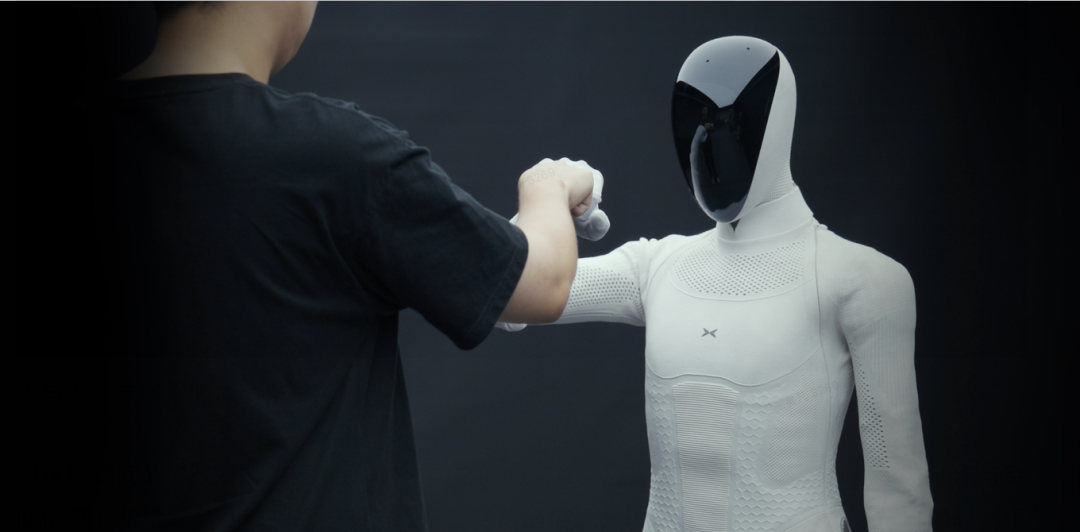
Carmakers are the most selective. XPeng has signed more than USD 900 million of equity financing for its robot division, with Tencent and Alibaba each subscribing about USD 100 million, and plans to put IRON in its own stores and campuses before selling outside. BYD is developing a humanoid in-house while holding stakes in AgiBot and PaXini. Geely led a nearly RMB 1 billion A-plus round in Xingdong Era in November 2025.
The supply side is buying too
Companies that sell perception, simulation or compute are moving in the same direction. Hesai shipped 142,400 robot lidar units in the second quarter of 2026, up 193.4 per cent year on year, and has said explicitly that it will not build general embodied models or robot bodies. 51WORLD sells simulation and deployment infrastructure. Horizon Robotics spun its robot business into Dogo Robotics, which raised USD 150 million in April 2026 and a total of USD 270 million across its B round, precisely because buying a body maker would turn its own customers into competitors.
Momenta went the other way and invested in data first, leading an A round in Jianzhi Robotics in August 2026. Jianzhi builds no robot, only a body-free data system and a foundation model for real-machine evaluation.
The question has changed
The pressure is measurable. IT Juzi counted 288 financing deals in Chinese embodied AI and robotics in the first half of 2026, worth more than RMB 46 billion, with roughly 70 per cent of the money going to the top 20 companies. TMT Post counted more than 20 robot companies that went bankrupt, dissolved, liquidated or shut a business line between February 2025 and September 2026.
For a company stuck between the top and the tail, the useful question is no longer who will rescue it. It is who it is useful to. Whether its orders can be verified, its team can be absorbed and its technology fills a gap in the buyer’s line will decide if it is funded, acquired or wound up.
Editor’s note: This is an adapted translation of the original OFweek report. It has been trimmed and restructured for readability for an international business audience. The full original (in Chinese) is at https://robot.ofweek.com/2026-11/ART-8321205-8420-30710691.html.