A Shenzhen listed company that most investors know as a supplier of phone and display components is redirecting more than a billion yuan into robots. Hongfuhan Technology filed to build a dedicated robot precision metal components base, and the filing is a cleaner signal of where Chinese component money is going than any funding round.
The numbers in the filing
The total investment is about RMB 1.007 billion, with a two-year construction period. Of that, RMB 220 million comes from the remaining IPO over-allotment proceeds, and RMB 787 million from the company’s own funds and self-raised capital. The site is Wuzhong district in Suzhou, Jiangsu, where existing plants will be upgraded with high-precision production and testing equipment rather than built from scratch.
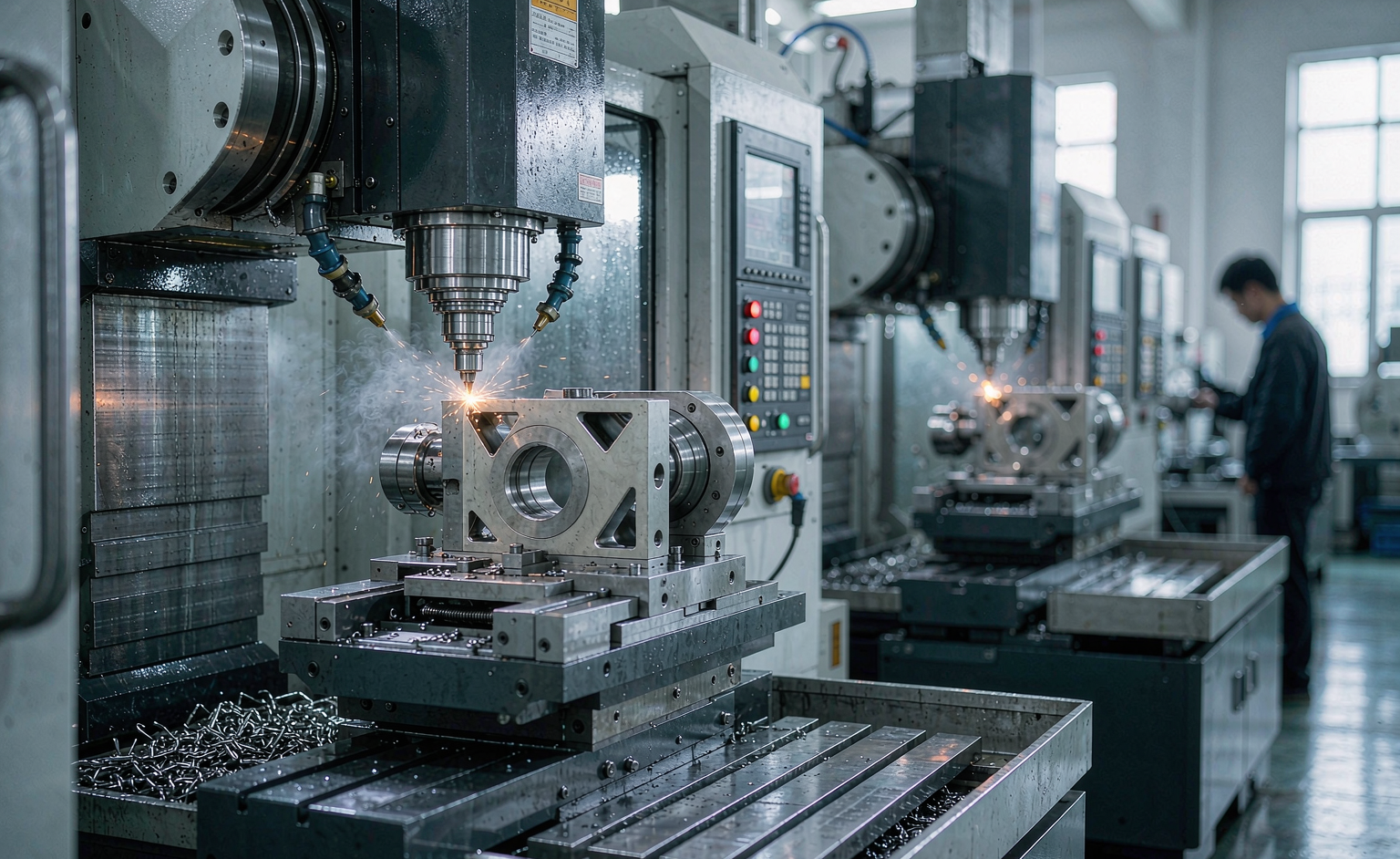
The output is mundane and essential: CNC machined assemblies, injection moulded assemblies and the metal housings that hold a robot’s joints, sensors and wiring together. Hongfuhan already runs precision stamping, milling and skiving processes, which transfer to robot components with less retooling than a new entrant would need.
The order that made the decision easy
In February, Hongfuhan signed a three-party framework agreement with Guangdong Quanxiang Intelligent and Jiangxi Xiexun Intelligent Equipment to supply handling robots, collaborative robots, charging robots, new energy forklifts and robot modules and core parts. The contract total was RMB 480 million including tax.
A RMB 480 million order is a strong argument for owning the capacity rather than subcontracting it. The Suzhou base is the industrial follow-through: a components supplier converting an order book into tooling, clean rooms and test benches.
The profit picture underneath
The financials explain why the company can fund this from its own balance sheet. In the first half of 2026 Hongfuhan reported revenue of RMB 589 million, up 65.7 per cent, and net profit of RMB 73.1 million, up 221.6 per cent. Non-GAAP net profit rose 232.5 per cent to RMB 69.52 million. Profit grew roughly three times faster than revenue, which usually means mix and utilisation rather than volume alone.
The nine-month forecast extends it. The company guides to net profit of RMB 170 million to RMB 200 million for the first three quarters, a rise of 108 to 145 per cent, with non-GAAP profit up 108 to 148 per cent.
Its customer list is the reason. Hongfuhan sits inside the supply chains of Foxconn, Pengding Holdings, Murata, BOE and Luxshare, which means it has already passed the qualification, documentation and yield discipline that robot customers also demand.
Why this matters beyond one company
Hongfuhan describes its structure as three pillars: smart manufacturing, thermal solutions and industrial robots, serving consumer electronics, AI data centres and robots. That combination is becoming the standard shape of a Chinese component supplier. Thermal management for AI servers and structural parts for humanoids share the same machining, brazing and quality systems, so a single plant can chase both demand cycles.
The strategic question is whether the robot line earns its capital. A base sized for scale production needs customers who order in the tens of thousands, and China’s humanoid output is still counted in thousands. The RMB 480 million contract covers the first phase. What happens after it decides whether this is a strategic pivot or an opportunistic extension.
Editor’s note: This is an adapted translation of the original OFweek report. It has been trimmed and restructured for readability for an international business audience. The full original (in Chinese) is at https://robot.ofweek.com/2026-10/ART-8321201-8120-30707866.html.