A production car has passed 500 km/h for the first time, and it was Chinese. The Yangwang U9 Xtreme recorded 503.17 km/h on a public road challenge in Abu Dhabi on 6 November, a run verified by the FIA and certified by Guinness World Records in two categories: fastest one-way speed for a production car, and fastest one-way speed for a production electric car.
The record it broke was German
The previous mark belonged to the Bugatti Chiron Super Sport 300+, which reached 490.484 km/h in 2019. The U9X had already run 496.22 km/h at the ATP test facility in Germany, close enough to 500 that the official telemetry showed 1.5 seconds of full throttle still available at the line. The car was not out of power. The track was out of length.
The driver on the Abu Dhabi run was Marc Basseng. Li Ke, executive vice president of BYD Group, was present.
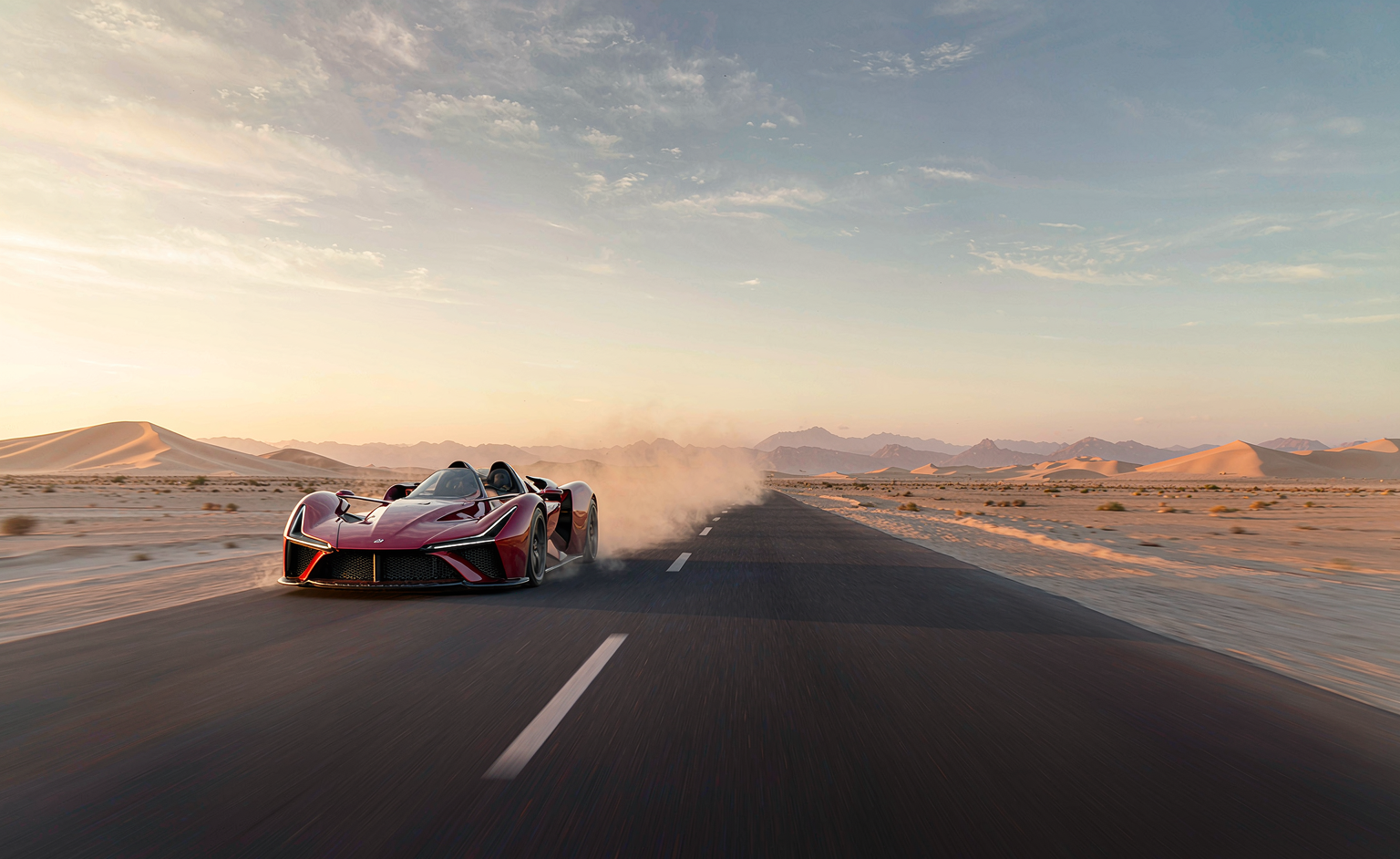
The hardware under the number
The car sits on a 1,200-volt architecture, which BYD describes as the first mass-produced full-domain high-voltage platform. Four custom motors spin to 30,000 rpm, each producing a peak 555 kW, for a combined 2,220 kW and more than 3,000 PS. It lapped the Nurburgring in 6 minutes 59.157 seconds.
The commercial details matter as much as the physics. The U9X was unveiled at BYD’s Zhengzhou circuit on 20 September 2025, shown and launched at the Beijing auto show on 24 April 2026, and deliveries began in Dubai and elsewhere from June 2026. The price is RMB 20 million, production is capped at 30 cars, and the allocation is 28 overseas and 2 in China. All 30 were taken quickly.
What a 500 km/h halo car is for
A record like this does almost nothing for BYD’s unit sales. Thirty cars at RMB 20 million is RMB 600 million of revenue, a rounding error for a company of its size. What it does is reset a ceiling that European brands have owned since the 1930s, and it does so in front of an Emirati and Gulf audience that buys exactly this kind of car.
It also functions as a component showcase. The 1,200-volt platform, the 30,000 rpm motor and the thermal management needed to hold peak power for a measured run are the same engineering families that feed into volume electric vehicles a generation later. BYD has run this play before with blade batteries and with integrated die-casting: prove it at the top of the range, then push the cost curve down.
The strategic value is credibility, not speed. A Chinese company arguing that it now sets the performance standard in electric vehicles is a different argument from a Chinese company arguing that it offers better value. The first one is much harder for a European competitor to answer with a price cut.
Editor’s note: This is an adapted translation of the original Chedongxi report. It has been trimmed and restructured for readability for an international business audience. The full original (in Chinese) is at https://chedongxi.com/p/379509.html.