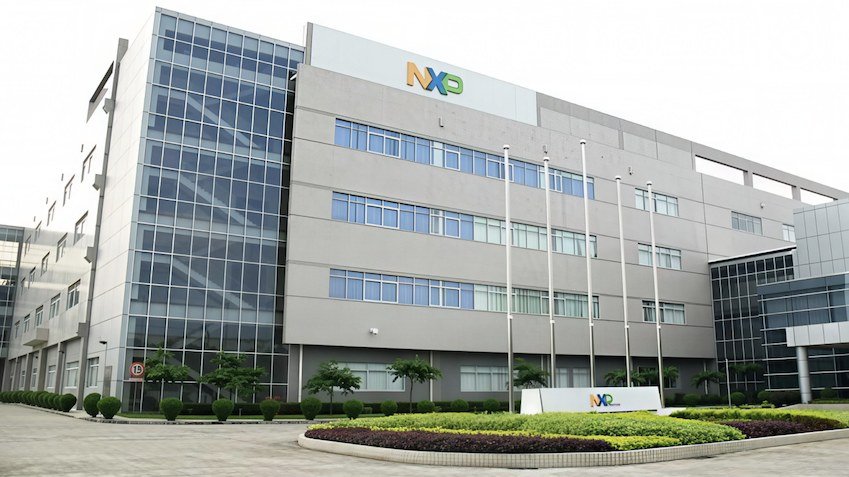
NXP has issued a third price adjustment notice to distributors in 2026, covering selected distribution and direct supply product lines with effect from 1 January 2027. The company attributed the move, as it did the earlier rounds in March and May, to persistent inflationary pressure across raw materials, energy, labour, logistics and supplier inputs.
NXP is a leading supplier in automotive semiconductors, with a portfolio built around software-defined vehicle products including the S32 family of automotive processors, the S32N5 central compute platform, in-vehicle networking chips and radar devices. Three rounds in twelve months from the same supplier is a signal about the input side of the Chinese car industry, not a single pricing event.
The margin has collapsed
Passenger car association data puts industry revenue for the first nine months at RMB 8.04 trillion, up 2.6 per cent, against operating cost of RMB 7.16 trillion, up 3.8 per cent. Cumulative profit was RMB 267.5 billion, down 23 per cent, for a sales margin of 3.3 per cent.
September was worse. Output of 3.06 million vehicles generated revenue of RMB 1.04 trillion, up 0.6 per cent, while operating cost rose 2.5 per cent. Monthly profit fell 68 per cent to RMB 14.2 billion and the sales margin dropped to 1.4 per cent, the lowest monthly reading in almost four years.
Dividing total profit by output gives roughly RMB 4,640 of profit per vehicle built in September. Cost growth is outrunning revenue growth, and the pattern has a name in the Chinese industry: revenue up, profit not.
Memory is the sharpest edge
UBS estimates that memory price inflation alone could add several thousand to tens of thousands of renminbi to the per-vehicle cost of a high-end assisted-driving model. Memory sits in the cockpit domain controller, the ADAS box and increasingly the central compute node, and it is the component with the least substitution room.
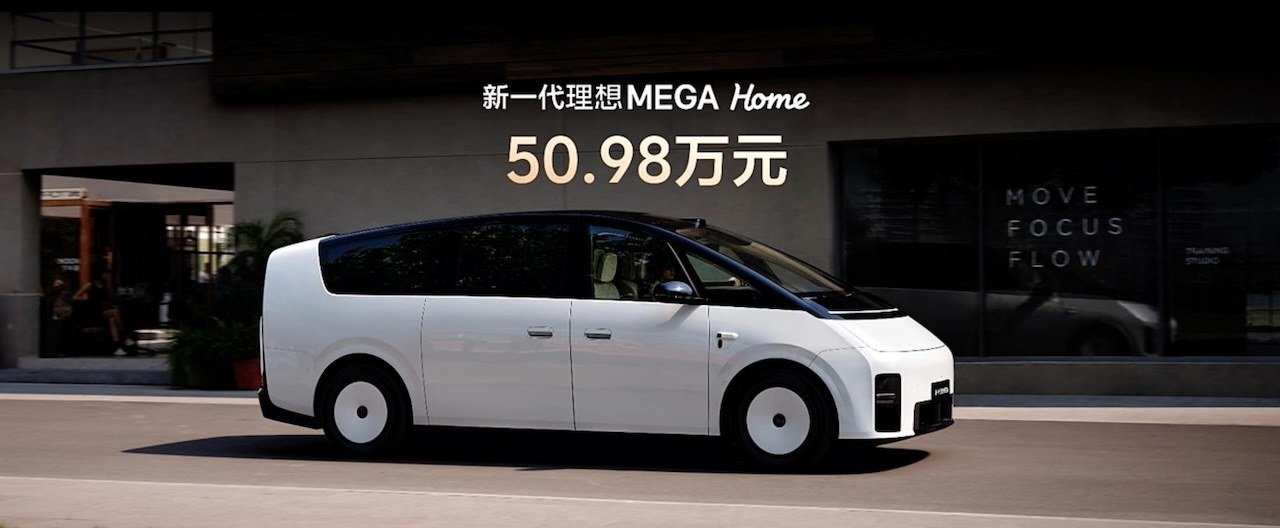
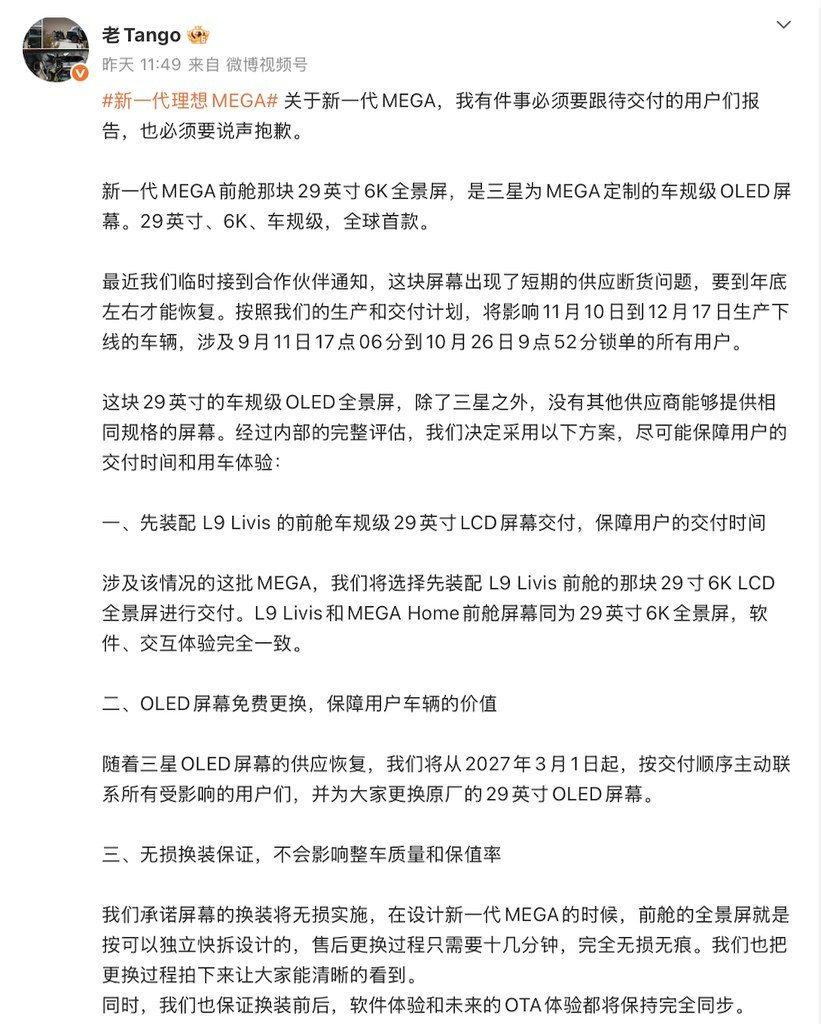
Cost pressure has moved down the chain into delivery. Li Auto’s product line head publicly apologised to buyers of the new MEGA because the 29-inch 6K panoramic screen in the front cabin, a Samsung automotive OLED made exclusively for the model, went out of stock.
Orders locked between 17:06 on 11 September and 09:52 on 26 October, scheduled for build between 10 November and 17 December, are affected. The interim solution fits the 29-inch 6K LCD used in the L9 Livis. Samsung OLED supply is expected to resume by year end, and a bulk screen replacement service opens on 1 March 2027 with a three-year service package as compensation.
Batteries, lamps and screens
It was not the first shortage on that model. In late October, buyers who locked orders before 15:00 on 7 September were told the CATL 5C ternary cells specified for their cars could not be delivered on schedule and would be replaced by Li Auto’s in-house Lianshan battery. Buyers could accept the substitution with RMB 3,500 of benefits, or cancel for a deposit refund plus RMB 5,000 in compensation. The company said it kept pressing for additional cell allocation without closing the gap.
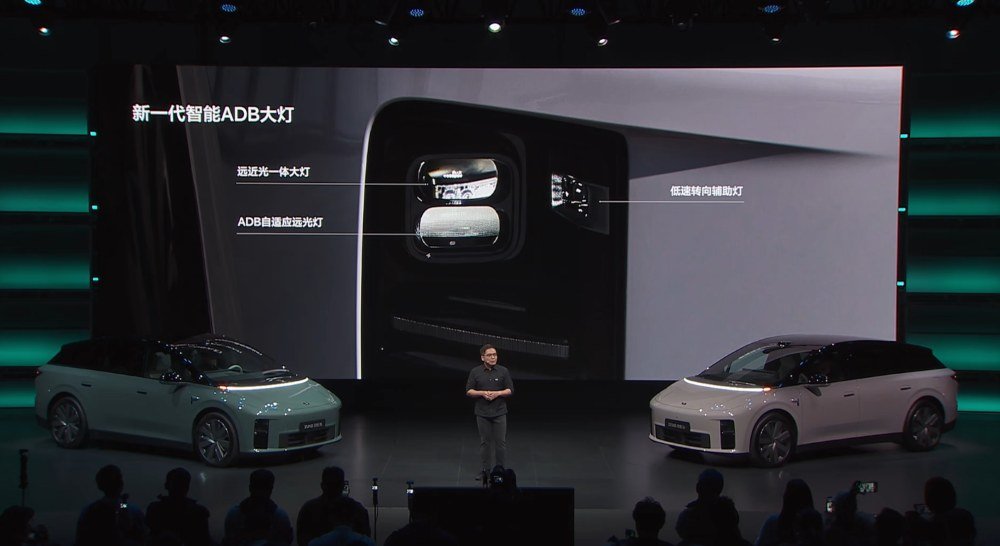
The i6 ran into the same pattern. In mid-to-late July, its product line head disclosed a short-term fluctuation in headlamp supply that cut that month’s output by about 4,000 vehicles against plan, after earlier delays caused by cell capacity ramp-up.
What the squeeze actually tests
Two stresses are running at once. On cost, raw material, energy and logistics inflation travels down the chain into the assembler. On delivery, one headlamp, one screen or one battery specification is enough to stop a line that is already running.
The response so far is substitution and compensation, which protects delivery dates but erodes both margin and brand promise. The durable responses are supply base diversification, in-house control of key chips and components, and tighter cost management, and only a handful of Chinese carmakers have the balance sheet to run all three at once.
For European suppliers and buyers the implication runs the other way. A customer base earning 1.4 per cent per vehicle has almost no capacity to absorb input inflation, which means price negotiations with Chinese carmakers will get harder, not easier, through 2027.
Editor’s note: This is an adapted translation of the original Chedongxi report. It has been trimmed and restructured for readability for an international business audience. The full original (in Chinese) is at https://chedongxi.com/p/379207.html.