On 13 November the Shenzhen Stock Exchange listing review committee convenes its 62nd session of 2026 to consider one application: Naisdate Planetary Transmission Systems, a gear maker in Zibo, Shandong, seeking RMB 823 million.
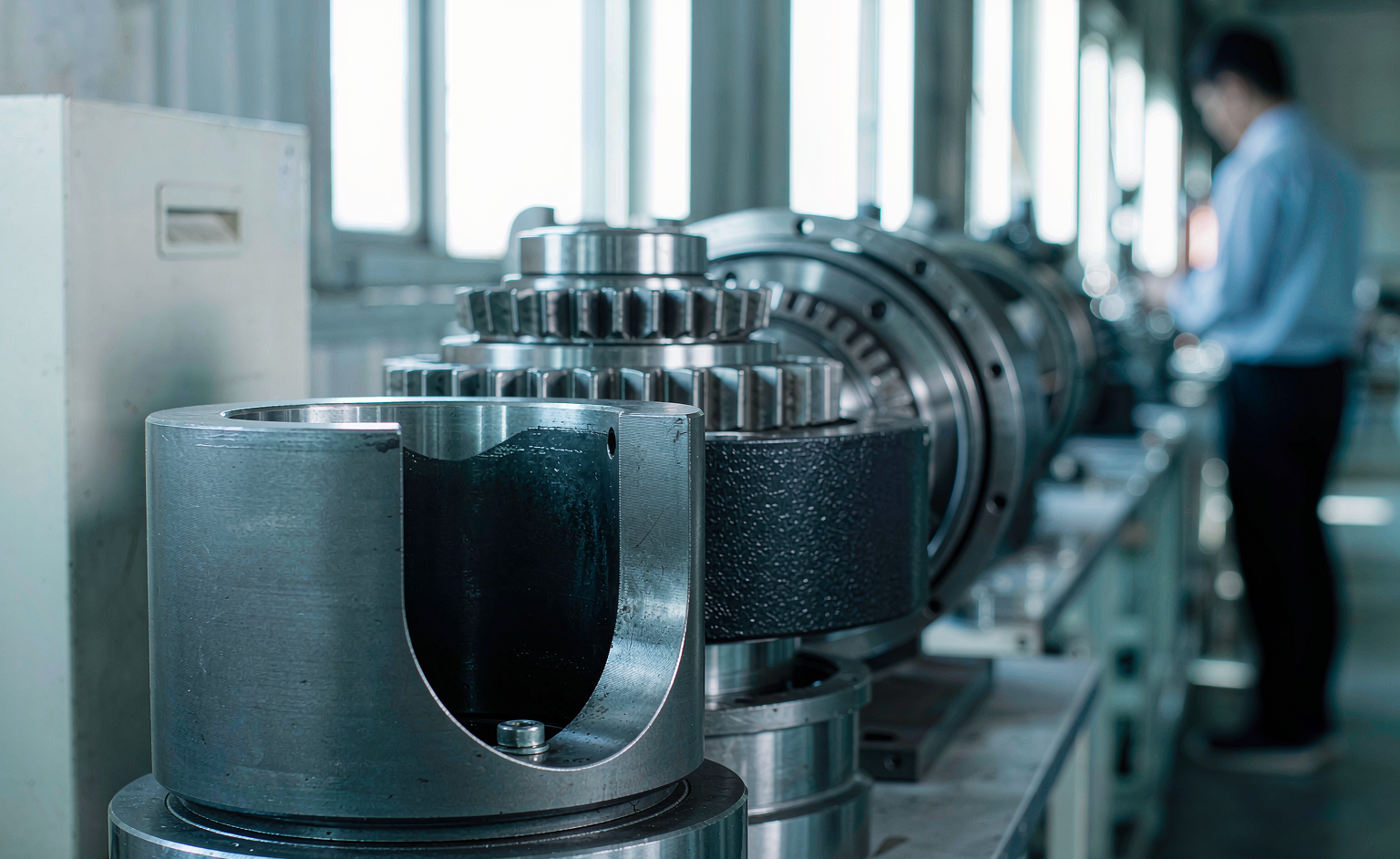
Its product never appears on a launch stage. It sits inside a robot joint, roughly 30 per cent of an industrial robot by cost, and it decides whether an arm shakes and whether a chassis tracks straight.
Editor’s note: This is an adapted translation of the original OFweek report. It has been trimmed and restructured for readability for an international business audience. The full original (in Chinese) is at https://robot.ofweek.com/2026-11/ART-8321201-12003-30711068.html.
Twenty years of gear cutting in an old industrial base
Chairman An Lishu, born in the 1960s, spent his early career at the state-owned Boshan Electric Machinery Factory, teaching in its education section, lecturing at the party school, then moving into sales after the enterprise was restructured. In July 2006 he put RMB 1.05 million into what became Naisdate.
By 2025 the company was turning out more than 700,000 precision planetary reducers a year, first in China and second globally on volume, according to public remarks by vice general manager Liu Qi in July 2025. Its younger brother An Liling, also out of Boshan, runs product development.
The competitive frame is import substitution at the top end. Harmonic reducers were long controlled by Japan’s Harmonic Drive, RV reducers by Nabtesco. Naisdate attacks the planetary segment, where Chinese suppliers have been strongest on mid-tier volume and weakest on the tolerances that robot joints demand.
The customer list is the argument
AgiBot, UBTech and Zhongqing buy its reducers for joint modules. JD Logistics, Cainiao and SF Express use its steering-wheel drive units in warehouse mobile robots. CATL runs them in lamination equipment.
The financials tell the story of a component supplier riding someone else’s cycle. Revenue was RMB 479 million in 2023 with net profit of RMB 152 million. In 2024, as solar and lithium battery capex contracted, revenue fell 28.86 per cent to RMB 341 million and plant utilisation dropped from 94.39 per cent to 56.62 per cent. In 2025 the embodied AI order book arrived: revenue from that segment went from RMB 7.23 million to RMB 96.62 million, a 12-fold jump, and utilisation climbed back to 101.81 per cent.
The company’s bet is on consumables rather than hits. A humanoid carries dozens of moving joints and every rotating one needs a reducer. Gears wear, precision drifts, lines speed up and expand. An integrator without a hit product struggles to survive. A reducer maker only needs industry-wide installed base to keep growing.
Where RMB 823 million goes, and why the exchange asked twice
The filing allocates RMB 623 million to a plant for 1.5 million precision planetary reducers and transmission modules a year, RMB 100 million to an automated central warehouse and RMB 100 million to an R&D centre upgrade. The new lines add 1.3 million units of annual capacity, 2.6 times actual 2025 output. Reviewers raised the absorption question in both rounds of inquiry.
The balance sheet makes the raise look less like need. At the end of June 2026 the debt ratio was 10.11 per cent with no interest-bearing debt. Cash, time deposits and bond investments totalled RMB 1.453 billion, 72 per cent of total assets. The company paid RMB 252 million in dividends across the reporting period, close to all of its net profit for that stretch, and public filings imply the founding couple realised about RMB 300 million through dividends and stake transfers.
Secondary pricing has been volatile. An agreed transfer in September was struck at RMB 39.65 a share, two transfers late in the year cleared at RMB 11.67 and RMB 14.52, and a new capital increase on 25 November returned to RMB 37.64. On 5 June the Securities Association of China put Naisdate on the third batch of on-site inspection lists for 2026.
Standards, and the price of becoming a commodity
On 6 and 7 November, Shengzhou in Zhejiang hosted the release of two national standards for harmonic reducers, GB/T 14118-2026 and GB/T 12601-2026, approved on 28 September and effective 1 April 2027. The versions they replace date to 1993 and 1990. Laifu Harmonic led the drafting, with Leaderdrive, Zhongji Kemei and Zhongda Leader participating.
Shi Zhaoyao of Beijing University of Technology, who sits on the national reducer standardisation committee, argued that a national benchmark is what allows the market to sort winners from losers. It also gives Chinese suppliers a reference sheet for export customers who will not read a factory tour.
The same benchmark accelerates price comparison, and prices are already falling. Laifu’s disclosed average harmonic unit price dropped from RMB 802 in 2023 to RMB 573 in 2025, a fall of nearly 30 per cent, while its unit cost went from RMB 482 to RMB 351. Naisdate’s gross margin slid from 55.6 per cent to 48.51 per cent. In the 2025 China harmonic reducer market, Leaderdrive held 27.5 per cent and Laifu 21.4 per cent, according to CIC data cited in Laifu’s prospectus.
That is not decay. It is a specialist component becoming a standard industrial good, priced per unit and bought per unit, which is exactly the market a volume reducer maker wants to own.