Lotus has spent four years telling the market it would end up battery-electric. Its first entry into the top tier of supercars is going to be a hybrid V8, and the engine was engineered as a hybrid from the first drawing rather than converted from one.
Horse Powertrain has confirmed that its W40 V8 and 8LDCT hybrid transmission will debut in the Lotus Type 135, the model that takes the British brand into the segment above its current range.
The engineering, briefly
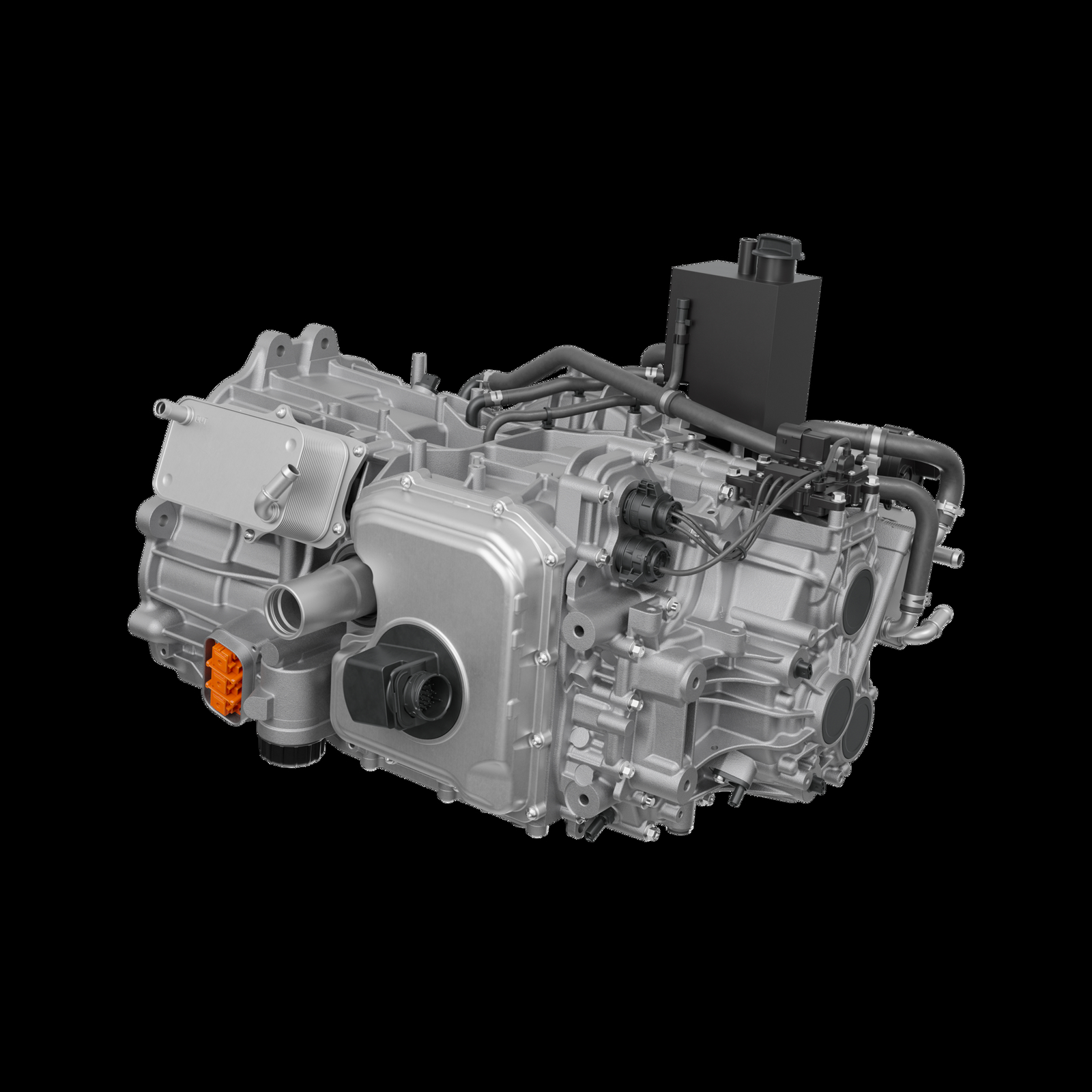
The W40 displaces 4.0 litres across eight cylinders in a longitudinal layout, with twin turbochargers mounted in a hot-V arrangement on top of the block, direct injection, and a short intake path sized for the turbos. Peak output is above 500 kilowatts with 800 newton metres of torque from a unit weighing 200 kilograms.
The transmission is the more consequential half. The 8LDCT is an eight-speed wet dual-clutch hybrid gearbox with shift response under 20 milliseconds, silicon carbide control electronics and power modules integrated inside the housing, a variable-displacement mechanical oil pump, and a peak torque capacity of 1,050 newton metres. Horse says the two were co-designed from the start, which is why the combined unit loses less in transfer than a bought-in engine and a bought-in gearbox bolted together.
The company’s argument for supercars is not fuel economy. It is that a hybrid system has to manage heat, shift response and torque fill under sustained load, and that a V8 designed around those constraints behaves differently from one adapted to them.
Who Horse Powertrain actually is
Horse is the powertrain joint venture between Geely and Renault, headquartered in London. That detail matters more than the engine. It means the supply chain for Europe’s next generation of high-performance hybrids runs through a company that sits inside both the Chinese and the European industrial systems, and that can sell a European badge an engine whose development was funded by Chinese volume.
Matias Giannini, Horse’s chief executive, called the W40 a milestone for the engineering team and one of the highest power density V8s in the industry’s history.
The strategy behind it
Lotus chief executive Feng Qingfeng framed the deal as combining Horse’s powertrain with Lotus’s own work on lightweight structures and chassis tuning. The Type 135 is intended to be the brand’s first genuine supercar, and a hybrid V8 is a faster route to credibility there than a battery pack, because the buyers in that segment judge sound and sustained output before they judge range.
This is also the least discussed consequence of Europe’s electrification timetable. Mass-market battery-electric volume keeps slipping to the right. At the top of the market, where volumes are tiny and margins are large, hybridised combustion is not being phased out at all. It is being re-engineered with silicon carbide inverters and dual-clutch hybrid transmissions, and the resulting hardware is better than the version it replaces.
What it signals for suppliers
A 200-kilogram V8 with a 1,050 newton metre gearbox is a low-volume, high-value programme. It will not move the industry’s carbon numbers. It will, however, keep a specific set of European and Chinese tier-one suppliers in combustion engineering work for another model cycle, at exactly the moment their mass-market contracts are being cancelled.
The cost of that work is being amortised across a joint venture with access to Chinese production volume. That is the structural advantage Horse has over a European engine maker trying to fund the same programme from a shrinking order book.
Editor’s note: This is an adapted translation of the original Gasgoo report. It has been trimmed and restructured for readability for an international business audience. The full original (in Chinese) is at https://auto.gasgoo.com/news/202611/10I70477529C103.shtml.