On 28 October, the Beijing arm of the China Securities Regulatory Commission accepted an IPO tutoring filing from Beijing Huixi Technology, starting the company’s route to an A-share listing with CITIC Securities as sponsor. Huixi was incorporated in April 2022, so four and a half years separate founding from a domestic listing filing.
The filing shows a controlling shareholder, Hefei Yinxi Intelligent Technology, holding 18.428 per cent of the equity but 68.7694 per cent of the votes through special voting rights. The founder team keeps close to seven tenths of the say with under two tenths of the shares, a structure designed so that a technical founder keeps control of direction after several rounds of dilution. Corporate registry data shows Hefei Yinxi at 23.8255 per cent, above the filing figure, because the B round and the tutoring agreement both closed on 22 October and the equity change has not finished its registry formalities.
The car market closed first
Huixi began with vehicle intelligent computing platforms and driver assistance chips. In October 2024 it released its first 7nm automotive-grade chip, Guangzhi R1, at 500 TOPS, pitched at twice Nvidia’s Orin-X and described as the first Chinese high-compute driver assistance chip natively tuned for transformer models. The stated goal was to be the fastest high-compute driving chip into domestic production.
That goal did not land. Public reporting indicates Huixi did not secure the planned passenger-car production programme in 2025, and the driver assistance window was narrowing. In the high-end assisted driving market for Chinese brands, Horizon Robotics and Nvidia together hold six tenths of share. Xiaomi and Nio, both early investors, left no stable passenger-car nomination: one built its own silicon, the other bought Nvidia.
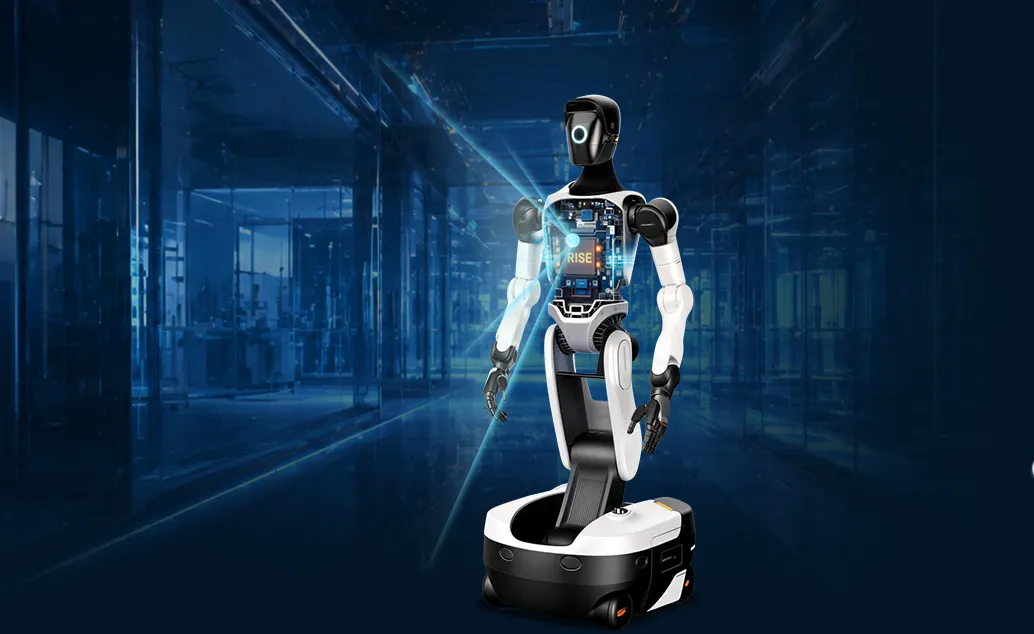
So the company moved with the market. Guangzhi R1 had been designed to run large models at the edge, which made its compute profile useful on a robot. From 2025 the RISE computing platform began shipping, first inside AgiBot’s Lingxi G2 humanoid, then integrated and validated on an L4 unmanned logistics vehicle from Jiushi Intelligent. At the World Robot Conference in August, Huixi showed its Huixi Embodied series, with the robot-facing R1 PRO using a fused large-brain and small-brain architecture at 375 TOPS, alongside RCM400 and RCM500 modules.
In under two years the company went from a chip to modules to a toolchain, packaging compute, perception and motion generation for robots as one kit.
The number that matters is 17,625
From 23 to 28 June, eight Lingxi G2 units worked the tablet quality inspection section of Longqi Technology’s Nanchang plant for six consecutive days. They completed 17,625 tasks with a 99.99 per cent success rate. A deployment result of that kind carries more weight with buyers than any compute figure.
The team is the other hard asset. Founder Xu Ningyi holds bachelor, master and doctoral degrees in electronic engineering from Tsinghua and was a chief architect in Baidu’s intelligent chip division, where he led design of the Kunlun cloud AI chip. Co-founder Zhang Jianyong also came out of Tsinghua, ran autonomous driving at Nio, and led the EyeQ4 and Orin platforms from sample to production launch. He Guanghui holds a Tsinghua doctorate and a professorship at Shanghai Jiao Tong University, working on AI chips and architecture.
The industry shorthand is that this team includes people who have shipped automotive chips past 1 billion units cumulatively, and technology that went into more than 700 production models. The company now has over 200 staff, averaging a decade of experience across chip design and driving production.
State money replaced strategic money
In February 2026 Huixi closed a Pre-B round of more than RMB 800 million, with AgiBot taking a strategic stake. In October it closed a combined Pre-B+ and B round of about RMB 1.7 billion. The lead investor changed from Shunwei and Xiaomi to the Beijing Artificial Intelligence Industry Investment Fund, joined by the national AI industry fund and the Beijing robotics industry fund. Including earlier rounds, equity financing in 2026 exceeded RMB 2.5 billion.
The change of lead investor says more than the amount. The company’s technical direction has been folded into an industrial cultivation programme rather than left as a financial investor’s option.
The tutoring filing discloses no revenue or profit, and multiple reports say Huixi is not yet profitable. The comparables show why that is normal at this stage. Black Sesame Technologies booked RMB 822 million of revenue in 2025 against RMB 1.417 billion of research spending and a full-year loss of RMB 1.425 billion. Horizon booked RMB 3.758 billion of revenue against RMB 5.154 billion of research spending. High-compute silicon burns cash on both development and delivery until volume arrives.
Customer concentration is the other risk. AgiBot is both shareholder and first scale customer. Leju and Jiushi have completed validation, but whether orders spread from one customer to many decides whether Huixi moves from a working line to a working margin. One industry survey estimates Huixi shipped about a fifth of global high-compute robot chips in the first half of 2026, ranking second globally and first among Chinese suppliers.
Switching to embodied AI cleared only the first gate. Laboratory validation, line trials and stable profitability are what the company faces between this filing and a listing.
Editor’s note: This is an adapted translation of the original OFweek report. It has been trimmed and restructured for readability for an international business audience. The full original (in Chinese) is at https://www.ofweek.com/ai/2026-11/ART-201714-8120-30710069.html.