How well do robots and logistics fit? On social media someone described the pairing as rice with tomato and egg, and the value of the comparison is that it is merely suitable. Warehouses are full of repetitive work, the task flow is relatively fixed, the space is enclosed, and the return on a robot is easy to calculate.
Yet a warehouse is not fully standardised either. Cartons come in different sizes, soft bags deform the moment they are gripped, bottled goods tip and break, and the same item is never left in the same place twice. Those non-standard problems are exactly what conventional automation handles badly.
At CeMAT Asia 2026, which closed this month in Shanghai, robots took the centre again. Moving cartons and palletising are no longer the interesting part. What drew attention was robots handling the goods inside the carton.
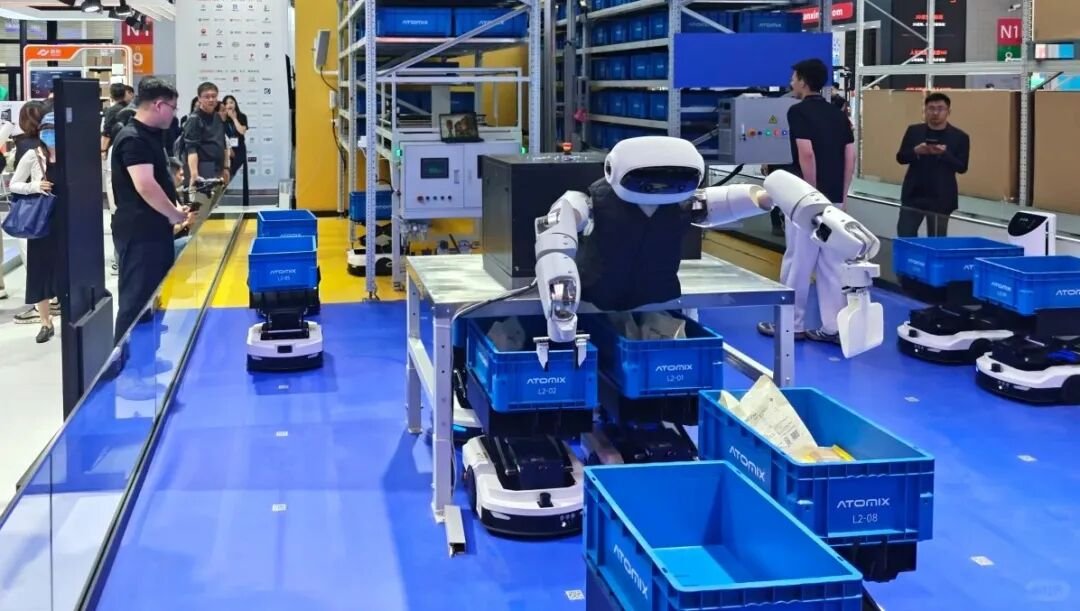
Three product approaches were on show, and all three answer the same question. When a robot stops moving boxes and starts picking items, what happens to warehouse throughput?
Zhiwang Weilai: keep the warehouse, change the robot
Zhiwang Weilai built its pitch around zero retrofit. The usual method of bringing automation into a warehouse is to make the environment suit the machine: adjust racking, re-plan aisles, standardise totes, add positioning markers and redesign part of the workflow. That raises the certainty of machine operation and carries a direct cost, because the warehouse has to stop, spend money and disturb its existing rhythm. For a working site with many SKUs and dense racking, that is not a decision taken lightly.
Zhiwang Weilai instead leaves racks, aisles and product layout untouched. At the show, Armstrong Pro completed shelf picking in a mock warehouse. It uses an all-wheel omnidirectional chassis that moves sideways and turns in place, with an effective working height covering zero to 2.4 metres. Dual arms take the goods while the mobile base moves between racks and adjusts posture.
Aisles and shelf heights are usually fixed years in advance, while product positions change constantly. A robot that can strafe, pivot and reach multiple heights has a chance of working without re-racking.
Founder Sun Junkai gave an example that shows how hard zero retrofit is. After a robot entered a pharmaceutical warehouse, the team found that even one extra centimetre on the chest could block an arm from reaching the shelf. They adjusted the chassis and body structure, and re-laid the electronics. From entry to near-stable operation took close to nine months.
That is the inversion worth noting. Warehouses used to accommodate equipment. Now robot companies absorb the problem a centimetre at a time. Zero retrofit is the heavier route, because the supplier must handle every site difference: rack heights, packaging, aisle widths, and even the posture of the same product from one day to the next. If every new warehouse required a customer rebuild, embodied robots would become an engineering project for a handful of showcase sites. Keeping existing facilities is what actually lowers the barrier. Sun said efficiency at entry was about 80 to 90 per cent of a human, and roughly one to one on the relevant picking tasks once stable.
Yuanli Lingji: grade the work before buying the robot
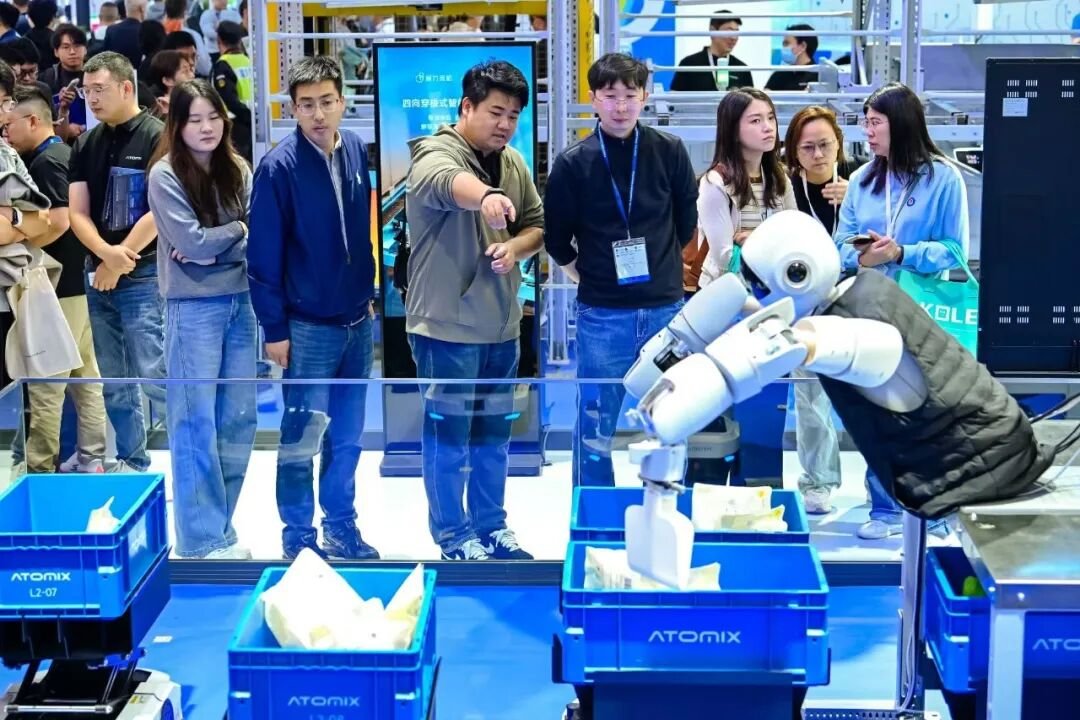
Once robots start picking goods, the next question arrives fast. Warehouse products differ, and so does the difficulty of handling them. Some are regular and fixed in place, where a dedicated suction device is enough. Some are soft bags and odd shapes that need a flexible dual-arm machine. A few exceptions are still cheaper handled by a person.
Handing everything to the most complex and expensive humanoid is technically tidier and economically questionable. Yuanli Lingji, which completed a strategic merger with ATOMIX in June 2026, showed a layered multi-agent system as the first embodied product of the combined company. AI splits the task first, then hands it to three tiers. L1 is a dedicated Cartesian robot for standard, easy-to-pick goods, built for high cycle rates and low cost. L2 is a dual-arm embodied robot for soft bags, irregular packaging and awkward postures. L3 keeps a human in the loop for exceptions and long-tail low-frequency tasks, and doubles as backup for automated picking.
The value of the layering is that each machine does what it is good at. Founder and chief executive Tang Wenbin previously ran logistics robotics at Megvii, and the three tiers follow his reading of warehousing as a problem of coordinating orders, tasks and equipment. Difficulty, frequency and handling cost decide the order, not technical ambition.
Yuanli Lingji says its earlier mixed multi-agent system, Ferrata, has been tested in a live warehouse at a leading customer, covering more than 100,000 SKUs with daily order peaks in the tens of thousands. At that scale, the practical approach is to separate what a dedicated machine should do, what needs embodied capability and what still needs a person, then let the system dispatch against live orders.
What a pick actually buys
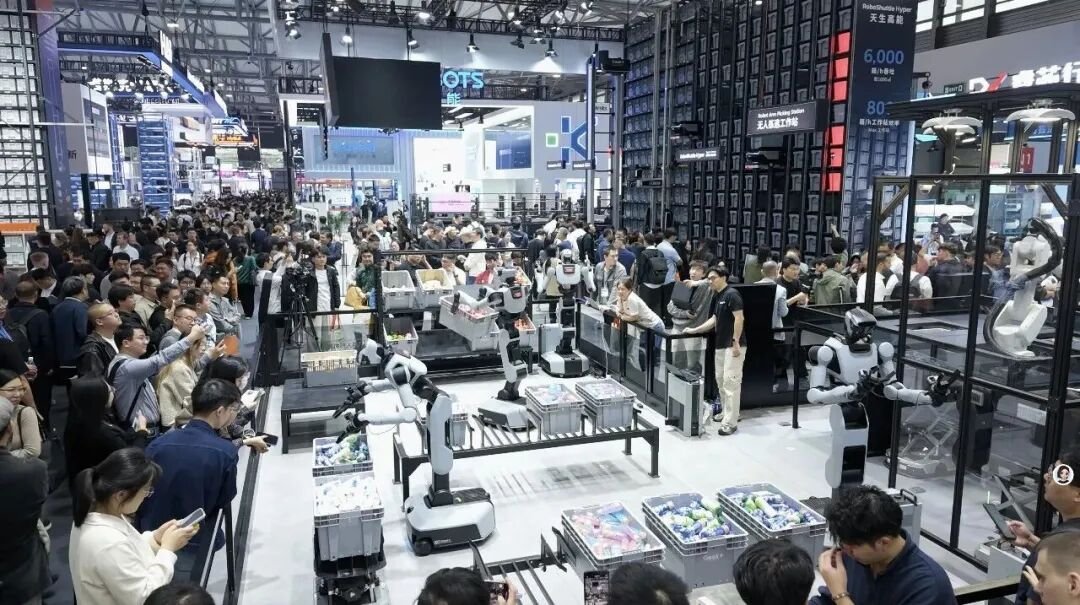
Geek+ used its Gino 1 robot to lift flexible picking capability and set out a plan for a warehouse that runs itself around the clock. The common thread across all three vendors is that the pick is only worth something if the rest of the line keeps moving.
Gripper count captures only part of efficiency. Once an embodied robot fills the picking gap, the conveyors, sorters and transfer equipment already installed spend less time waiting for goods and more time working. That is the actual return, and it is measured in the continuity of the whole flow rather than in the speed of one machine.
Editor’s note: This is an adapted translation of the original OFweek report. It has been trimmed and restructured for readability for an international business audience. The full original (in Chinese) is at https://robot.ofweek.com/2026-11/ART-8321202-8420-30711042.html.