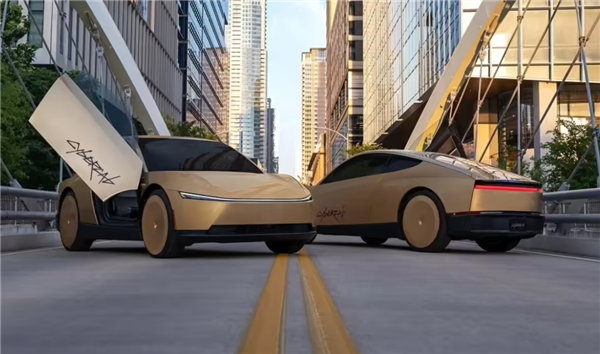
Tesla will invest EUR 3 billion, about USD 3.31 billion, to expand its plant at Grünheide outside Berlin with a new building dedicated to the Cybercab. The company said it will file the building permit before the end of this year, begin construction in the first half of 2027 and start production in 2029. The stated target is capacity for up to one million units.
The timing is what makes the announcement worth reading twice. On 12 November, Mercedes-Benz froze new investment in its German plants and put closures into the options under review. Management told staff in an internal memo that German manufacturing costs are too high and that the company faces low-cost competitors in China. Volkswagen had already abandoned its Wolfsburg upgrade and is working through closures and reductions. Audi is moving more production to China, with the Chinese A8 built in Changchun and a China-only AUDI brand.
An island of expansion in a shrinking base
Grünheide is Tesla’s only vehicle plant in Europe. It opened in March 2022, builds the Model Y, has nameplate capacity above 375,000 units a year and recently passed 7,000 cars a week. Tesla has added more than 2,000 people in recent months and plans to start cell production next year, lifting the European content of the Model Y to about 90 per cent to satisfy EU localisation rules.
Putting Cybercab capacity in Germany rather than the United States is a bet on European demand for driverless ride-hailing. It is also a bet that the regulatory picture clears. Rules for autonomous vehicles remain national and uneven across the bloc, and a one-million-unit target is a statement about 2032 rather than 2029.
For suppliers, the more useful signal is the direction of travel inside a single country. One manufacturer is adding a line for a vehicle that does not exist in volume yet while three domestic groups are cutting capacity for vehicles that do. The gap between those two decisions is not about battery chemistry. It is about which balance sheet can wait.
Editor’s note: This is an adapted translation of the original OFweek report. It has been trimmed and restructured for readability for an international business audience. The full original (in Chinese) is at https://www.ofweek.com/auto/2026-11/ART-70109-8460-30712064.html.