The sell-off in technology stocks from late October into early November revived a question that had gone quiet. The Nasdaq 100 fell 1.4 per cent on 2 November and closed more than 10 per cent below its 6 October peak, which by the usual definition puts the index in a technical correction.
Analysts quoted by Gasgoo make a distinction that matters for the car industry. Valuation is one question and strategic need is another. Stefan Puehl, a partner at PwC Germany, put it in a sentence that translates cleanly: the AI bubble may burst, AI will not. What changes in a correction is the funding environment, not the direction of travel in development, production and the cabin.
Three deals, three layers of the stack
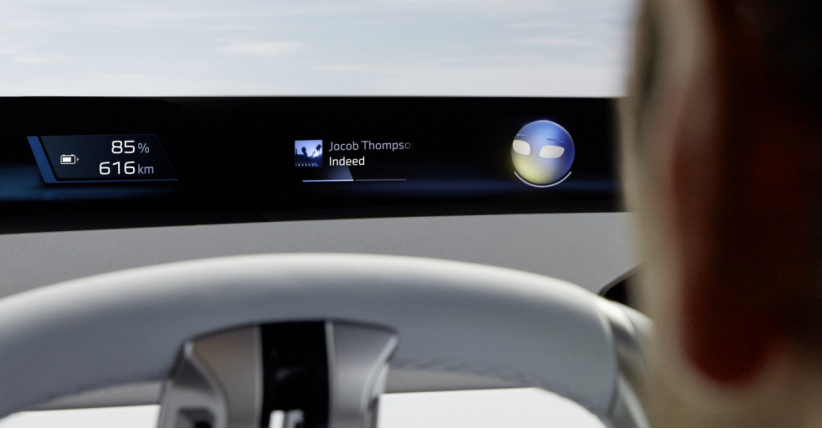
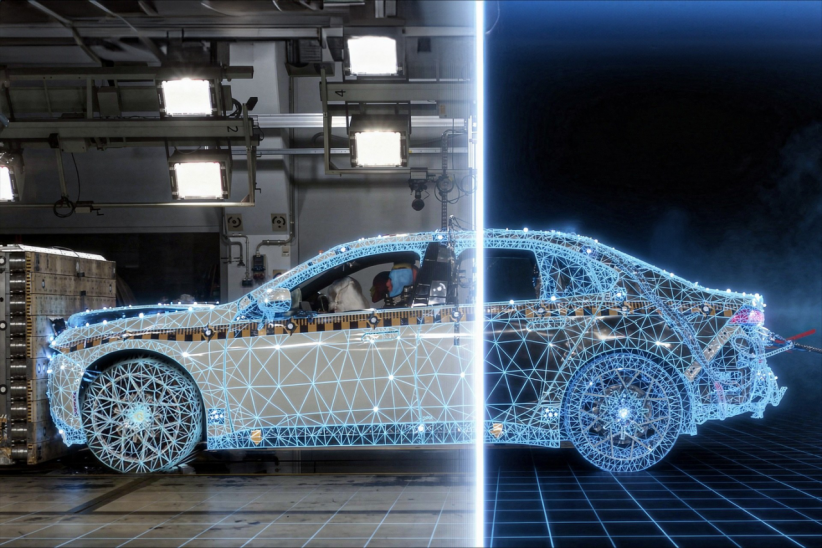
Mercedes-Benz works with Liquid AI to put intelligence into its third and fourth generation MBUX systems in North America, which is the customer-facing layer. Stellantis chose Mistral AI for generative capability across enterprise operations, which is the back office. BMW also uses Mistral AI, but for crash simulation, which is engineering.
Read together, the three deals show that AI has moved past the voice assistant into the cabin, the business process and the simulation loop. Deeper embedding means a partner failure propagates further, and the partner’s balance sheet becomes part of the carmaker’s supply chain in a way that is invisible while markets are rising.
The failure mode is not a bad answer, it is a price
Pedro Pacheco, a research vice president at Gartner, argues that if the bubble bursts, a group of financially fragile technology companies will be eliminated in the adjustment. Should an AI partner fail, supply of the associated products and services becomes unstable and the cost of obtaining them rises. For a company that was already inefficient, the pressure compounds. His formulation is that insufficient efficiency ends in a cost spiral, where the return obtained is small relative to the price paid.
He also expects divergence rather than a uniform retreat. Companies that have already prioritised AI will keep investing, while more risk-averse groups pull back, which widens the gap between them over the cycle.
The gains are measurable, which is why the spending continues
Capgemini’s research arm published a report in August finding that automotive organisations which have scaled AI are collecting real returns. Development cycles shortened 17 per cent, engineering productivity rose 19 per cent and time to market fell 19 per cent. Those three numbers map onto speed of development, output per engineer and commercial timing, which is the difference between a demonstration and an operating result.
A PwC global automotive survey in September found about 51 per cent of respondents ranking AI among the three most important technologies for reaching strategic goals in the next five years, the highest mention rate of any technology in the study.
The exposure for European groups is concentrated in the middle of that stack. A carmaker can replace a cockpit assistant. Replacing a model that sits inside crash simulation and enterprise workflows in the middle of a vehicle programme is a different problem, and it is the one that a funding winter would expose.
Editor’s note: This is an adapted translation of the original Gasgoo report. It has been trimmed and restructured for readability for an international business audience. The full original (in Chinese) is at https://auto.gasgoo.com/news/202611/16I70478155C601.shtml.