NXP Semiconductors has introduced a unified robotics platform built on what the company calls Neural Axis Architecture, a distributed foundation designed to connect perception, real-time control, AI processing and communication inside a single robot system.
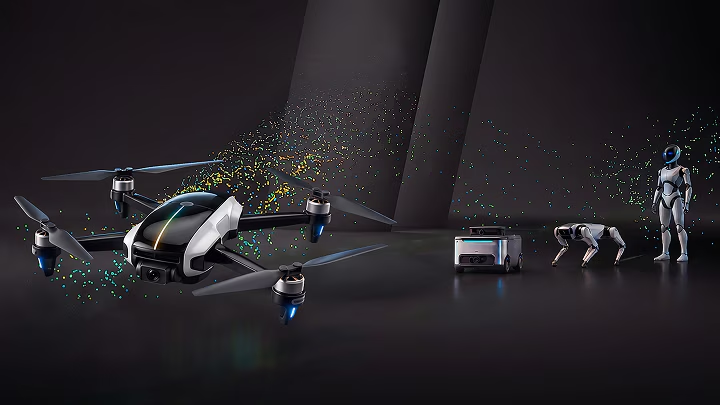
The product is a hardware and software stack with safety and functional safety built in, rather than a processor with a development kit attached. NXP’s pitch is that a developer can begin with a motor control subsystem already tested and validated through the SDK, then add AI-based perception, flight control and navigation on the same robot SDK, reference designs and platform architecture.
The integration tax is the target
Robot subsystems have to work together across very different physical formats, and the work of integrating and validating them commonly consumes months of engineering time. NXP says pre-integrated software and validated interoperability between subsystems compress that to days or weeks, and that the platform rests on safety-certified silicon from its existing portfolio.
Jerome Legros, vice president and general manager of the robotics business, framed the timing around trust. As autonomous robots leave controlled environments and enter the spaces where people live and work, trust becomes the precondition for wide deployment, and developers need a base platform that accounts for safety, functional safety, real-time control and lifetime reliability from the design stage.
That is a supplier argument aimed at a specific gap. Most robotics programmes today assemble perception from one vendor, motion control from another and the safety layer from a third, then spend the integration budget reconciling them. A platform vendor that absorbs that work sets the interfaces everyone else has to meet.
For European industrial buyers, the practical question is not whether the architecture is good. It is whether a single supplier holding perception, control and safety becomes a dependency that is harder to reverse than the integration cost it removes.
Editor’s note: This is an adapted translation of the original Gasgoo report. It has been trimmed and restructured for readability for an international business audience. The full original (in Chinese) is at https://auto.gasgoo.com/news/202611/16I70478124C409.shtml.