The most revealing number at Amio Robotics is not the headcount that fell from 130 to about 60. It is a RMB 1.539 million investment loss booked by its own incubator, which quietly stopped adding money while the rest of the sector raised a record sum.
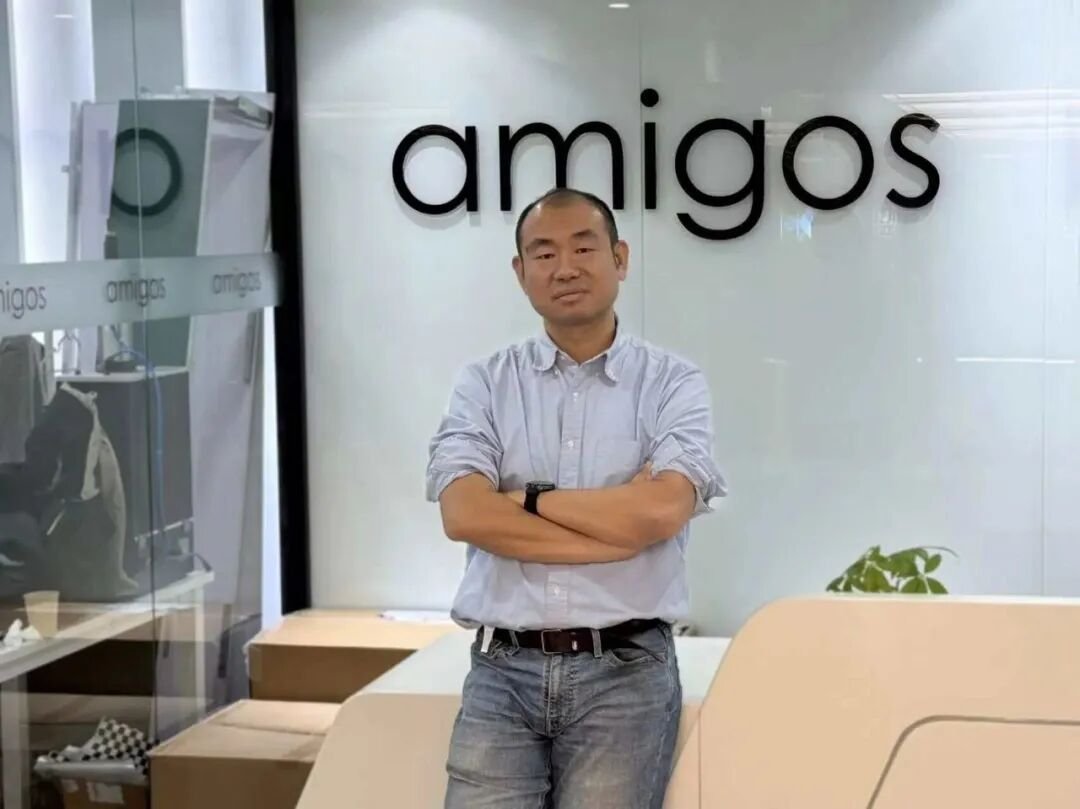
Amio, founded by the former head of Xiaomi’s autonomous driving product and mass production programme and billed as one of 2026’s most promising new faces, is reported to be losing its core team and shrinking. Its original CTO, COO and head of product have all left, headcount has fallen from a peak of about 130 to just over 60 including interns, and another round of cuts is under way.
This is not a collapsed company in the usual sense. Wages have been paid, work has not stopped, funding reached the bank account and products have run on production lines. The better word is pressure. But pressure and collapse share the same underlying ledger: funding.
The shareholder that stepped back
The party that stopped is Anker Innovations, the consumer electronics group that incubated Amio, led its seed round and connected it to deployment scenarios. Losing Anker costs Amio much more than one cheque.
The company is only two years old and raised a seed round in the hundreds of millions of RMB led by Anker, with Sunwoda, CICC Capital and K2VC among the names on the cap table. Founder Liu Fang studied computer science at Shanghai Jiao Tong University, was an early engineer on Google China’s search business, joined Xiaomi in 2012 to work on MIUI Yellow Pages and later ran the XiaoAI speaker, translator and car mirror products, then led Xiaomi EV’s autonomous driving product and mass production effort from team formation through to the SU7 launch. His scarce asset is production experience: embodied intelligence has no shortage of people who can stage a demo, and very few who can push one onto a line.
After the SU7 launch, Liu joined Anker in 2024 to build an embodied robotics team, reporting to vice-president Zhu Fanghao. He left after only a few months and founded Amio that September.
A deliberately narrow product
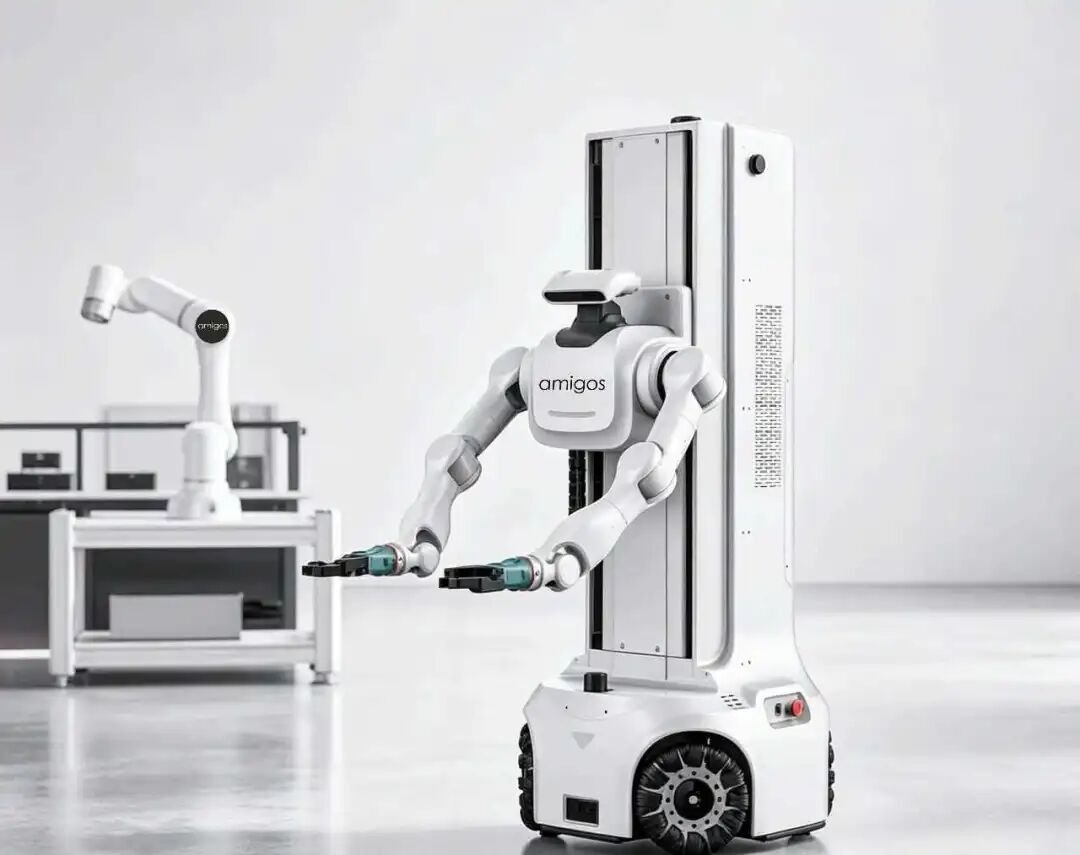
Amio does not build bipeds. It builds wheeled dual-arm machines, skipping the balance and battery cost of legs to focus on the hands, aimed at loading and unloading on 3C electronics lines and at automotive sheet-metal assembly.
Liu put a plain commercial model behind it: one work station costs about RMB 100,000 a year in labour, or RMB 300,000 across three shifts. A robot priced around RMB 200,000 replaces 2 to 2.5 workers, targeting payback in one to two years. Translating robots entering factories into monthly wages and payback periods won customers including Sunwoda, Canada’s CAMT and DBK Energy, with deployments in China, Southeast Asia and the Americas. The first factory units went in during October 2025, and the first commercial order and first overseas order were signed that December.
But the sector never lacks orders. Like startups that failed before it, Amio has not disclosed cumulative deliveries, cash collected, repeat purchase rates or revenue scale.
What the cap table says
Seed and angel rounds closed in March 2025, with three rounds totalling close to RMB 200 million. The seed was co-led by Anker and Xinglian Capital, with Anker also providing industrial scenarios and resource introductions. Z Fund, the Zhipu ecosystem fund, and K2VC followed, Sunwoda added tens of millions of RMB, and CICC Capital and Junshan Capital joined an angel round of similar size.
Anker therefore held three roles at once: incubator, lead seed investor and scenario provider. Shareholder-as-customer is common in the industry and gives a startup validation sites, but it also invites questions about how market-based those orders really are.
Dilution was unusually light. Liu Fang holds 50.5519 per cent directly plus 14.8285 per cent through the Amiga holding platform, about 65.38 per cent in total. On the institutional side, Anker holds 8.4253 per cent, Xingliandingsen 7.9326 per cent, CICC Guanbo 5.1709 per cent, Qianhai Hongsheng 4.2127 per cent, K2VC 1.6851 per cent and two Huahan funds 5.17 per cent combined. No institution crosses 10 per cent. Financial investors normally take far more at seed and angel stage, so a structure that leaves most of the room to the founder reads differently in the current situation.
The half-year when everyone else raised
In the first half of 2026, China’s embodied intelligence sector saw 322 financings worth about RMB 93.47 billion, more than the whole of 2025. Amio disclosed no new round during the hottest six months the sector has had.
Anker’s 2026 interim report records an investment loss of about RMB 1.539 million on Amio. Working back through its 8.4253 per cent stake under the equity method implies a first-half loss at Amio of roughly RMB 18 million. An RMB 18 million half-year loss is not fatal. What matters is that the loss is continuing while the money supporting it has stopped. Anker added RMB 35.5275 million of equity investment in 2025, and the carrying value had fallen to about RMB 32.8139 million by the end of June 2026, with no additional capital in the first half. A person familiar with the matter said Anker does not want to keep adding to its Amio position, citing the long commercialisation cycle for embodied intelligence.
The same source attributed the management exodus to Liu Fang’s style, describing him as hard to communicate with, carrying a large ego, slow to read market iteration and unwilling to be challenged. Amio has said its technical system has been split into modules and that product iteration will not be interrupted by personnel changes.
For Amio, the immediate task is narrow: with a smaller organisation and a tighter product line, can it win its first cash flow that does not depend on its incubator, from a real customer acceptance certificate.
Editor’s note: This is an adapted translation of the original 36Kr report. It has been trimmed and restructured for readability for an international business audience. The full original (in Chinese) is at https://m.36kr.com/p/4073794487407744.