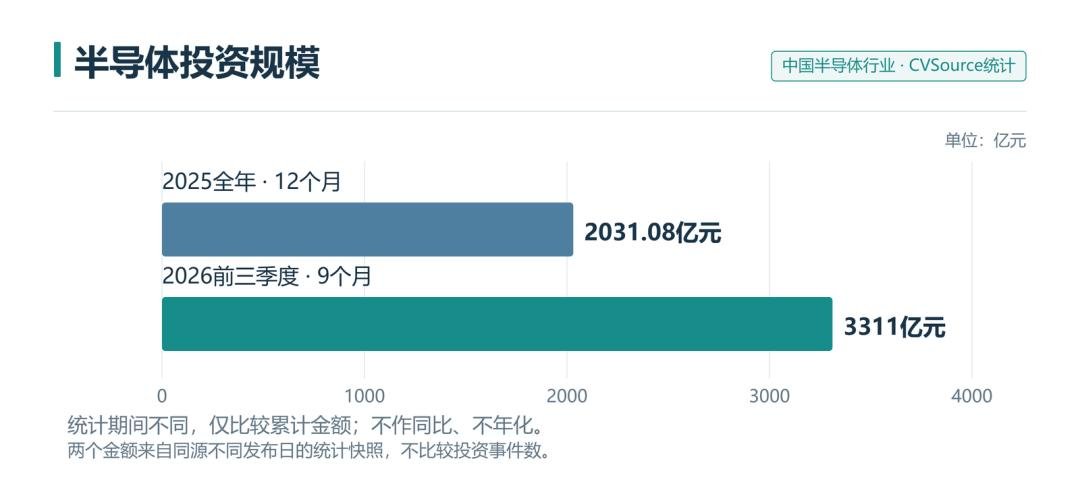
China’s semiconductor investment in the first three quarters of 2026 already exceeded all of last year. CVSource counted RMB 331.1 billion across 1,475 deals. The capital is waiting for products that can be shipped, iterated and then used to change how customers allocate orders.
From first customer to next generation
In early November, Lingchuan Technology closed a RMB 1 billion Series B. Its SL200 smart-video chip has sold close to 100,000 units to Kuaishou, Alibaba Cloud and Baidu Cloud, according to investor Qiming Venture Partners. A next-generation chip for AI video production taped out in April and returned from the fab recently, with volume shipments targeted for 2027. Video encoding and video generation consume different resources, so the company adopted a three-dimensional stacking design and adapted its unified computing platform to models including Wanxiang and Hunyuan Video. Old customer relationships open the door. The new chip still has to prove its performance and cost in real workloads.
Memory makers show the sequence more clearly. Counterpoint data published on 5 November put CXMT’s third-quarter DRAM revenue share at 9 per cent, down one point from the second quarter but up four from a year earlier. Samsung, SK Hynix and Micron still hold 88 per cent together, yet procurement now accommodates a participant with close to a tenth of revenue.
CXMT moves into flagship phones
In September CXMT began mass production on its fifth-generation DRAM platform, G5, and launched a 24-gigabit LPDDR5X chip. On a common 8-gigabit die basis, the company says G5 yields at least 50 per cent more dies per wafer than G4, spreading fab and equipment cost over more output. The same month it disclosed LPDDR6 shipping in the Xiaomi 18 Fold, in a 16-gigabyte package running at 10,667 megabits per second. Samsung has validated its own 16-gigabyte LPDDR6 on a new Qualcomm Snapdragon platform at up to 10.7 gigabits per second. The two are close on paper, but commercial deployment and platform validation are different milestones, and power, yield and long-term reliability are not settled by those two figures.
YMTC sells drives, not just dies
Yangtze Memory’s Xtacking architecture manufactures the memory array and the peripheral control circuitry separately, then bonds them, allowing each to use a different process. Fifth-generation TLC entered production in 2024 and fifth-generation QLC followed in 2025. TechInsights confirmed the four-wafer hybrid bonding structure of Xtacking 4.0 in a retail TiPlus7100 drive. Its PE501 enterprise solid-state drive uses QLC and reaches 122.88 terabytes, the same capacity class as Solidigm’s D5-P5336. Counterpoint estimated YMTC’s NAND revenue share rose from 11 per cent in the second quarter of 2025 to 14 per cent this year, during a quarter when NAND prices rose 55 per cent quarter on quarter.
Enterprise SSDs require system validation. The PE501 and a specified firmware version were registered in the University of New Hampshire interoperability list in January, and the PE501N in October. Selling a die leaves drive design to the customer. Selling a drive means owning the controller, firmware, data protection and after-sales service. Moving into higher-value customers and expanding manufacturing capacity are now two jobs that have to advance together.
The whole-system bill
On 27 October Nvidia and Oracle said Vera Rubin NVL72 and Vera CPU were available on the OCI cloud, only months after the platform appeared at a launch event. A single NVL72 rack links 72 GPUs through NVLink, alongside CPUs, networking, data processors and software. If compute units wait for data or GPUs communicate poorly, headline performance never materialises. Buyers now compare whole systems, not chips.
Domestic accelerators are learning the same lesson. In January Baidu described deploying DeepSeek R1 on its Tianchi supernodes, each linking 32 Kunlun XPU cards, with SGLang separating prefill from decode and experts spread across more cards to leave room for longer context. Optimisation now happens at the level of how a model runs, not a chip’s specification. Nvidia’s quarterly filing to 26 July showed only part of licensed H200 shipments to Chinese customers had completed, under 1 per cent of data-centre revenue for the quarter. If actual supply widens and pricing is competitive, products relying on a supply gap face a harsher comparison.
Nvidia’s CMX context-storage platform shows where new demand can form without a domestic GPU winning outright. It adds a flash-based shared layer for the key-value cache generated during long conversations, with latency-sensitive data in high-bandwidth memory, system memory for buffering, and local and shared storage for capacity. Longer conversations, more concurrency and always-on agents all increase data that must be stored, moved and reused. NAND, DDR, LPDDR and HBM each serve a different position in that stack. Which orders Chinese memory makers win depends on product fit and customer validation, not on a single replacement chip.
The question has moved from whether domestic supply exists to how orders are split. Every supplier that can keep pace with a new generation gives a customer another way to manage price and supply risk. New capital now buys more companies a place in that selection process. Only when customers keep choosing those chips in the next product cycle does a funding round turn into a durable position.
Editor’s note: This is an adapted translation of the original 36Kr report. It has been trimmed and restructured for readability for an international business audience. The full original (in Chinese) is at https://m.36kr.com/p/4076127876585094.