Pragmatik Labs, founded by former Alibaba AI lead Lin Junyang, has completed a new funding round at a valuation of USD 5 billion, roughly RMB 33.46 billion. Only a little over three months separate it from the first round, when the valuation stood at USD 2 billion. More than double in a quarter, for a company that has yet to release a concrete product.
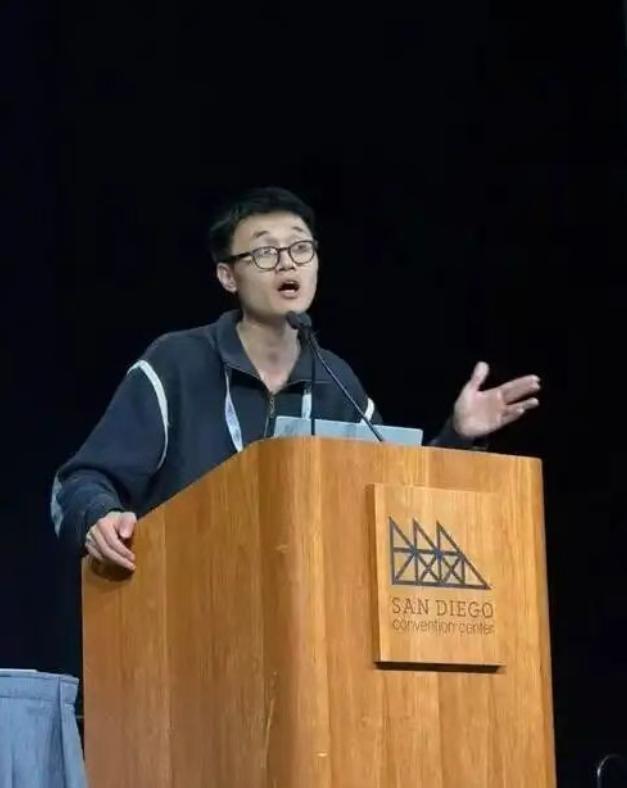
People familiar with the matter said the new round raised tens of millions of dollars. New investors include HyT Capital, CDH Investments and automaker Geely Automobile Holdings. None of the four parties responded to requests for comment at the time of publication.
A bet on small AI developers
Funding across the large-model sector has grown cautious. For a six-month-old company with no published product to more than double its valuation in a few months is being read as a clear wager on smaller AI developers. The presence of Geely is notable. Pragmatik works across both the digital and physical worlds, and outsiders see room to connect its embodied intelligence work with vehicle intelligence. Neither the company nor its investors have confirmed such a plan.
The domestic operating entity, Pragmatik Shanghai Technology, was registered on 13 May 2026 with Lin as legal representative and registered capital of RMB 1.25 million. The team sits in Shanghai’s Xuhui model-speed zone. The English name is Pragmatik Labs, internally shortened to p7k. Its stated direction is next-generation agents spanning digital and physical environments. The website lists four strands: general digital agents for knowledge work and business operations, embodied systems that adapt and act in the real world over long tasks, a loop turning frontier research into products and feeding reality back into research, and long-horizon exploration beyond current paradigms. No model parameters or products are published.
From pragmatics to AGI
The name comes from pragmatics in linguistics. Lin explained on social media that he studied linguistics on a friend’s recommendation, moved into computational linguistics and natural language processing, and chose the name as a return to where it all began. He also saw pragmatism as what AGI ultimately targets, solving real problems in the real world.
Born in 1993, Lin was Alibaba’s youngest P10 engineer and is grouped with Zhipu founder Tang Jie, Moonshot founder Yang Zhilin and Tencent chief AI scientist Yao Shunyu as one of four leading Chinese foundation-model figures. He left Alibaba in March 2026, writing that he was stepping down and saying goodbye to Qwen. That same month he published a long essay arguing for a shift from reasoning thinking to agentic thinking, which became the annotation for his new venture.
The first round was announced in the early hours of 12 August 2026. Reports citing two people familiar put it at about USD 220 million with a post-money valuation near USD 2 billion. Hillhouse and Sequoia China invested about USD 100 million each, Tencent about USD 20 million, and the Shanghai Future Industry Fund also participated. Some estimates based on equity records put the angel total closer to USD 240 million across seven institutions. Corporate filings show Lin directly and indirectly controls about 88 per cent of the equity, with outside investors holding roughly 12 per cent, rare in an environment where founders are heavily diluted.
Where the money goes reflects where AI competition has moved. The focus is shifting from parameter counts and leaderboard positions to whether a model can call tools, adapt to environments and finish tasks in real settings. Pragmatik has said little and shipped less. The valuation says the market is willing to pay for the direction anyway.
Editor’s note: This is an adapted translation of the original 36Kr report. It has been trimmed and restructured for readability for an international business audience. The full original (in Chinese) is at https://36kr.com/p/4078023821137542.