Fulin Precision (300432.SZ) and its wholly owned subsidiary Banqiao Intelligent plan a robot electric-joint plant in Mianyang, Sichuan, with total investment of RMB 500 million. The first phase is designed for 2 million joints and core parts a year.
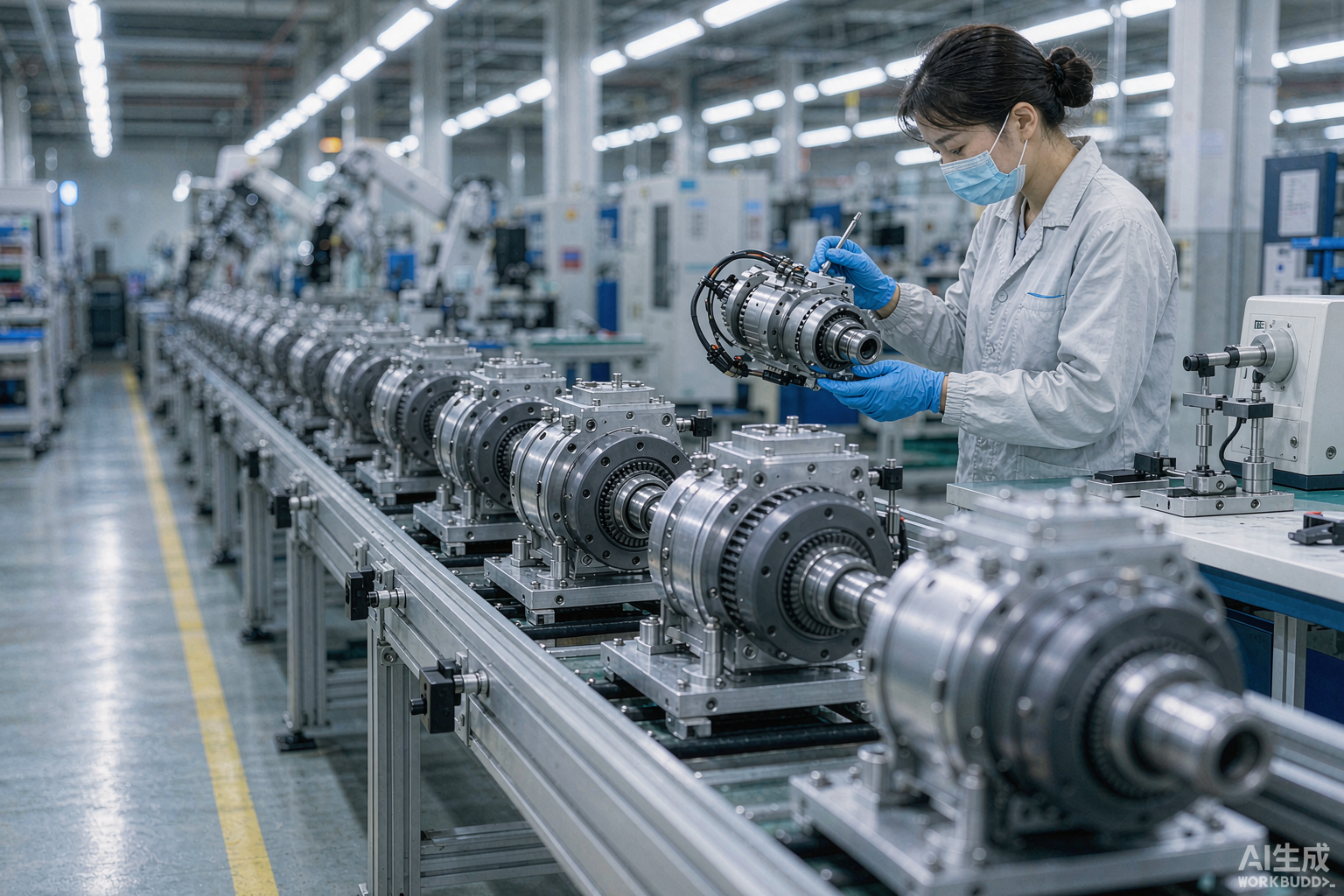
The subsidiary is less than six months old. It has more than 100 engineers, its current floor turns out 113,000 joints a month, and some products have moved from samples into small-batch production. The new plant is a scale-up of an existing line rather than a start from zero.
Why an auto parts maker thinks it can do this
Fulin built its position in automotive precision hydraulics and electromagnetic drive components, areas where it has already substituted imports. Precision gear machining, transmission structure manufacturing and automotive-grade quality control are the same disciplines a joint module needs. The tooling, the tolerance stack and the process discipline transfer across.
Joints are one of the highest-cost subsystems in a humanoid, and the module market is expanding quickly. The hard problem is not design. Many start-ups can produce a joint that performs beautifully in a laboratory. Fewer can hold yield, cost and long-term reliability across a million units, and that is where domestic suppliers have historically stalled.
A wave of Chinese car-parts companies is now extending into robot core components, and the scepticism directed at them is fair. Some are attaching a robot story to a capital markets narrative with nothing behind it, and the sector’s competitive axis has shifted from specification sheets to delivery and engineering capability.
Fulin’s case will be decided by whether the 2 million units arrive as shipments or as capacity. Force control, sensing and integration requirements differ from automotive parts, and customer validation cycles are long.
China does not lack robot designs. It lacks suppliers who can ship the same joint a million times.
Editor’s note: This is an adapted translation of the original OFweek report. It has been trimmed and restructured for readability for an international business audience. The full original (in Chinese) is at https://robot.ofweek.com/2026-10/ART-898890-12003-30708269.html.