A humanoid robot that walks into a factory is limited less by its brain than by its feet. That is the argument Shenzhen Zhilv Technology makes for rebuilding the sole.
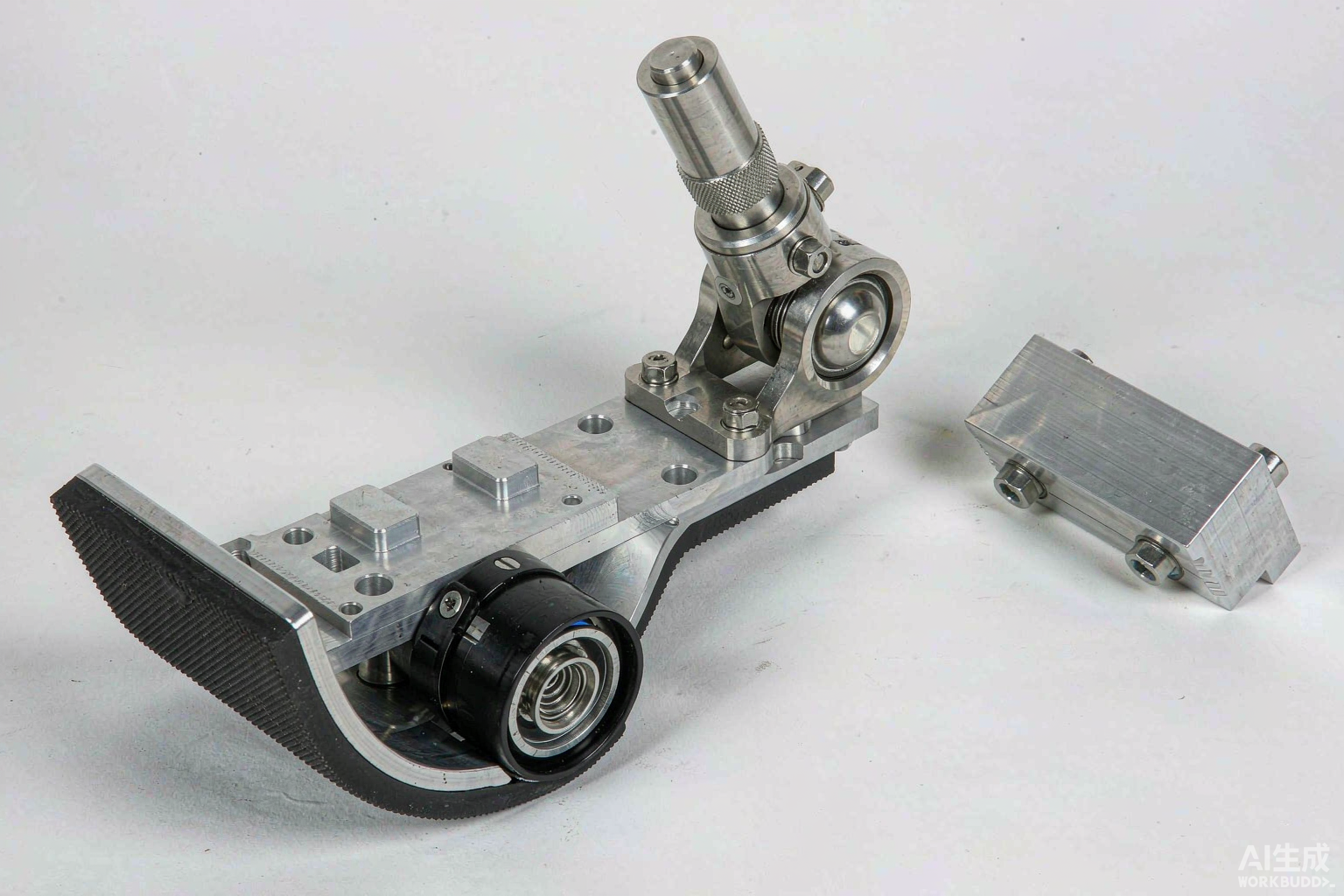
In measurements on full-size bipedal machines of 65 to 75 kilograms, the standard aluminium plate and single-density rubber pad fails in six ways. Damping is too low, so impact travels up into the knee and the waist components, and walking noise follows. There is no toe or heel upturn, so slopes, steps and oily or sandy floors catch the machine. Fasteners work loose because a hard nut locks poorly onto soft rubber. The sole is a consumable rated at 1,000 to 2,000 hours and is glued in place, which turns replacement into an overhaul. There is no cover, so water and grit get in and future foot electronics have nowhere to go. And the plate and pad are separate parts, which multiplies moulds, SKUs and spares.
Standard plate, replaceable shoe
Zhilv’s answer is a standard base plate in 7075 aluminium alloy as a quick-change platform, with a dual-density composite sole above it: a 70A wear layer, a 40A cushion layer and TPV for rebound. Impact absorption is above 60 per cent. The outline copies a human foot, narrowing at the forefoot, rounding at the heel and curving in at the waist, with a 10 to 15 degree toe upturn and an 8 to 12 degree heel upturn. Large metal washers let the nut lock onto metal rather than rubber.
Because the plate is common and only the sole wears, an operator replaces a consumable layer instead of a foot. Zhilv quotes a bill of materials at 1,000 pairs, tooling amortised, of about RMB 300 per foot including the plate. Tooling takes about 15 working days after design sign-off, confirmation samples follow, and a run of up to 1,000 pairs takes about 7 working days.
The material partner is Dawn Group (002838.SZ), a listed polymer materials company.
The roadmap ends in a sensing foot
Three stages. First, standardise the interface so one plate takes soles tuned for temperature, oil, static or wear, swapped like a wheel. Second, move the plate to a lighter structure bonded to a carbon-fibre support. Third, instrument the sole with sensing components, wireless charging and a hinged two-segment plate, so the foot can manage heat, route cables and take customisation.
Every humanoid programme is currently specifying its own foot, which means every programme is funding its own tooling for a part that wears out. A standard module turns that cost into a catalogue item.
The cheapest component in the robot is the one that decides how long the expensive ones last.
Editor’s note: This is an adapted translation of the original OFweek report. It has been trimmed and restructured for readability for an international business audience. The full original (in Chinese) is at https://robot.ofweek.com/2026-10/ART-898890-8210-30705719.html.