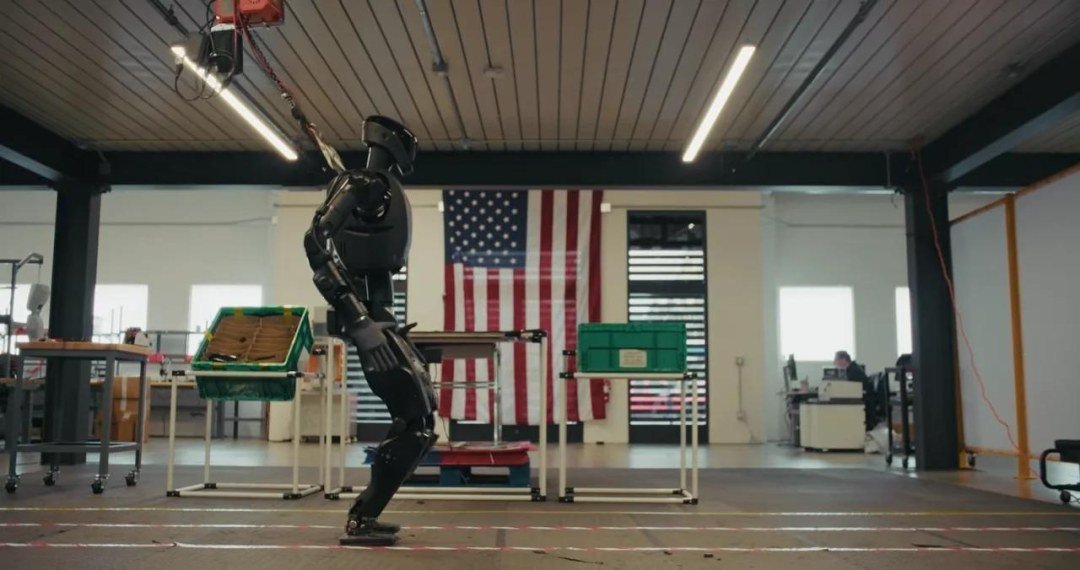
Foundation, a US startup building humanoid robots for military use, has collapsed into a catalogue of governance failures. According to CNBC on 14 November, the company stopped paying staff on 30 October. Its chief executive and co-founder Sankaet Pathak borrowed USD 4.6 million from the company in 2025 to buy a house in California. The USD 300 million General Motors order he touted to investors was described by GM itself as fabricated. The more revealing question is not how strange the scandal is, but how the story survived until the payroll failed.
The contracts were thinner than the headlines
Payroll and the mansion are symptoms. The claim that needs checking is the order book, because that is what attracted money. Foundation was widely reported to have won about USD 24 million in defence department contracts. CNBC traced the sum and found it was not newly won. It was an existing government research contract inherited when the company acquired Boardwalk Robotics in 2024. Federal records show no Pentagon contracts registered under Foundation in 2026. A previously cited USD 24.8 million navy contract actually belongs to partner IHMC.
The GM line is worse. According to the SF Standard, General Motors explicitly denied the USD 300 million humanoid order cited in Foundation’s fundraising materials, calling it fabricated. A company that cannot make payroll put a contract its partner publicly disowns into its investor deck. That is not a communication error. It is an attempt to mask an empty cash position with a fabricated demand signal.
A pattern, not an accident
Pathak’s previous company, the fintech firm Synapse, collapsed in 2024, leaving many customers unable to withdraw deposits. Reports say he also borrowed money while Synapse was near failure. A man who borrowed before his first company went under borrowed again before his second stopped paying wages. That pattern says more than the truth of any single order. With one director, one person holding most shares and no checks on financial decisions, self-approved loans and invented orders are not accidents. They are the predictable output of a governance vacuum.
The governance spectrum in embodied AI
Foundation is not alone. Placed alongside other recent failures in the sector, governance risk shows three different faces. Wujing Power treated framework orders as deliveries. NVIDIA faces engineers leaving amid opaque internal procedures. Foundation occupies the extreme end: orders invented, loans self-approved, a board of one. The common thread is that when story earns a higher valuation than delivery, governance is the first layer sacrificed. Foundation could package inherited contracts and fiction as military endorsement and keep going until payroll failed, not because the deception was clever, but because very few people in a hot capital market took the time to look through the share register and the contract ownership.
Pathak is still seeking several hundred million dollars in new funding at a USD 3 billion valuation. Whether the story survives will not depend on the specification of the Phantom-01 robot. It depends on whether anyone bothers to count how many people sit on the board.
Editor’s note: This is an adapted translation of the original OFweek report. It has been trimmed and restructured for readability for an international business audience. The full original (in Chinese) is at https://robot.ofweek.com/2026-11/ART-898890-8420-30712242.html.