Aptiv signed two strategic cooperation agreements during the ninth China International Import Expo, one with Tashi Robotics and one with Shanghai Electric, extending its embodied AI business into the factories that supply it.
The scope covers large-scale robot deployment, application of core technology, and joint validation in industrial scenarios. Hundreds of embodied robots from the two partners will progressively enter Aptiv’s frontline production for technical verification and solution tuning. Data generated during operation feeds back into product development and into the embodied models themselves, so the industrial scenario and the model improve together.
The robots go in, the electronics come out
The direction of the deal runs both ways. Aptiv’s high-performance computing platform and intelligent power management systems will be fitted into both partners’ robots, with volume production planned within 2026. The computing platform supplies the perception, decision-making and motion control budget, and uses a platformised hardware and software architecture so it can be adapted across different robot products.
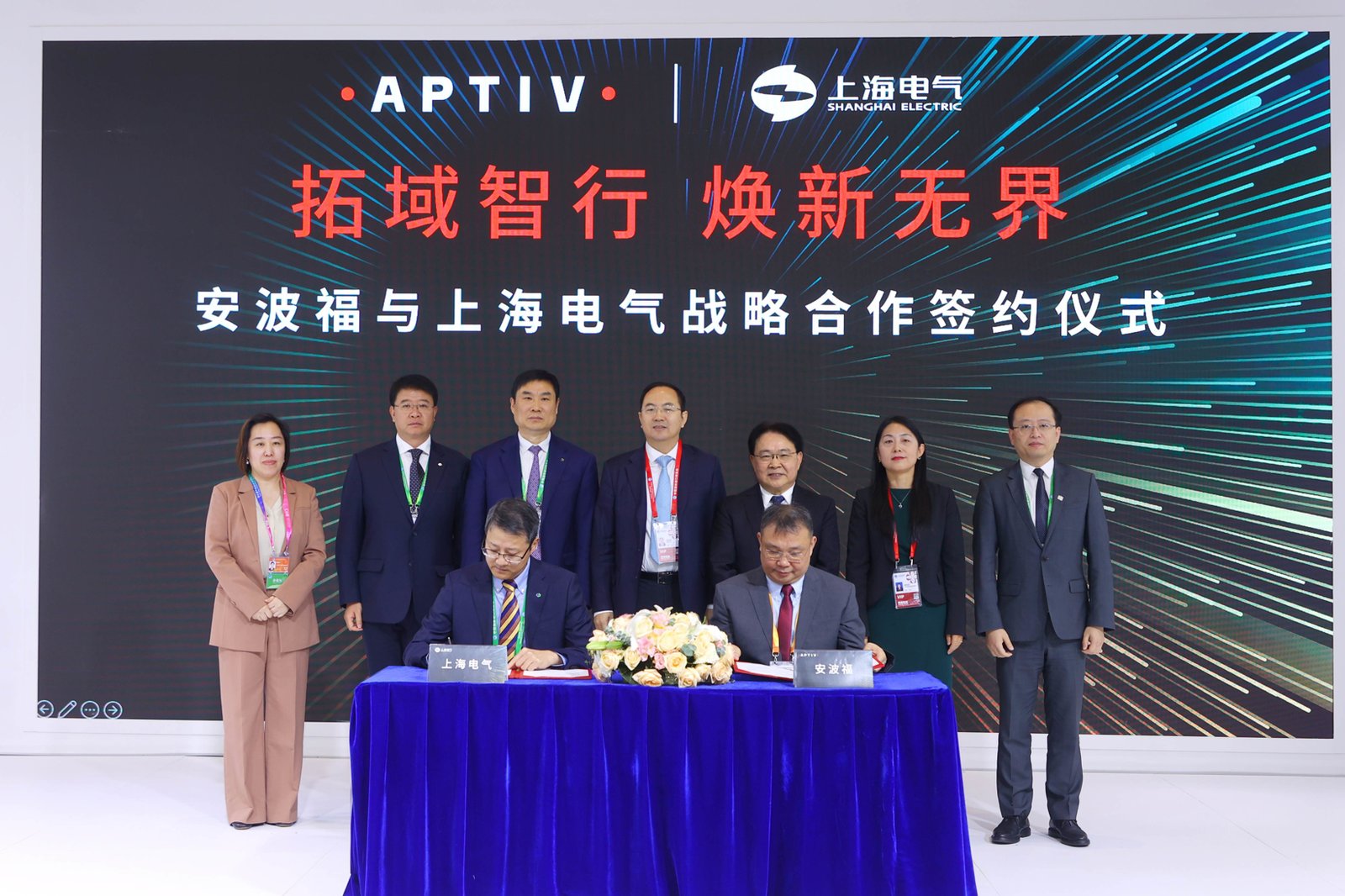
Yang Xiaoming, president of Aptiv China and Asia-Pacific, makes the argument directly. Cars and embodied robots differ in application scenario, he says, but the technology has a common origin, the underlying stack is shared, and the supply chain is common. Aptiv is extending what it learned in automotive product engineering, systems engineering and volume manufacturing into robotics.
Aptiv already has a robot solution set covering perception sensors, edge computing, software, power management, flexible harnesses and connectivity. Its PULSE perception system combines surround cameras with short-range radar for 360-degree sensing and uses machine learning for dynamic path planning.
An earlier pilot set the template
Aptiv already had an agreement with Tashi to deploy 100 robots in its factories during the year, covering eight production processes, 33 application types and 46 core workstations. The new signature extends that from deployment into core robot technology and volume production of components.
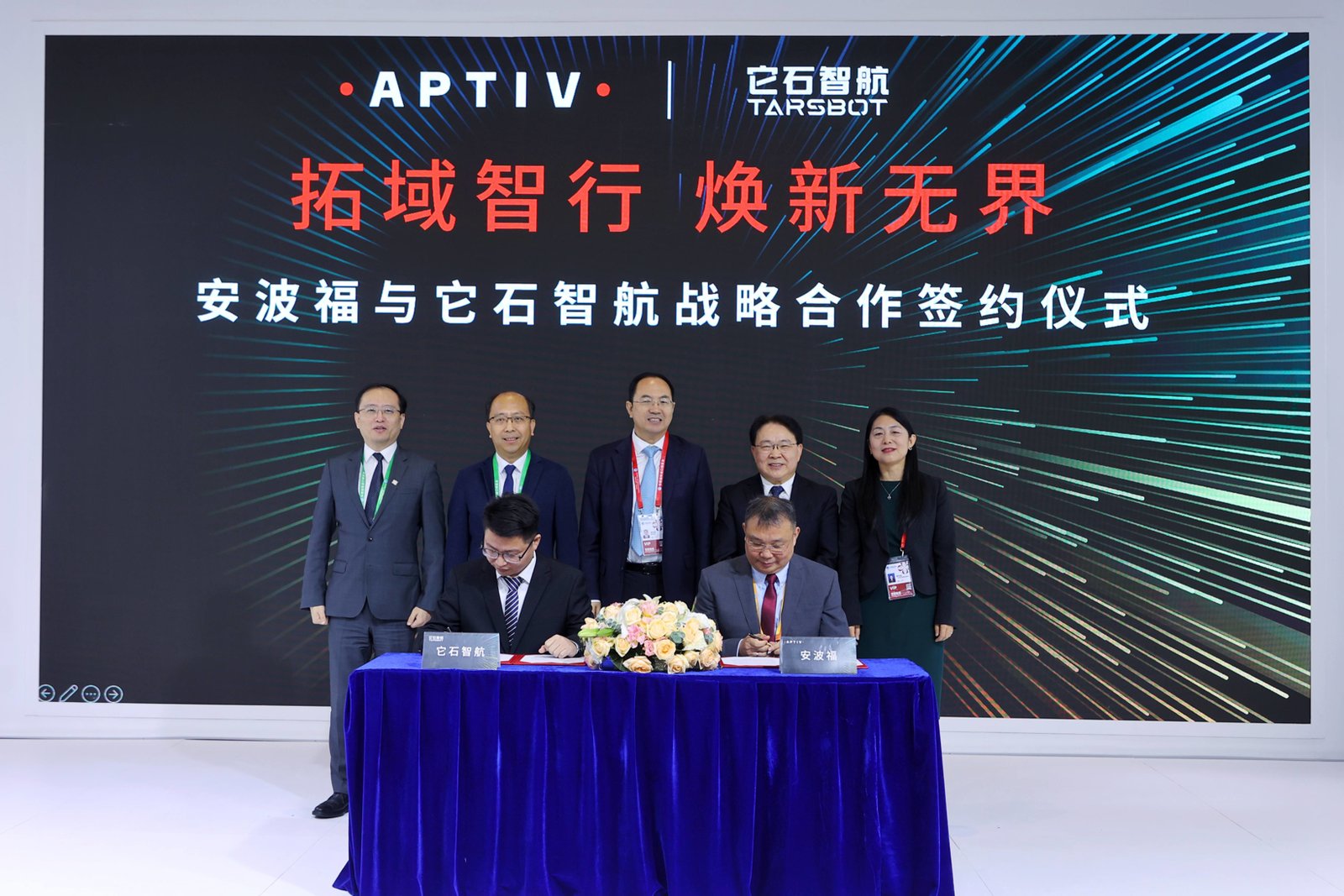
Two Chinese entities are named in the agreement: Shanghai Tashi Zhihang Technology and Shanghai Electric Holdings Group.
For a Western Tier One supplier the calculation is unfamiliar but not complicated. The robot brands competing for the factory floor are mostly Chinese, and the layer where a car supplier has genuine defensibility is the compute, power and sensing stack underneath them, plus the manufacturing discipline to build it at volume.
Editor’s note: This is an adapted translation of the original Gasgoo report. It has been trimmed and restructured for readability for an international business audience. The full original (in Chinese) is at https://www.gasgoo.com/apps/e060bad9eca91db7f01403fc7120041f/robot/news/70477204-%E5%AE%89%E6%B3%A2%E7%A6%8F%E4%B8%8E%E5%AE%83%E7%9F%B3%E6%99%BA%E8%88%AA-%E4%B8%8A%E6%B5%B7%E7%94%B5%E6%B0%94%E7%AD%BE%E7%BA%A6/.