In a showroom in Nanshan, Shenzhen, Dobot keeps the first desktop arm it built next to the humanoid it ships today. In eleven years the company has delivered more than 100,000 robots, sells into over 100 countries and territories, serves more than 80 Fortune 500 companies, and takes close to half its revenue from outside China.
Founder Liu Peichao started the company in Shenzhen in 2015. The strategy he describes is unglamorous: turn robots into standardised products and resist the temptation to customise for large orders, however large.
Two five-year cycles on components
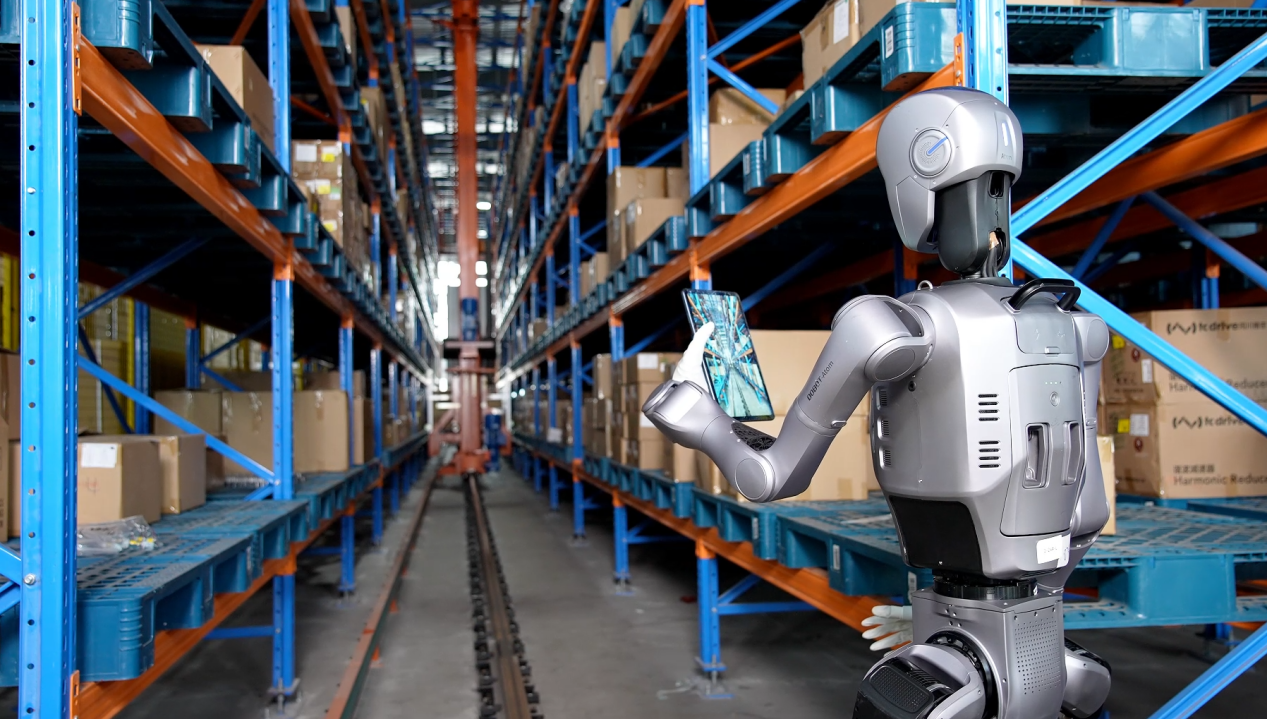
Dobot spent its first five years developing servo motors, encoders and controllers in house. The parts worked, but stability fell short of the industrial requirement of 50,000 to 100,000 hours of operation. A second five-year cycle was needed before the in-house design was locked.
The company’s non-contact collision prevention system uses self-capacitance sensing to detect an approach at 15 centimetres and hold a safe collaborative speed of one metre per second. The China Machinery Industry Federation assessed it as internationally advanced. By the end of 2025, research staff made up 31.38 per cent of headcount and research spending exceeded 20 per cent of revenue.
Why the components carried over
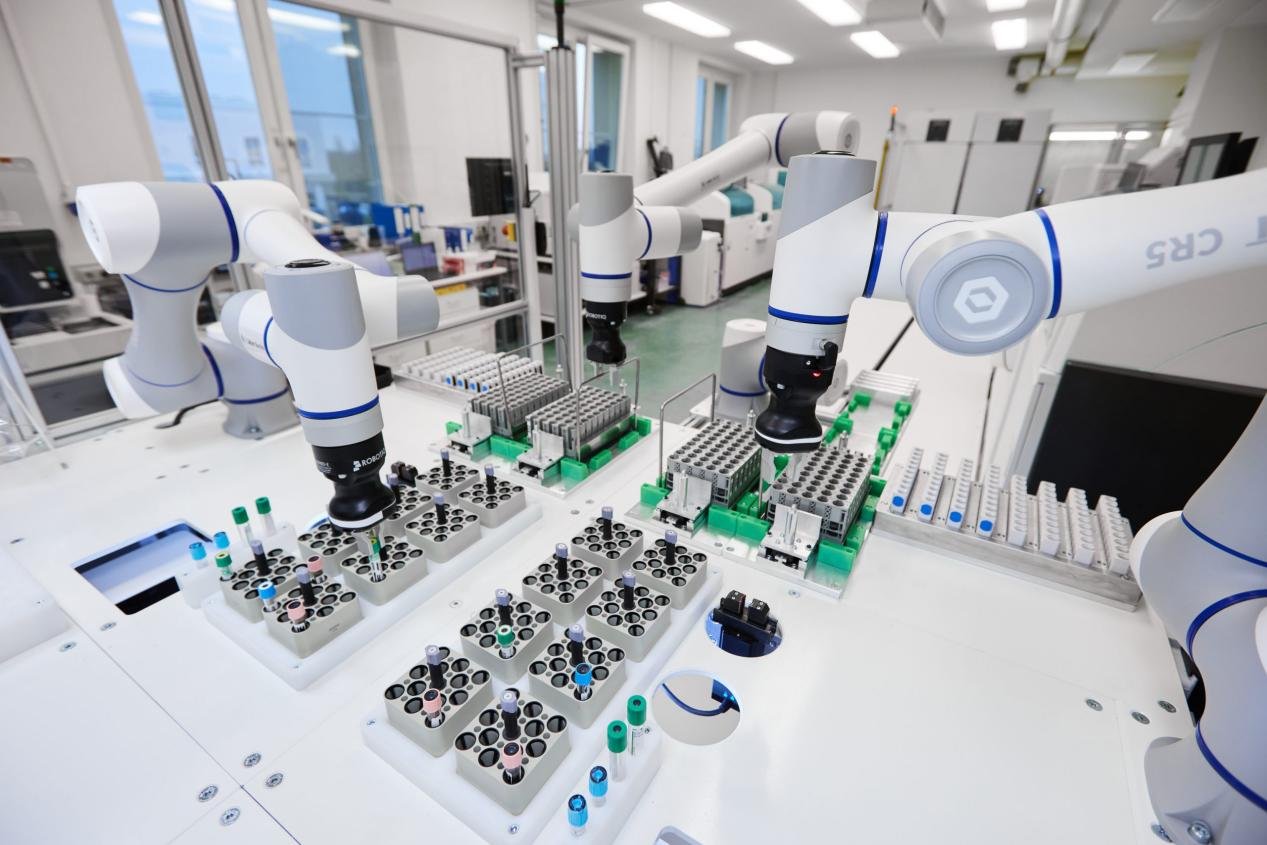
Integrated joints, servo systems and force sensors are largely common between collaborative arms and embodied AI products, so part of the product line can be reused. On that base Dobot added full-size humanoid, hexapod and dual-arm lines, extending manufacturing capability built on collaborative arms into embodied AI.
From able to do it, to able to keep doing it
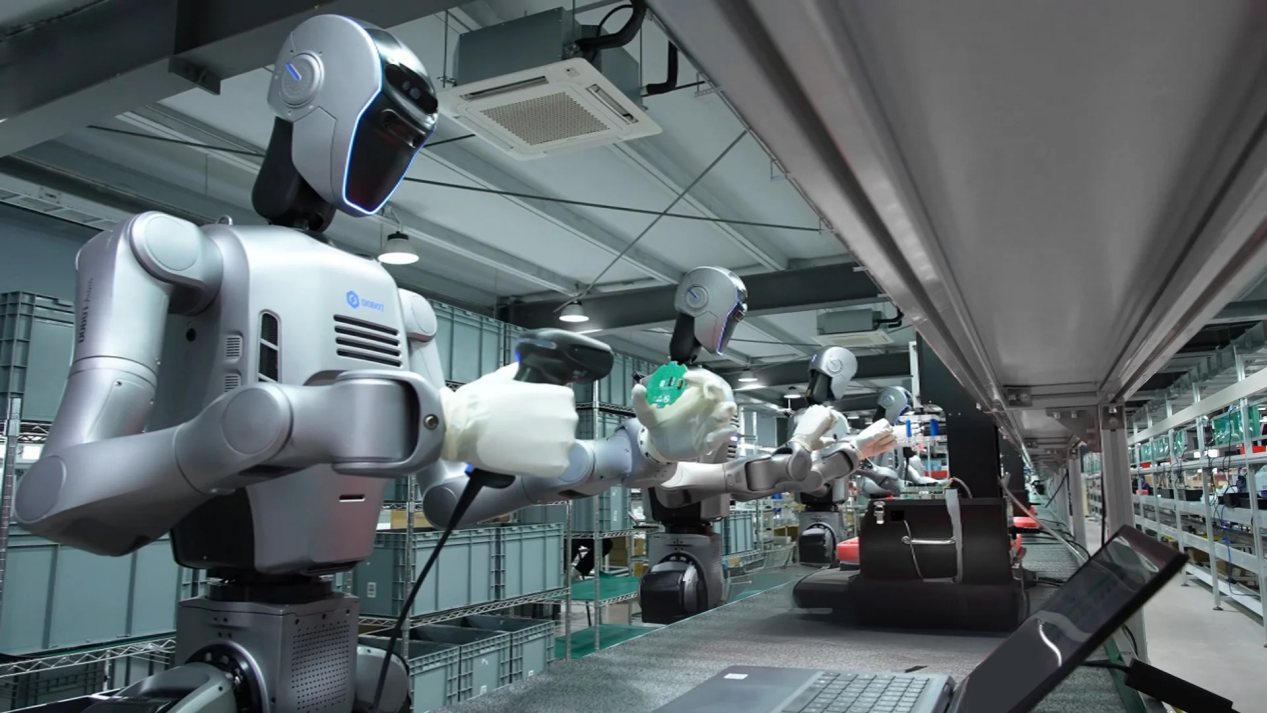
Liu draws a distinction that the industry tends to blur. A household appliance is static. A robot is a dynamic product sitting in the same space as people, which makes long-duration safety a different problem from capability.
Two obstacles remain before humanoids become an industry. The first is the brain: motion control and the body have a fairly clear technical route, but understanding a complex task and planning through a changing environment has not been solved. The second is turning demonstrations into products that are stable, safe, reproducible and economically worthwhile.
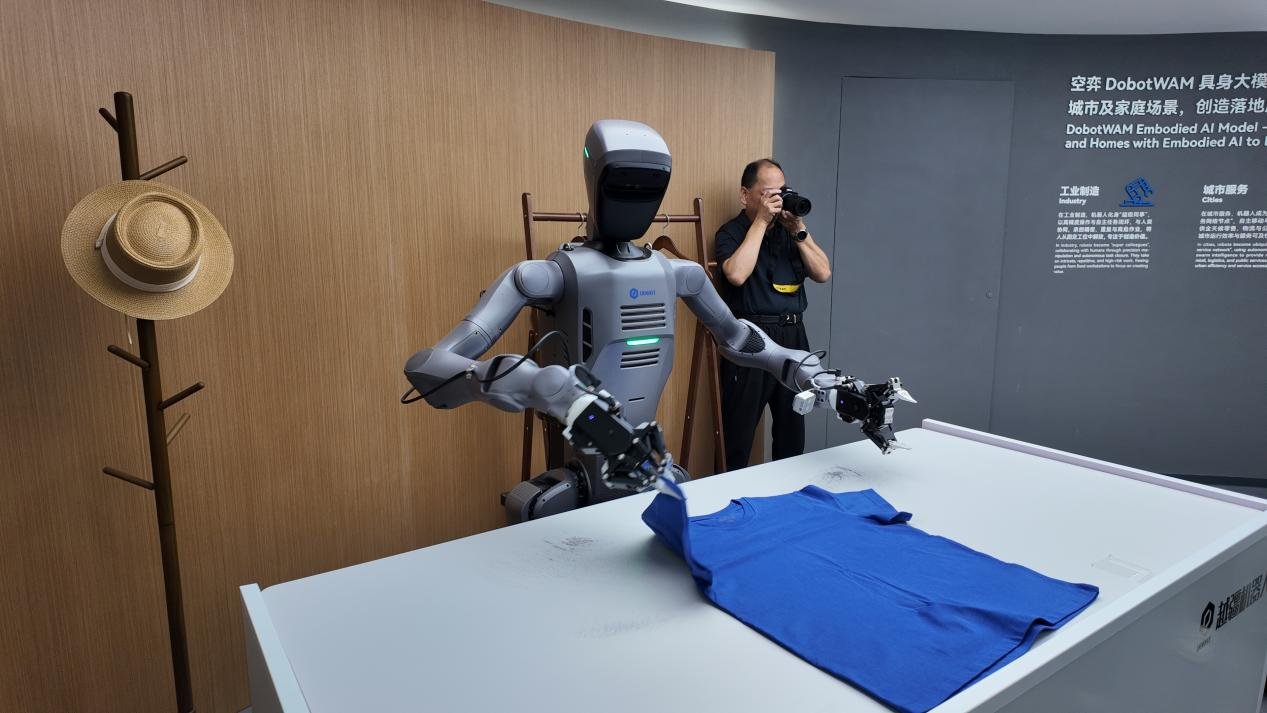
Consistency is the harder of the two. Reliability decides whether one robot can work for a long time. Consistency decides whether ten thousand robots work the same way. A humanoid has more joints, and motor, control algorithm, structure and rotational inertia interact, so a single working prototype and a production run of thousands are different engineering problems. The point of scale is not only lower cost. It is a consistency regime running from design through manufacturing, testing and quality control.
The return-on-investment test
Liu’s threshold for commercialisation is simple. A customer who buys one or two units is trying it out and will not count the cost. A customer who buys three to five has found a use. A customer who buys ten or twenty has done the return calculation. Every country, industry and buyer arrives at the same question: does the robot create more value than it costs to run.
He frames the competition as one of value rather than price, and notes that Dobot prices in the same band as established international brands because of what it puts into the product, which in turn funds the next round of development.
Shenzhen’s role in this is supply chain, talent and access to application scenarios, and the article closes on the ladder the industry is climbing: the first robot running is a technical breakthrough, the thousandth still running is engineering capability, the ten-thousandth still identical is manufacturing capability.
Editor’s note: This is an adapted translation of the original Shenzhen News report. It has been trimmed and restructured for readability for an international business audience. The full original (in Chinese) is at https://www.sznews.com/news/content/2026-11/06/content_32209556.htm.