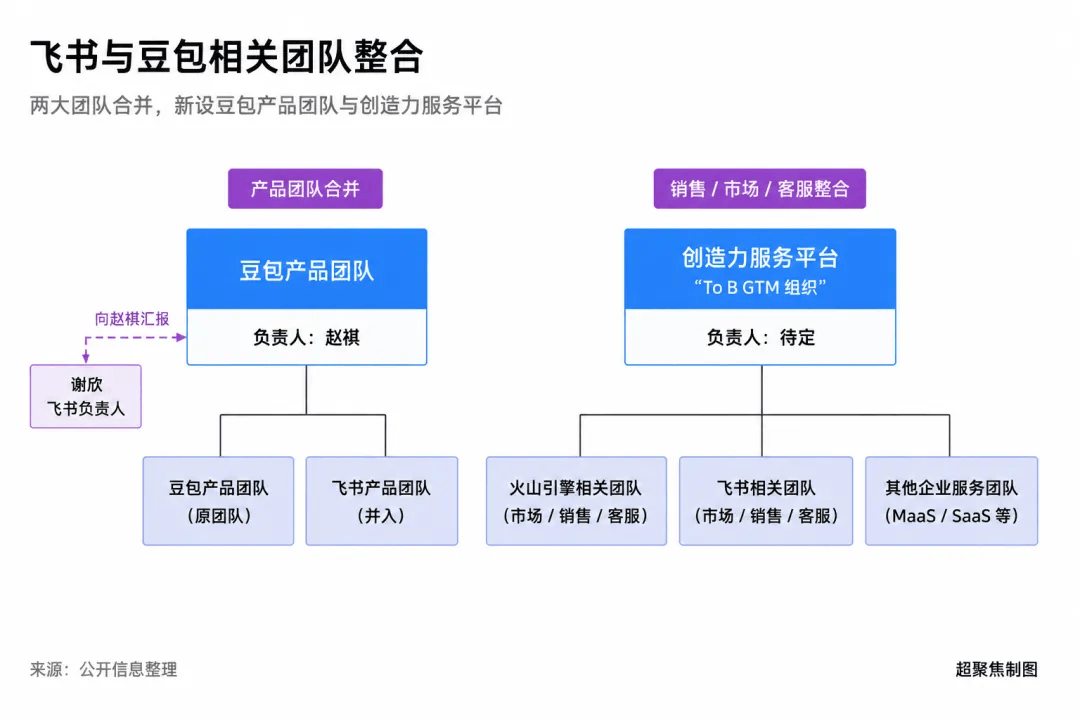
On 30 July, ByteDance reshuffled its AI and enterprise units. Feishu’s product team merged into the Doubao product team; Feishu’s sales, marketing and service teams merged into Volcano Engine’s. Feishu itself survives, but its once-integrated organisation is now split between Doubao for product and Volcano for commercialisation.
Not alone
Alibaba and Tencent moved within weeks. Alibaba consolidated three agent lines, QoderWork, Wukong and MuleRun, under QoderWork, led by DingTalk’s Chen Yusen. Tencent moved QClaw into the unit that houses WorkBuddy. All three stopped internal horse-racing and converged on one AI front door.
Why the rush
On the surface it is cost control. The deeper play is lock-in. Cloud vendors bound clients with infrastructure, but clients still drift away and leave. AI is different: once a company builds its evaluation sets, model routing and approval workflows around one model, switching means re-running thousands of real-scenario tests, a cost few will bear.
Owning the default enterprise AI entry point means owning more than a software fee. It means an unbreakable client relationship, where the model, the documents, the meetings and the workflows all live in one system. ByteDance now sells a complete enterprise AI service, from work entry to task execution, not just Feishu seats or Doubao models.
Read the original report (Sohu IT)
Translated and adapted from Sohu IT (it.sohu.com).