For years, Sinnol was known almost only for port autonomous driving, a quiet, closed-scenario business easy to dismiss. Then it closed a 300m yuan Series C, and the market looked again.
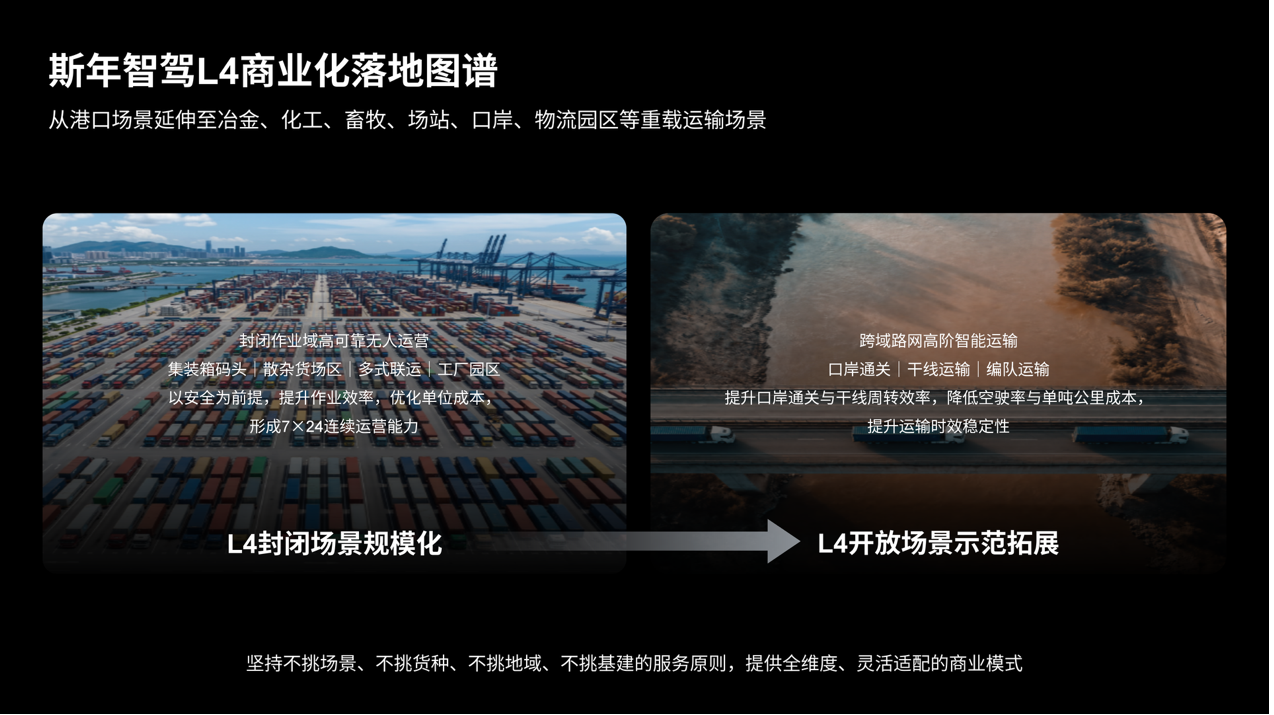
The round, from Xingzheng Capital and Yidao Capital, funds next-generation vehicle-grade autonomous solutions. Alongside it, Sinnol announced it is moving beyond ports into open-road heavy logistics.
Why ports first
Founder He Bei chose ports in 2020 for their high digitalisation and labour cost, easier to prove autonomy’s value. Reality was harder: unmanned trucks must mix with human drivers, coordinate with quay and yard cranes, and obey central dispatch. Sinnol learned standardised operation, scheduling and delivery across container, bulk and break-bulk cargo, then extended from in-port to between-port and out-of-port transport.
From vehicle to system
Sinnol now leads global port autonomous driving by market share and has entered rail yards, steel plants, multimodal hubs and cross-border ports with China-Mongolia and China-Vietnam links. Its pitch shifted from single-vehicle intelligence to a system: vehicle executes, roadside fills gaps, cloud schedules. It sells EPC packages and fleet operations, not just trucks.
The real test is willingness to pay
He Bei is blunt: give a terminal free autonomous trucks and they cheer, but getting them to pay is the hard part. Fewer than 1,000 unmanned trucks run in Chinese ports today. Sinnol refuses loss-making projects, betting that proven operation, mapless deployment and franchise-style local ops let it scale to thousands of vehicles, and into overseas markets, on one reusable capability stack.
Read the original report (LeiPhone)
Translated and adapted from LeiPhone (leiphone.com).