Shenzhen’s Jiuyou database clears a national-level evaluation with Peking University
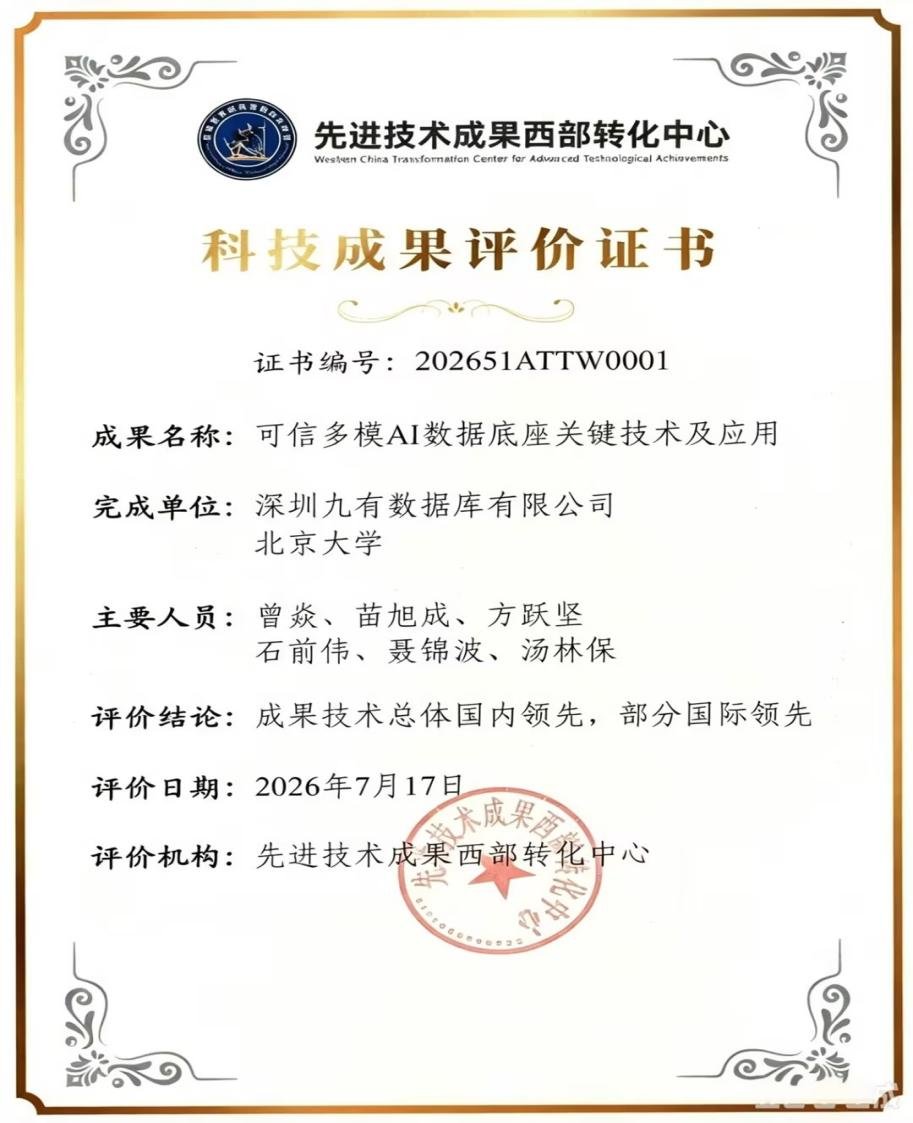
What the evaluation found The panel concluded the project fills a core gap in China’s domestic multi-modal AI databases and offers a new paradigm for modernising basic-software architecture and fusing AI with the data layer. Targeting the strategic need for local substitution in critical fields, it tackles entrenched industry problems: rigid sharding in distributed databases, … Read more


A Huawei veteran is betting China’s inference chips on the Agent era

A Huawei lifer’s bet Founder and CEO Yang Bin spent more than two decades at Huawei, building the company’s processor team from scratch in the US and later leading wireless baseband algorithms and chip work, with long experience in large-scale hardware scheduling and data architecture. He sums up entrepreneurship as ‘the realisation of everything you … Read more

China’s first thousand-qubit computing platform launches in Shenzhen

Shenzhen has launched what its backers call China’s first thousand-qubit-scale quantum computing power platform, a step they say moves the country’s quantum effort from technical validation toward something industry can actually use. On 3 August, the Greater Bay Area, Guangdong, Quantum Science Center, the National Supercomputing Center in Shenzhen, and Entropec, Shenzhen, Technology unveiled the … Read more

DeepSeek’s ‘kill line’: why a model 85 times cheaper is resetting the default

DeepSeek V4 Flash is redrawing how models are judged. On OpenCode, a single AI coding tool, the model burned 8 trillion tokens in one day, more than the entire OpenRouter platform’s daily average of about 6.6 trillion across 400-plus models. The reason is price. DeepSeek charges about 2 yuan per million output tokens; Anthropic’s Claude … Read more

Alibaba’s QwenWork enters the AI-office war with Qwen3.8-Max underneath

On 3 August Alibaba opened public beta for QwenWork, its enterprise agent product, folding together QoderWork, MuleRun and Wukong into one entry for local desktop control, long cloud tasks and team collaboration. It ships alongside Qwen3.8-Max, Alibaba’s new flagship: 2.4 trillion total parameters, 95 billion active per inference, a 1-million-token context and vision. In a … Read more

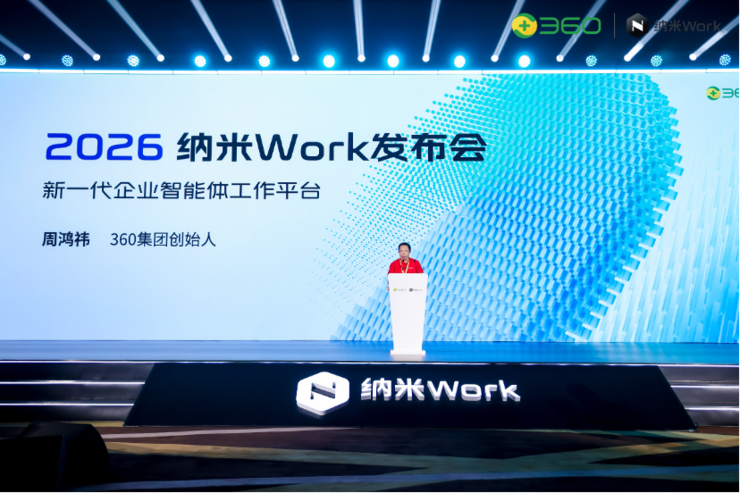
360 launches Nano Work, betting enterprise agents on 20 years of security

On 28 July, 360 founder Zhou Hongyi launched Nano Work, an enterprise agent platform aimed at business owners, founders, one-person companies and employees — what he calls a ‘super organisation.’ Before shipping, 360 used itself as the lab: it ran agents like OpenClaw across more than 1,000 real internal scenarios, collected over 56,000 feedback items, … Read more

Canchen Tech raises tens of millions to build AI ‘virtual organs’ for drug testing

Canchen Tech (CANCHEN TECH) has closed a seed-to-angel series of rounds worth tens of millions of yuan, with investors including Orient Securities Capital, SongHe Capital, Tsinghua-based funds and TusStar, the company told Leiphone. It is building a system-level virtual-organ simulation platform — digital twins spanning molecule, cell, tissue and organ — to replace parts of … Read more

Xiaomi’s MiMo bet: why a hardware company is still paying for a base model

Xiaomi has reorganised its AI around MiMo, its in-house base model, folding the XiaoAI assistant’s tech into three pillars: the MiMo model team led by Luo Fuli, cloud engineering under Luan Jian, and on-device OS work pushed into the phone business. The move matters because MiMo is no longer an optional model. As Xiaomi’s ‘human-car-home’ … Read more

The EU AI Act starts fining. China’s model makers face a new gate.

Three tiers of pain The penalty structure runs in three bands. Use of banned, unacceptable-risk AI can draw up to 35 million euros or 7 per cent of global annual turnover, whichever is higher. Most compliance and regulatory breaches, including those for general-purpose model providers under Article 101, reach 15 million euros or 3 per … Read more

From 1% to 69%: how US startups came to depend on China’s open models

From 1% to 69% Citing the ATOM report, the essay notes that Alibaba’s Qwen rose from about 1 per cent of new open-model fine-tuning and adaptation in January 2024 to 69 per cent by February 2026. The US still holds the lead in closed systems from OpenAI, Anthropic and Google, but its startup ecosystem has … Read more