The humanoid-robot sector has entered its capital-realisation phase. AgiBot has confirmed it has launched the process for a Hong Kong listing, and it timed the announcement to land on the very day the exchange’s new listing rules took effect.
The message was not a surprise. Rumours of an IPO have circulated for half a year. But choosing to go public on the day the new rules took hold signalled the company’s style: tight pacing, hitting every beat.
Three years in, revenue has climbed from 300,000 yuan to the 1-billion-yuan range. Cumulative production has passed 15,000 units, and the company holds close to 40 per cent of the global humanoid-robot shipment share. That growth rate is rare even across hard tech.
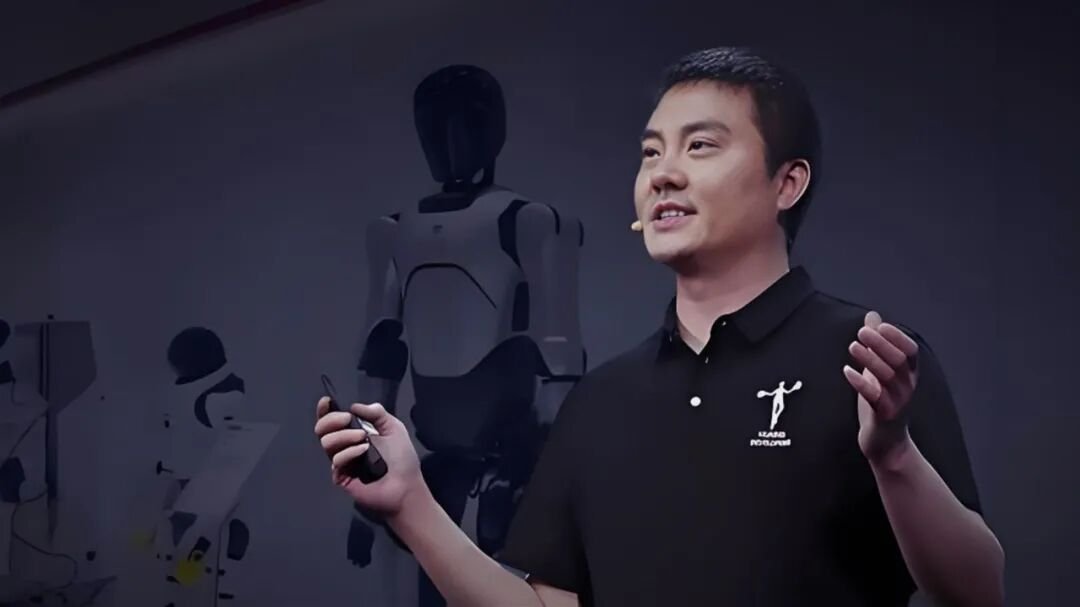
Behind the numbers is controlling shareholder Deng Taihua, who stayed out of the public eye for years. He spent over two decades at Huawei, running both the wireless and computing business lines. The operating discipline from that background runs through AgiBot’s journey from startup to IPO.
For Deng and AgiBot, the listing is more like a kickoff at halftime. The first three years solved the build-it-and-scale-it problem, from prototype to batch shipments. What comes next is the one-to-ten test: commercial validation, technology iteration, ecosystem building, and a race against the entire industry.
Few in 2023 predicted AgiBot would reach the front of the pack this fast. Year-one revenue was 300,000 yuan, effectively zero. In 2024 it became 60 million, a two-hundred-fold jump. By 2025 full-year revenue broke 1.05 billion yuan, making it the fastest Chinese robotics company to cross the 1-billion threshold.
In 2026 the momentum held. First-quarter revenue already exceeded 1 billion yuan, and the company’s full-year target is 4 billion.
Capacity ramp-up drove the revenue. At the start of 2025 monthly output was around 1,000 units. By year-end cumulative production hit 5,000. By the end of March the 10,000th general-purpose embodied robot rolled off the line, 5,000 to 10,000 in a single quarter. By the end of June cumulative output passed 15,000, and the 15,000th Spirit G2 was delivered that day to a Longcheer factory.
On shipments, Omdia put global general-purpose humanoid output at about 13,000 units in 2025, with AgiBot at 5,168, a 39 per cent share and ranking first globally. IDC’s figures: about 18,000 humanoids shipped globally, AgiBot 5,200, also top, and first in the full-size segment.
The world-number-one tag is not uncontested. After the report, Unitree issued a clarification arguing the two used different scopes: Unitree counted only pure bipedal humans, while AgiBot’s figure included wheeled and semi-humanoid forms. The definitional split produced different rankings. Setting the dispute aside, the two companies, one in Shanghai and one in Hangzhou, are widely recognised as the top two, and the gap between them is far from safe.
*Translated and adapted from OFweek Robotics (https://robot.ofweek.com/2026-07/ART-898890-8420-30696421.html).*