The summer of 2026 is hotter in China’s internet boardrooms than outside. In the past week ByteDance and Alibaba both restructured. ByteDance folded its decade-old Feishu product team into Doubao; Feishu head Xie Xin now reports to Doubao’s Zhao Qi, and Feishu’s go-to-market system merged into Volcano Engine. Alibaba merged three agent lines, QoderWork for coding, MuleRun for task scheduling and Wukong for desktop interaction, into a new product, Qianwen Office, handing control to 92-born ‘princeling’ Chen Yusen, who only took DingTalk in June.
Why now, and why the office
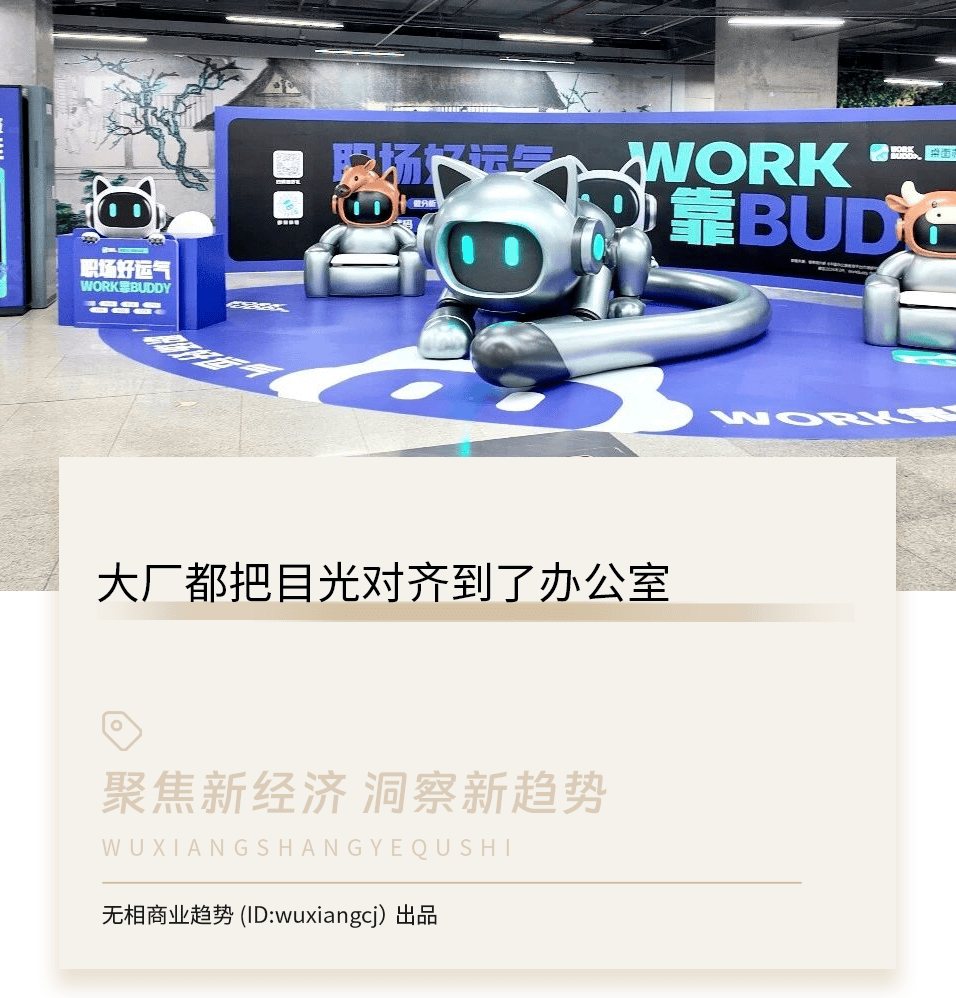
The trigger looks like a Morgan Stanley note from 30 July: AI investment has entered ‘halftime’, and the market is shifting from chasing upstream compute chips to two new fronts, AI applications and supporting resources. The real reason is simpler. Tencent, long mocked as behind in AI, is now quietly cashing in. Under ex-OpenAI researcher Yao Shunyu, Tencent merged QClaw into WorkBuddy, which passed 20m monthly unique visits and took more than half the desktop AI-office agent market. WorkBuddy is a standalone desktop app with one clean input box: tell it to summarise the week’s meeting, pull key decisions, message the project group and book a room, and it does all of it. In Q2 2026 its 20.97m visits beat the second and third players combined, and the Tencent system held a 53.8 per cent share, with almost no extra traffic spend thanks to WeChat and Tencent Cloud.
Copying the winner
Alibaba and ByteDance moved because Tencent made them envious, and Tencent’s edge was the office. On the last generation of office tools Tencent was weak, with WeCom long trailing DingTalk and Feishu, so it had no baggage when it pivoted. Yao pushed cross-team reinforcement-learning infrastructure with a clear rule: let the model fit the business, not the business fit the model, and Tencent fed real business data back to the Hunyuan model. ByteDance’s move looked rushed, in Xie Xin’s own word, because Doubao has a ‘split personality’, consumers treat it as a toy while the company wants it as a paid work tool. Alibaba, tired of internal horse-racing, did a pixel-level copy and merged lines under a young leader willing to cut old code.
The B-side is where AI pays
All three are concentrating fire on the office because the B-side is where AI software monetises. Traditional office tools are used widely but rarely help a firm earn, and in China few firms pay for ‘tools’. AI was meant to fix this, letting one worker’s saved time become the boss’s saved wage, but the reality is the saved time gets filled with new work. For small firms to pay willingly, the giants must prove the AI saving lands in the owner’s pocket, not as a new intelligence tax. That is Morgan Stanley’s ‘halftime’, and why the giants are now fighting over the pie that was Office, WPS, DingTalk and Feishu, with part of WorkBuddy’s growth coming from eating rivals.
Read the original report (Sohu IT)
Translated and adapted from Sohu IT (it.sohu.com).