DEEP Robotics released a new quadruped, the X50, on 6 November. The company describes it as an upgrade built around combined sensing and control, paired with a high-stiffness, high-response joint system, aimed at larger payloads, harder terrain and more stable posture.
The headline figure is a rated payload of 50 kilograms without increasing the robot’s body dimensions. The company says the X50 can carry that load across stairs, slopes, broken mountain paths and gravel while remaining stable.
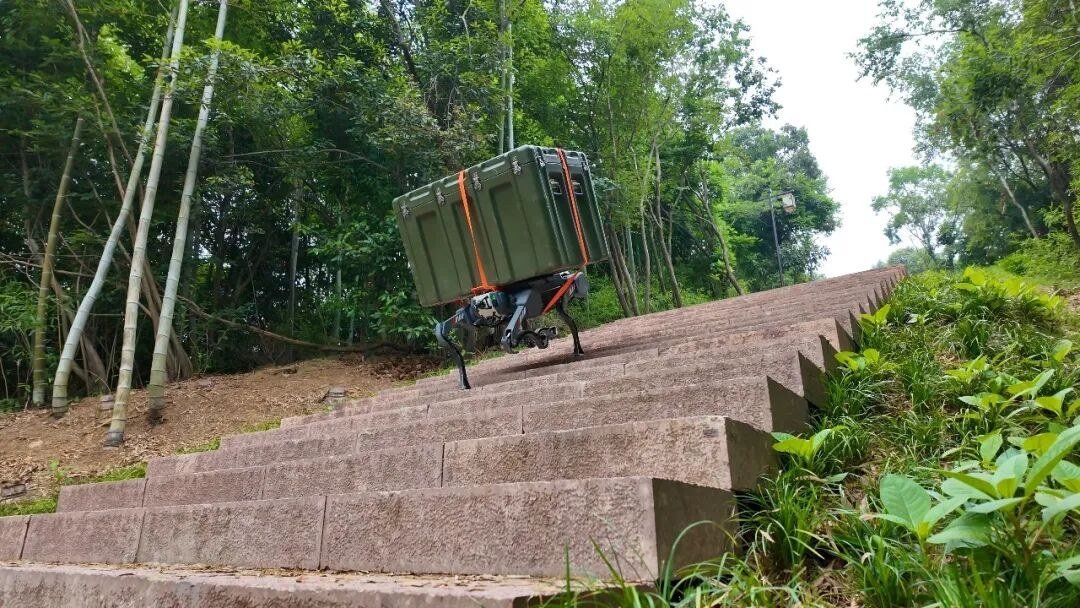
Payload and speed together
Carrying weight and moving over rough ground have long been in tension for quadrupeds. As payload rises, the tolerance for a missed foothold on a slope or a step shrinks, and machines tend to stall on the last hundred metres of a complex site.
DEEP Robotics says the X50 sustains 3 metres per second for more than two kilometres while carrying the full 50 kilograms. Each footfall under that load multiplies the impulse through the joints, and the powertrain has to hold output without derating over a long run.
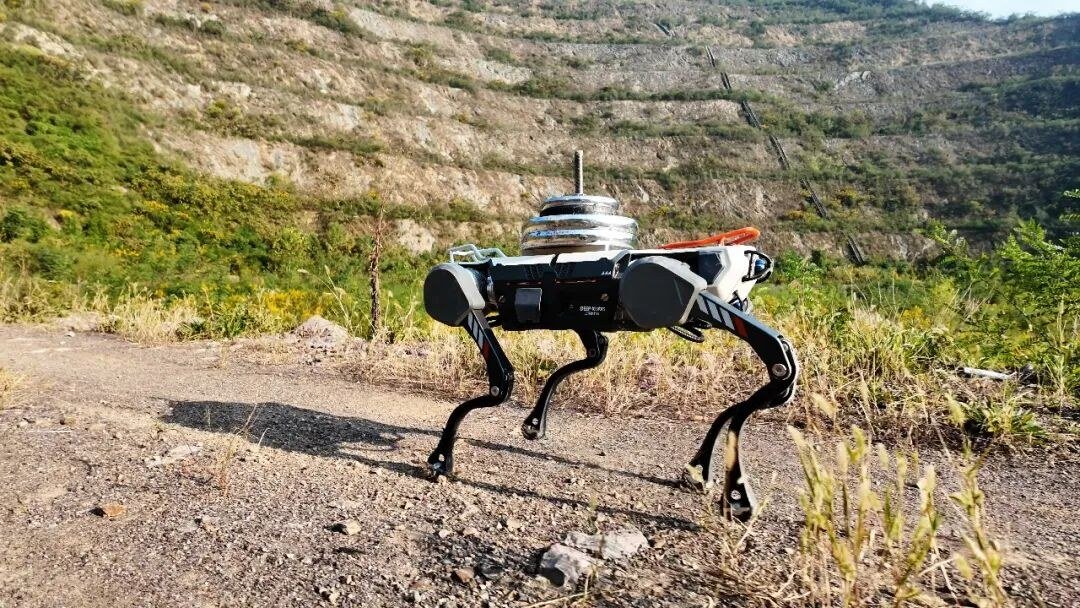
The terrain list
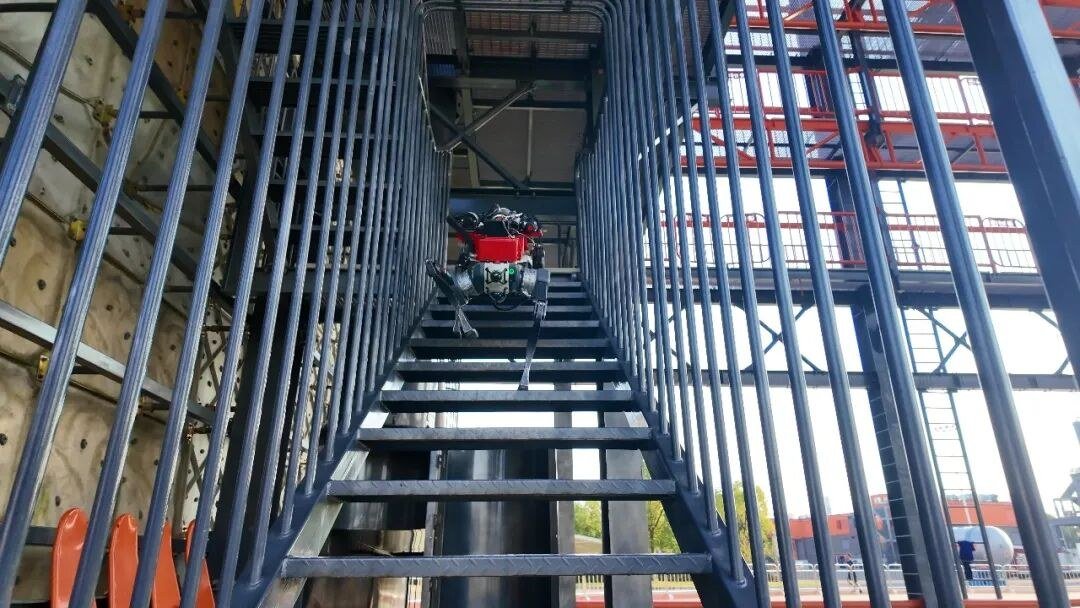
The company specifies continuous ascent of 80 cm platforms, repeated clearing of 70 cm gaps between stone blocks and climbing of open-riser staircases without treads. The control stack fuses lidar point clouds and inertial data and uses a reinforcement learning locomotion policy to predict terrain and plan footholds, with the joint response converting each perception decision into limb movement.
That combination extends the working envelope from flat ground to multi-storey interiors, which is where the industrial cases sit. In a power plant the robot can climb open steel staircases between boiler floors carrying inspection equipment. In a chemical plant it can move between pipe racks. Inside a multi-storey factory it can carry rescue gear up successive flights.
Why the firefighting detail matters
The most commercially specific claim is about hose recoil. A pressurised firefighting hose generates a reaction force that pushes back on whatever is holding it. DEEP Robotics says the X50 can adjust body attitude in real time to offset that force and hold the nozzle direction steady.
If that works in practice, it changes the staffing of an interior fire attack. The person on the nozzle is the person exposed to heat, smoke and structural collapse. A robot that can hold a charged line while standing on a rubble pile is not replacing a tool. It is replacing a position.
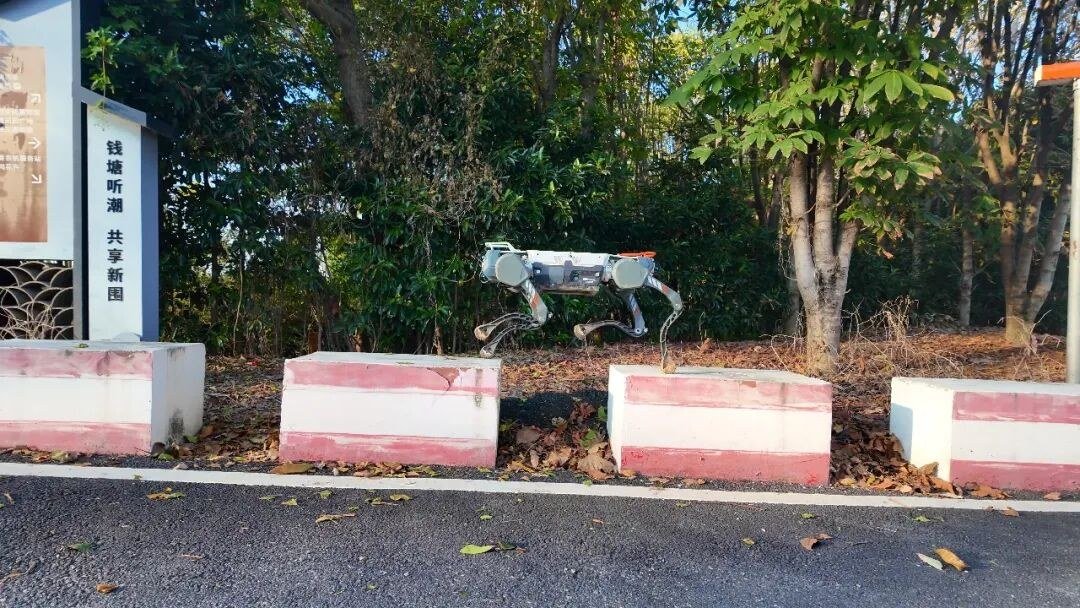
The commercial question
Quadrupeds have spent five years in the inspection niche: walk the corridor, film the gauge, come back. The X50 is aimed at load-bearing work, where the comparison is not another robot but a two-person team and a vehicle.
That comparison is decided by duty cycle, not by peak specification. A 50 kg payload over 2 km is useful only if the machine can repeat it shift after shift with predictable maintenance, and DEEP Robotics has not published service intervals or pricing.
The other constraint is regulatory. Industrial sites in Europe increasingly require machinery to meet the new EU Machinery Regulation, which now covers software behaviour and AI functions. A quadruped selling into European utilities will need documentation that Chinese suppliers have not historically produced.
Editor’s note: This is an adapted translation of the original OFweek report. It has been trimmed and restructured for readability for an international business audience. The full original (in Chinese) is at https://robot.ofweek.com/2026-11/ART-898890-8120-30710809.html.