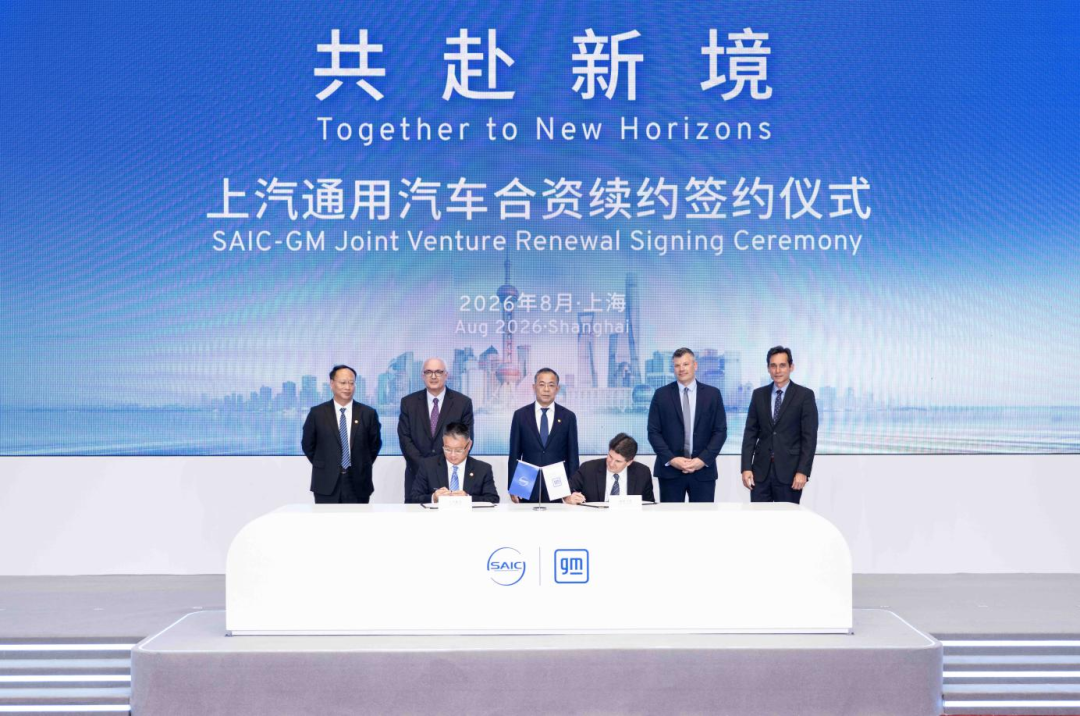
On 5 August, SAIC Motor and General Motors signed a renewal in Shanghai that extends SAIC-GM to 2047, another 20 years. It is a symbolic number. Since its 1997 founding, SAIC-GM has run nearly three decades. As China’s industry moves from combustion to electrification and intelligence, the two sides chose to renew now, which raises a new question: what can a typical Sino-US joint venture still contribute in the smart-EV era?

GM’s China business is no longer what it was. Sales peaked around 4 million units in 2017 and by 2025 had fallen below half that peak. Profit tells the same story: GM once earned about 2 billion US dollars a year from China, swung to loss in 2024, then recovered. In the second quarter of 2026 its China business posted profit for a seventh straight quarter, and in the first half SAIC-GM equity income was 248 million US dollars, double the year before.
An insider said SAIC-GM is trying to turn a traditional joint-venture manufacturer into a car-technology company with stronger local technical decision power, software iteration and global product-output ability. That path is not smooth, because it must fix not just products but the organisational habits, technical voice and interest balance built over 30 years.
After the renewal, the division of labour shifts. On product definition, the Chinese team won more say over which car to sell, what smart cockpit and driving features to carry and which tech route to take. On where to export and how to build overseas sales and compliance, GM leans on its mature global network. SAIC-GM will push China-defined, China-developed and China-made products to the world; the Buick Electra E7 exports from October, with targets across the Middle East, Africa, South America, Mexico and Asia-Pacific.
The 50:50 structure stays. By 2030 SAIC-GM plans at least 30 new-energy models, focusing on Buick and Cadillac while Chevrolet shifts to export, using Chinese development to build small, price-competitive cars for GM’s global network.
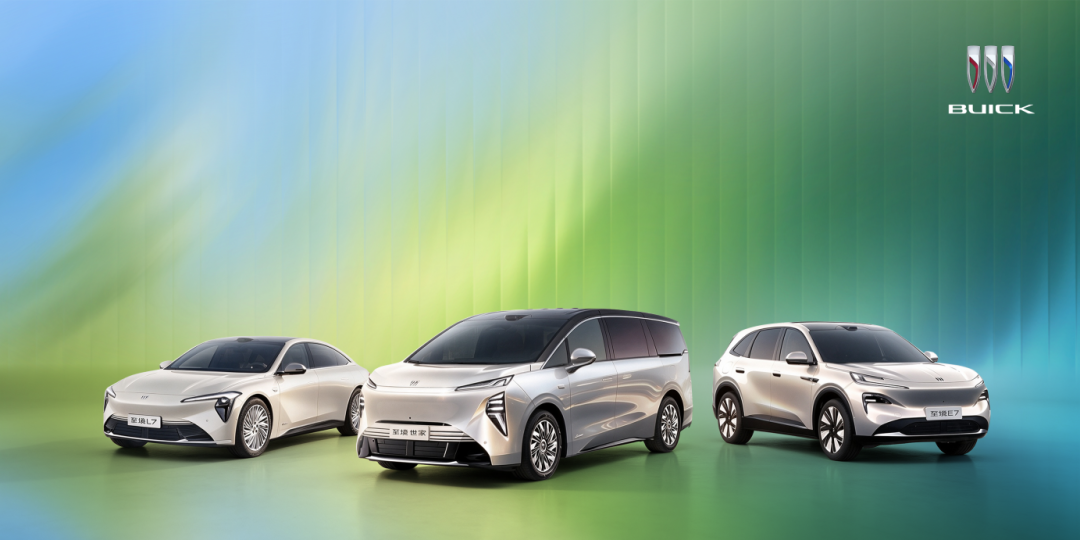
In 2025 SAIC-GM launched the Xiaoyao super-fusion architecture, the first China-led full-domain fusion new-energy architecture from a joint venture, covering battery, plug-in and range-extender power across sedan, SUV and MPV. On it the Buick Electra brand built a full line-up in a year. The Electra E7 broke 10,000 deliveries in its first month, the fastest such start for a joint-venture EV, and the Electra family led the over-400,000 yuan luxury NEV MPV segment in the first half of 2026.
The ‘Electra model’ targets both fast and good: good means traditional joint-venture quality, engineering and safety; fast means the local product definition and software iteration China’s market now demands. Over-the-air updates already reflect this, adding parking without bay lines after user feedback, more split-screen views and more waypoints for camping-mode engine tuning.
SAIC-GM is also working with Momenta to spread assisted driving across more models and will even retrofit intelligent features onto combustion cars. Smart driving, cockpits and large AI models are moving from China to the world, so the next 20 years may not be one-way technology transfer.
Image gallery

Editor’s note: This is an adapted translation of the original Leiphone (Lingxiang Wang) report. It has been trimmed and restructured for readability for an international business audience. The full original (in Chinese) is at https://www.leiphone.com/latest/index/id/4761.
Translated and adapted from Leiphone (Lingxiang Wang) (https://www.leiphone.com/latest/index/id/4761).